
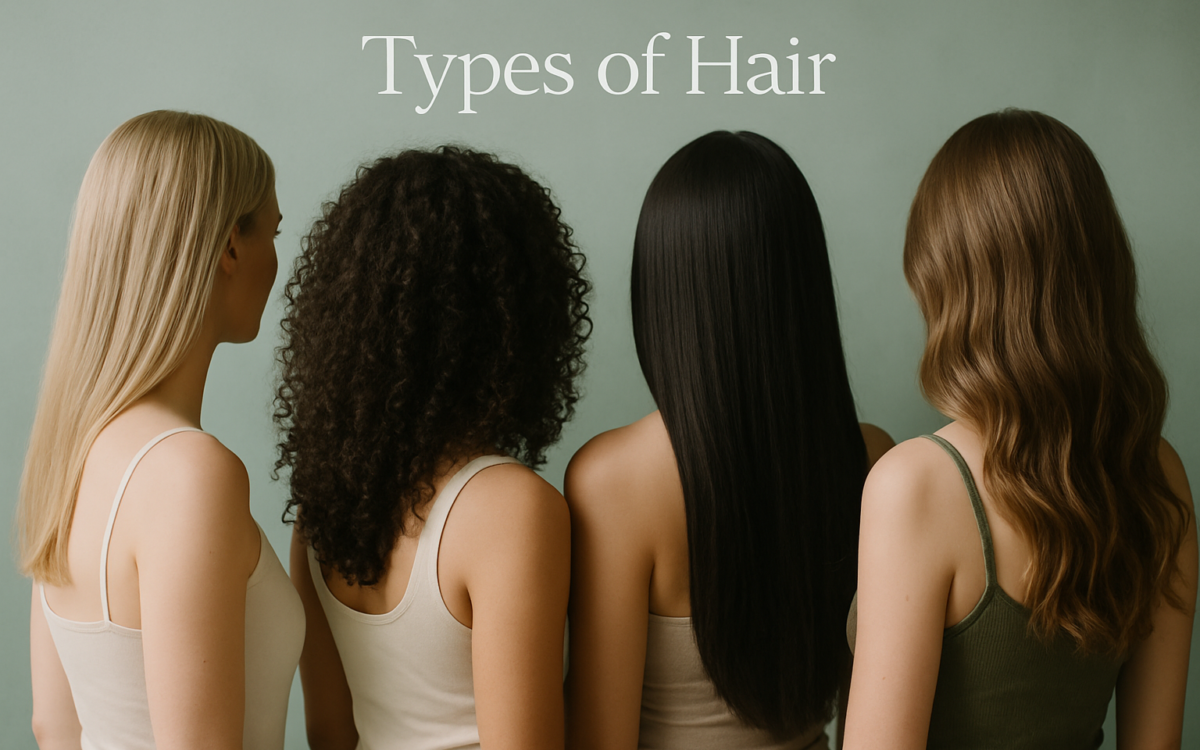
Hair is an essential part of our identity, influencing our style, confidence, and even how we feel about ourselves. But did you know that not all hair is created equal? Understanding the different types of hair can help you make informed decisions about your hair care routine. From texture to thickness, each hair type has unique characteristics that can affect how you care for and style it.
What Are the Main Types of Hair?
Hair can generally be categorized into four main types based on texture: straight, wavy, curly, and coily. Each of these types comes with its own subcategories and characteristics. Recognizing your hair type can help you select the right products and treatments.
Straight Hair
Straight hair is typically smooth and shiny, and it reflects light well. This type of hair tends to be easier to manage when it comes to styling, but it can also be prone to oiliness. Straight hair can be fine, medium, or thick. Here’s a breakdown:
- Fine Straight Hair: This type is thin and often lacks volume. It can be easily weighed down by products.
- Medium Straight Hair: Offers a good balance of thickness and manageability, making it easy to style.
- Thick Straight Hair: This type is robust and can hold styles well but might require more effort to manage.
Wavy Hair
Wavy hair lies between straight and curly, forming soft waves that can add volume and movement. Wavy hair can vary in thickness and texture, leading to a few distinct classifications:
- Loose Waves: Light and bouncy, this type is often easy to style and maintain.
- Defined Waves: This hair type has more structure and can sometimes resemble gentle curls.
- Coarse Wavy Hair: Thick and textured, this type often requires specific care to avoid frizz.
Curly Hair
Curly hair is characterized by distinct spirals and coils. The tightness of the curls can vary greatly, impacting the hair’s overall appearance and maintenance:
- Type 3A: Loose, big curls that can be easily shaped and styled.
- Type 3B: Tighter, springy curls that can add significant volume.
- Type 3C: Very tight curls, often referred to as corkscrew curls, needing hydration and moisture for optimal health.
Coily Hair
Coily hair, often referred to as afro-textured hair, has the tightest curl pattern and is highly voluminous. It is also the most delicate type, requiring special care:
- Type 4A: Soft, coiled hair that retains moisture well.
- Type 4B: Z-shaped curls that are more fluffy and have a less defined curl pattern.
- Type 4C: The most tightly coiled texture, often fragile and needs comprehensive moisture and care.
Hair Thickness and Density
In addition to texture, hair also varies in thickness and density. Hair thickness refers to the individual strand’s diameter, while density refers to how many hair strands are present on the scalp. You can have:
- Fine Hair: Thin strands that can be easily weighed down.
- Medium Hair: Holds styles well but may have some limitations in volume.
- Thick Hair: Lots of volume but may need specialized tools for styling.
Impact of Hair Type on Care Routines
Your hair type significantly influences which products and routines will work best for you. For example:
- Straight Hair: Usually benefits from lightweight products and regular wash routines to avoid oil buildup.
- Wavy Hair: Needs products that define waves without weighing them down, such as light mousses or sea salt sprays.
- Curly Hair: Requires moisturizing creams and leave-in conditioners to combat dryness and frizz.
- Coily Hair: Often benefits from heavier oils and creams to help maintain moisture and prevent breakage.
When to See a Doctor
If you notice significant changes in your hair, such as excessive hair loss, scalp irritation, or changes in texture that cause you concern, it may be time to consult a healthcare provider. Understanding whether these changes are temporary or indicate a more serious underlying condition is crucial. You can learn more about hair health from reputable sources like the NIH and Mayo Clinic.
Conclusion
Recognizing the various types of hair helps you tailor your hair care routine for the best results. Whether you have straight, wavy, curly, or coily hair, understanding its unique needs can lead to healthier and more vibrant locks. Embrace your hair type, and remember, when in doubt, consult a hair care professional to discover what works best for you!
