
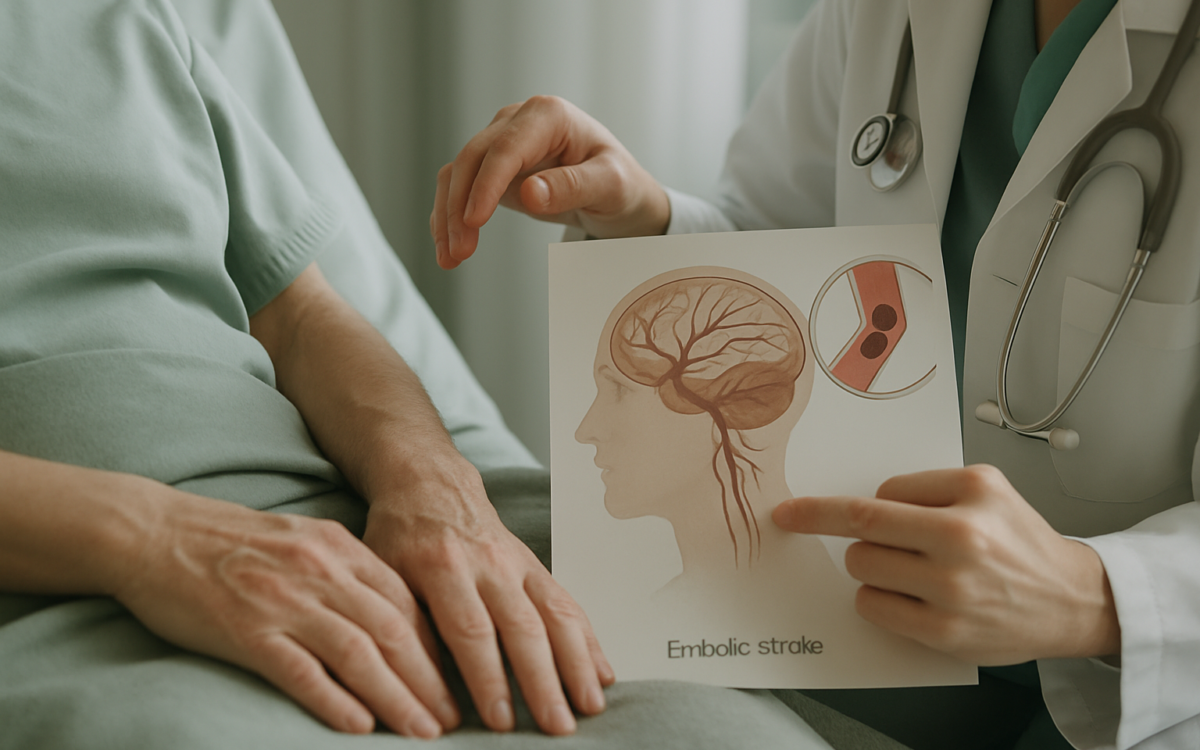
Embolic stroke is a serious condition that affects thousands of people each year. It occurs when a blood clot or other debris forms elsewhere in the body and travels to the brain, blocking vital blood flow. Understanding the causes, symptoms, and treatment options is crucial for prevention and early intervention.
What Is an Embolic Stroke?
An embolic stroke is a type of ischemic stroke, where blood supply to the brain is disrupted. This happens when a clot forms typically in the heart or large arteries and then travels through the bloodstream to the brain. This clot, called an embolus, can obstruct blood flow and lead to brain damage if not treated quickly.
Causes of Embolic Stroke
Several underlying conditions can lead to the formation of an embolus:
- Atrial Fibrillation: This irregular heartbeat can cause blood to pool in the heart, forming clots that can be sent to the brain.
- Heart Valve Disorders: Issues with heart valves can lead to blood clots, increasing the risk of embolic strokes.
- Heart Attack: Damage to the heart muscle during a heart attack can create clots that may embolize.
- Deep Vein Thrombosis (DVT): Clots can form in the deep veins of the legs and travel to the brain, causing an embolic stroke.
Identifying Symptoms
Recognizing the symptoms of an embolic stroke is vital. Time is crucial for effective treatment. Here are some common symptoms:
- Sudden numbness or weakness: Often affects one side of the body, especially the face, arm, or leg.
- Difficulty speaking: Slurred speech or trouble understanding language can occur.
- Vision problems: Sudden difficulty seeing in one or both eyes.
- Severe headache: A sudden and intense headache with no known cause.
If you or someone you know experiences these symptoms, seek medical help immediately.
Risk Factors to Consider
Understanding the risk factors associated with an embolic stroke is crucial for prevention:
- Age: The risk increases as you age, especially for those over 55.
- Family History: A family history of stroke can increase your risk.
- High Blood Pressure: This condition can damage blood vessels and facilitate clot formation.
- High Cholesterol: Elevated cholesterol levels can lead to arterial plaque and clots.
- Diabetes: Having diabetes increases the risk of stroke due to its effects on blood vessels.
- Smoking and Alcohol: Both increase the risk of clots and strokes.
Diagnosis of Embolic Stroke
If a stroke is suspected, rapid diagnosis is crucial. Medical professionals may use various tests to identify the cause:
- Physical Examination: A doctor will perform a neurological exam to assess mental and physical functions.
- Imaging Tests: CT scans or MRIs can visualize the brain and determine the type of stroke.
- Blood Tests: Testing for coagulation disorders or other underlying issues may occur.
Treatment Options Available
Once diagnosed, treatment typically focuses on restoring blood flow and preventing future strokes. Options include:
- Medication: Thrombolytics (clot busters) can be administered within hours of stroke onset to dissolve clots.
- Anticoagulants: These medications help prevent new clots from forming.
- Medical Procedures: In some cases, surgery may be necessary to remove large clots or repair blood vessels.
Prevention Strategies
Preventing an embolic stroke often involves lifestyle changes and managing risk factors:
- Maintain a Healthy Diet: A diet low in saturated fats, cholesterol, and sodium can help manage blood pressure and cholesterol levels.
- Exercise Regularly: Physical activity can improve heart health and reduce stroke risk.
- Avoid Smoking: Quitting smoking significantly lowers your stroke risk.
- Control Blood Pressure: Regularly check blood pressure and follow your doctor’s recommendations.
When to See a Doctor
Seek emergency medical attention if you notice symptoms of a stroke, even if they seem to subside. Quick intervention can save lives and improve recovery outcomes. Understanding the signs and acting swiftly is key.
Conclusion
Embolic stroke is a serious condition that requires immediate attention and understanding of its causes and symptoms. Being aware of the risk factors and taking preventive measures can significantly reduce your risk. Remember to consult a healthcare professional for personalized advice and treatment options.
