
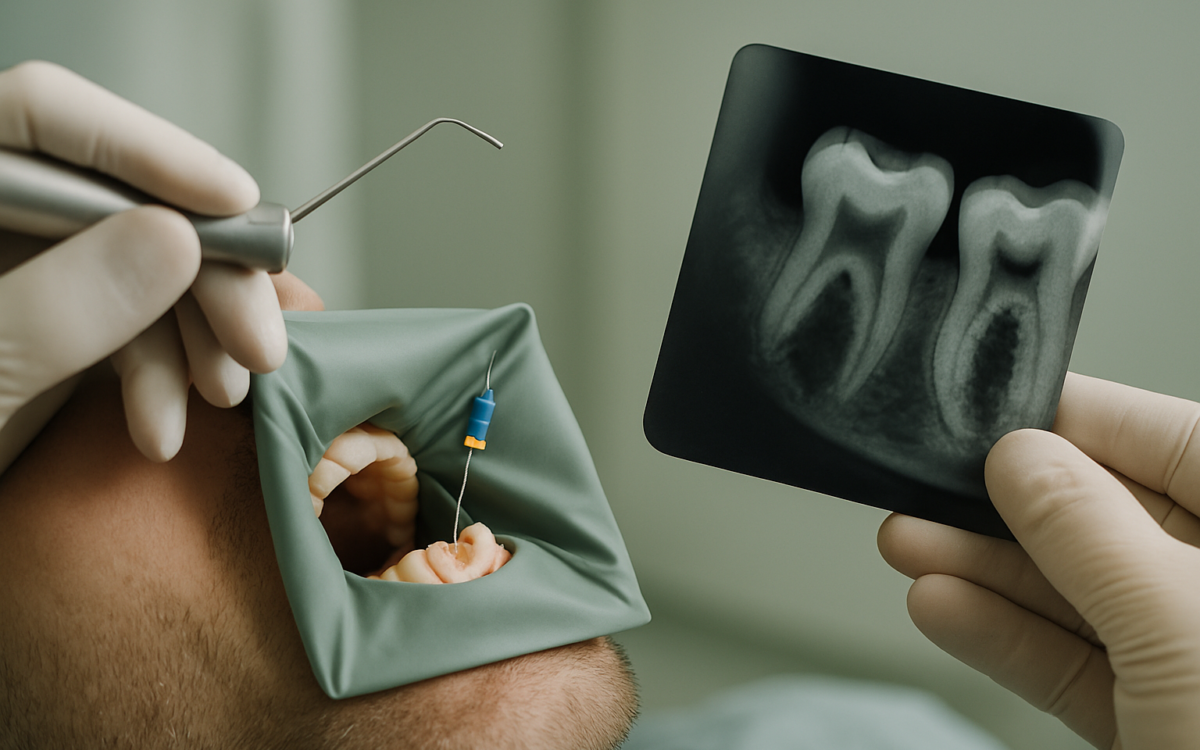
Root canals can seem intimidating, but they are often necessary to save a tooth that has become seriously damaged or infected. Understanding the connection between root canals and infections is important for maintaining your oral health. In this article, we’ll explore what a root canal is, how infections can develop, their symptoms, treatment options, and ways to prevent them.
What is a root canal?
A root canal is a dental procedure that treats infection or damage in the pulp of a tooth. The pulp is the innermost part of the tooth containing nerves and blood vessels. When a tooth becomes infected, the pulp can swell and cause pain, leading to the need for a root canal. During the procedure, the dentist removes the infected pulp, cleans the tooth’s interior, and seals it to prevent future issues. Root canals are a common and effective solution that can save a tooth from extraction.
How infections develop after a root canal
Despite being performed to treat infection, root canals can sometimes lead to further complications. Understanding how this can happen is vital:
- Inadequate cleaning: If the infected pulp isn’t completely removed, remaining bacteria can multiply and lead to reinfection.
- Perforation: During the procedure, a dentist may accidentally create a small hole in the tooth, allowing bacteria to enter.
- Crown failure: After a root canal, a crown is often placed to protect the tooth. If the crown fails or doesn’t fit properly, bacteria can infiltrate.
- Delayed treatment: If a tooth infection is not treated promptly, it can worsen and complicate healing, leading to further infection even after a root canal.
Symptoms of infection after a root canal
Recognizing the symptoms of an infection after a root canal is essential for early intervention. Here are common signs to watch for:
- Persistent pain: Ongoing or worsening pain in the treated tooth area can indicate an infection.
- Swelling: Swelling in the gums or face near the treated area may signal an issue.
- Discharge: Discharge or pus from the gum surrounding the tooth can be a clear sign of infection.
- Foul taste or odor: An unpleasant taste or smell coming from the mouth can indicate bacterial presence.
- Sensitivity: Increased sensitivity to hot or cold, even after the tooth seems healed, may indicate an underlying problem.
Treatment options for root canal infections
If an infection occurs after a root canal, timely intervention is crucial. There are several treatment options available:
- Retreatment: This involves reopening the tooth, cleaning out any remaining infected tissue, and resealing it.
- Apicoectomy: If retreatment is unsuccessful, a dental surgeon may perform an apicoectomy, removing the tip of the tooth root along with infected tissue.
- Antibiotics: In some cases, antibiotics may be prescribed to treat infections effectively and manage symptoms.
- Extraction: As a last resort, if the infection cannot be controlled, extracting the tooth may be necessary.
Preventing infections after a root canal
Prevention is always the best approach. Here are some strategies to minimize the risk of infections after a root canal:
- Regular dentist visits: Routine check-ups can help catch problems early and maintain oral health.
- Good oral hygiene: Brushing twice a day and flossing daily helps keep teeth and gums healthy.
- Follow care instructions: After a root canal, it’s essential to follow your dentist’s care instructions, including avoiding hard foods and maintaining good oral hygiene.
- Stay hydrated: Drinking plenty of water helps maintain saliva production, which protects against bacteria buildup.
When to see a doctor
If you experience any signs of infection following a root canal, it’s important to contact your dentist promptly. Ignoring symptoms can lead to serious complications. Always consult your healthcare provider for concerns about dental procedures or treatments.
In summary, while root canals are generally successful at treating tooth problems, infections can still occur. Understanding the signs, symptoms, and treatment options is essential for your oral health. By maintaining good dental care habits and staying in close contact with your dentist, you can significantly reduce your risk of complications after a root canal procedure.
