
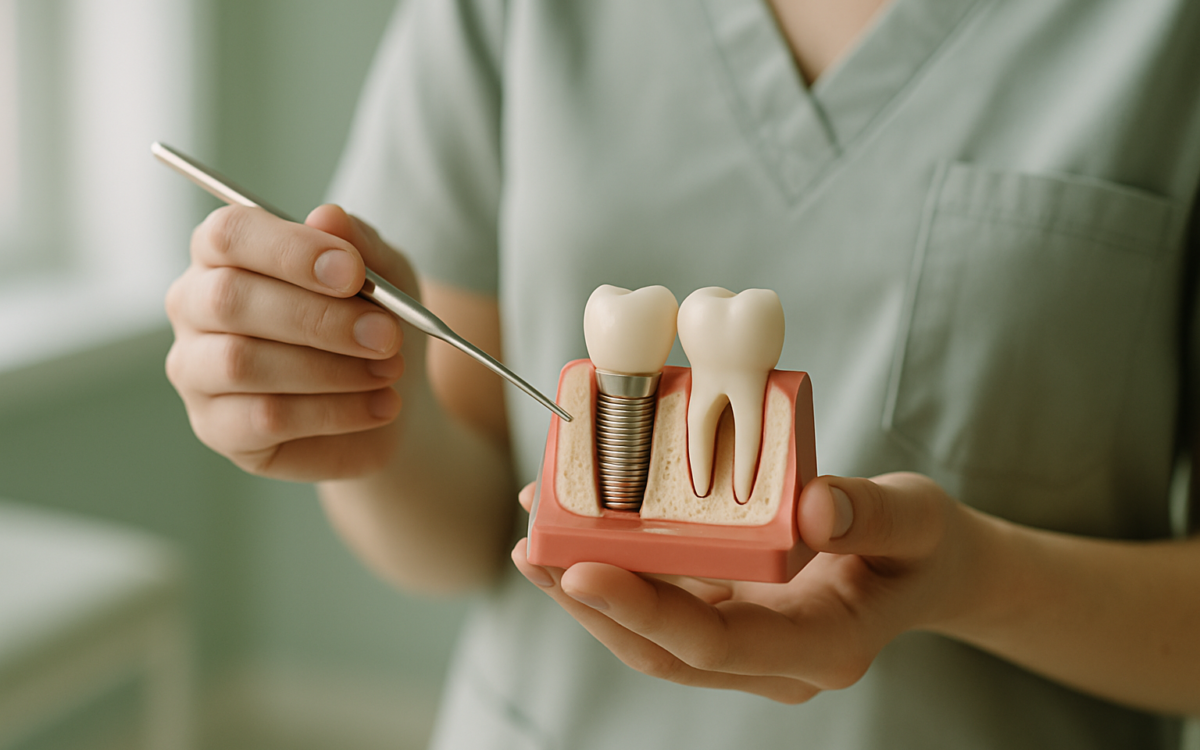
Dental implants have become a popular solution for people who have lost one or more teeth. Unlike dentures, which can be removed, or bridges that rely on adjacent teeth for support, implants provide a stable and long-lasting option that acts like natural teeth. But how do dental implants work? In this article, we will explore the process of dental implants from start to finish, their advantages, and what to expect.
What are dental implants?
Dental implants are artificial roots placed in the jawbone to support one or more replacement teeth. They are typically made of titanium, a material that is not only strong but also biocompatible, meaning it can fuse with bone. This fusion process, known as osseointegration, is crucial for the stability and longevity of the implant.
The dental implant procedure
The process of getting dental implants usually involves multiple steps and can take several months. Here’s an overview of what to expect:
1. Initial consultation
The first step is a consultation with a dental professional. During this visit, they will assess your oral health, discuss your medical history, and take imaging tests, such as X-rays or a CT scan to evaluate the amount of bone available for the implant.
2. Preparing the jawbone
If your jawbone is not thick enough or is too soft, the dentist may suggest a bone graft to create a stronger foundation. This may involve taking bone from another part of your body or using synthetic materials.
3. Placing the implant
Once your jawbone is ready, the dentist will surgically place the implant into the bone. This usually requires local anesthesia, and the procedure itself can take one to two hours. After the implant is placed, you’ll need time to heal, which can take several months.
4. Abutment placement
After the implant has integrated with the jawbone, the next step is to attach an abutment—a small connector that holds the replacement tooth. This involves a minor surgical procedure where the dentist will expose the top of the implant. Once the abutment is placed, it may take additional weeks for the gum tissue to heal.
5. Attaching the crown
Finally, after the healing period, a custom-made crown (the visible part of the tooth) is attached to the abutment. The crown will be designed to match your natural teeth in color and shape. Your dentist will ensure it fits perfectly for both aesthetics and function.
Benefits of dental implants
Dental implants offer numerous advantages over other tooth replacement options:
- Durability: With proper care, dental implants can last a lifetime.
- Improved oral health: Implants do not require altering adjacent teeth, preserving your natural tooth structure.
- Enhanced appearance: Implants look and feel like natural teeth, which can boost your confidence.
- Better functionality: They allow for normal eating and speaking without the concerns often associated with dentures.
Potential risks and complications
While dental implants are considered safe, there are some risks involved, as with any surgical procedure. Possible complications include:
- Infection at the implant site
- Nerve damage leading to pain or numbness
- Sinus problems if the implant extends into the sinus cavities
It’s essential to choose a qualified dental professional to minimize these risks.
Who is a candidate for dental implants?
Most adults who are in good health and have sufficient jawbone density are candidates for dental implants. However, certain individuals may not be suitable:
- Those with chronic diseases that affect healing, such as uncontrolled diabetes or autoimmune disorders
- People who smoke heavily, as this can hinder recovery and increase the risk of implant failure
- Individuals who lack sufficient bone density may need additional procedures (like bone grafts) to be eligible
Consultation with a dental professional is crucial to determine if dental implants are the right choice for you.
When to see a doctor
If you are considering dental implants, or if you have concerns about your oral health, it’s wise to consult a dental professional. Signs that may require immediate attention include:
- Persistent pain or discomfort in the jaw
- Swelling or tenderness around the gums
- Loose dental implants or complications with existing ones
Conclusion
Dental implants represent a remarkable advancement in restorative dentistry, offering a reliable and aesthetic solution for tooth loss. Understanding how they work and what to expect throughout the process can help you make informed decisions about your dental health. Always consult with your dental provider to discuss your options and any concerns you may have.
For more information, you can refer to reputable sources like the Mayo Clinic and the National Institutes of Health.
