
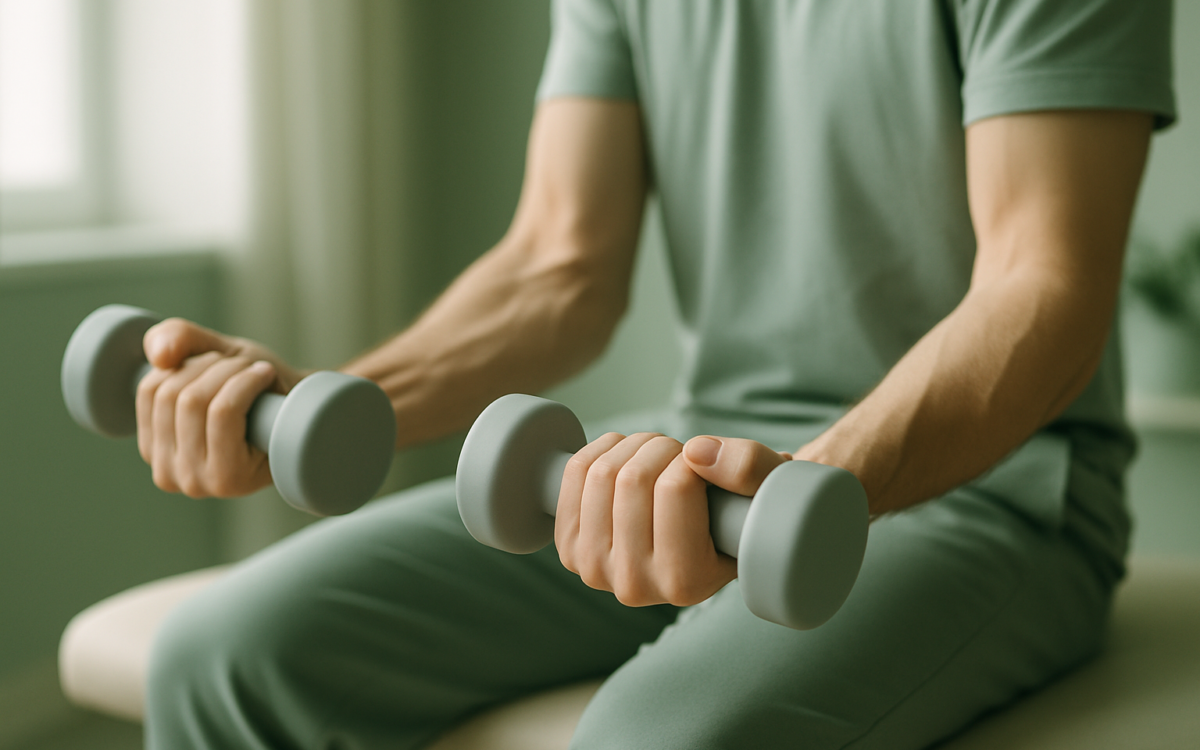
Forearm strength is often overlooked in fitness routines, yet it plays a crucial role in daily activities and overall athletic performance. Strong forearms improve your grip, which enhances your ability to lift heavier weights and perform various exercises effectively. Additionally, well-developed forearms can help prevent injuries and improve the stability of your wrists and hands. In this article, we’ll explore several effective forearm exercises that you can do with dumbbells to build strength and resilience.
The Importance of Forearm Strength
Having strong forearms is essential for various reasons. Not only does it improve your performance in sports and weightlifting, but it also aids in daily tasks like opening jars, carrying groceries, or even typing on a computer. According to the National Institutes of Health, grip strength is linked to overall physical health, making it a vital indicator of fitness. Improved forearm strength can also support better posture and reduce the risk of injuries in the wrists and elbows.
Getting Started with Dumbbells
Before diving into the exercises, it’s crucial to choose the right weight for your dumbbells. Start with a weight that challenges your muscles but still allows you to maintain proper form throughout the movements. If you’re new to strength training, consider starting with lighter weights and gradually increasing them as you build strength and confidence.
1. Dumbbell Wrist Curl
The dumbbell wrist curl is a classic forearm exercise designed to target the wrist flexors. Here’s how to do it:
- Setup: Sit on a bench or chair with your feet flat on the ground. Hold a dumbbell in one hand and rest your forearm on your thigh or a flat surface, palm facing up.
- Movement: Slowly curl the dumbbell towards your body by flexing your wrist. Keep your forearm stationary throughout the movement.
- Return: Slowly lower the dumbbell back to the starting position. Aim for 10-15 repetitions, then switch to the other hand.
2. Dumbbell Reverse Wrist Curl
This exercise targets the wrist extensors and helps balance out forearm strength. It helps improve grip strength and can be performed similarly to the wrist curl:
- Setup: Sit or stand with a dumbbell in one hand, palm facing down, and forearm resting on your thigh or a flat surface.
- Movement: Curl the dumbbell upward by flexing your wrist while keeping your forearm stationary.
- Return: Lower the weight back down. Repeat for 10-15 reps, then switch sides.
3. Dumbbell Hammer Curl
The hammer curl is excellent for working both the biceps and forearms simultaneously, enhancing both muscle strength and grip:
- Setup: Stand with a dumbbell in each hand, arms at your sides, palms facing each other.
- Movement: Keeping your elbows close to your body, curl the dumbbells up toward your shoulders while maintaining the hammer grip.
- Return: Lower the dumbbells back to the starting position. Aim for 8-12 repetitions.
4. Farmer’s Walk
The farmer’s walk is a functional exercise that not only builds forearm strength but also engages the core and lower body. To perform it:
- Setup: Grab a pair of dumbbells and stand upright with your feet shoulder-width apart.
- Movement: Walk forward while holding the dumbbells at your sides, maintaining a straight posture.
- Time: Continue walking for 30 seconds to a minute, focusing on grip strength and stability. Rest and repeat.
5. Wrist Rotation
This exercise helps improve forearm flexibility and is a great way to cool down after your workout:
- Setup: Hold a light dumbbell in one hand.
- Movement: Rotate your wrist in circles, both clockwise and counter-clockwise, to increase mobility.
- Duration: Perform this for 1 minute in each direction, then switch to the other hand.
Integrating Forearm Exercises into Your Routine
Incorporating forearm exercises into your workout routine is relatively easy. Aim to include these exercises 2-3 times a week to see improvements in strength and grip. You can add them to your existing upper body or full-body workouts. Remember to warm up before diving into strength training, as proper muscle preparation can help prevent injuries.
When to See a Doctor
If you experience pain, swelling, or discomfort in your forearms or wrists during or after exercising, it’s essential to consult with a healthcare professional. Persistent pain could indicate an injury or condition that warrants medical attention. Regular check-ups can help ensure you’re on track with your health and fitness goals.
Strengthening your forearms through targeted exercises can significantly enhance your overall fitness performance. By incorporating these dumbbell exercises into your routine, you will not only boost your grip strength but also improve your ability to perform daily tasks with ease. Remember to focus on form, gradually increase weights, and listen to your body as you progress on your fitness journey.
