
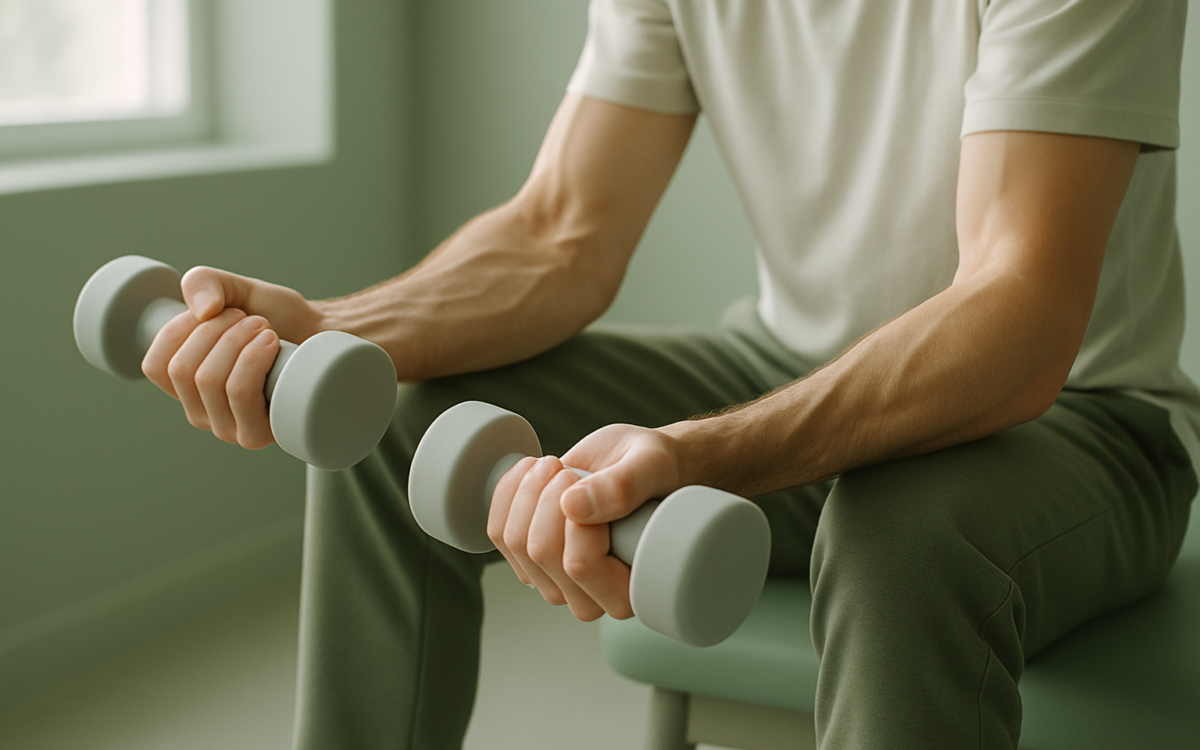
Forearm workouts are often overlooked in fitness routines, yet they play a critical role in enhancing grip strength and improving overall upper body performance. Whether you’re lifting, playing sports, or simply opening jars, strong forearms can make a significant difference. With just a pair of dumbbells, you can effectively target these muscles and achieve noticeable results. This guide presents a variety of full-body forearm workouts using dumbbells that can be easily incorporated into your fitness routine.
The Importance of Forearm Strength
Forearm workouts do more than just shape your arms; they also set a solid foundation for many physical activities. Strong forearms support grip strength, which is essential for weightlifting, climbing, and even daily tasks. Improved grip strength can aid in preventing injuries, enhancing performance in sports, and increasing the ability to perform various lifting techniques. According to the National Institutes of Health, grip strength is indicative of overall muscle strength and is associated with better functional abilities as we age.
Essential Techniques for Dumbbell Workouts
Before diving into specific exercises, it’s crucial to understand the basic techniques that will enhance your forearm workout with dumbbells:
- Proper Grip: Firmly grasp the dumbbells with an overhand grip, ensuring you engage your forearm muscles.
- Controlled Movement: Perform each exercise with slow, deliberate movements to maximize muscle engagement and minimize injury risk.
- Full Range of Motion: Ensure you use the full range of motion for each exercise to effectively target the forearm muscles.
Top Dumbbell Exercises for Forearm Strength
1. Wrist Curls
Wrist curls are a classic exercise targeting the forearm muscles. They effectively work the flexors that help you grip things tightly.
- Sit on a bench holding a dumbbell in one hand with your arm resting on your knee.
- With your palm facing up, curl the dumbbell up toward your forearm.
- Lower it back down slowly and repeat for 10-15 reps before switching sides.
2. Reverse Wrist Curls
These curls target the extensor muscles in your forearm, which can help balance out the strength you gain from wrist curls.
- Using the same setup as wrist curls, hold the dumbbell with your palm facing down.
- Lift the dumbbell toward your forearm, and slowly lower it back down.
- Perform 10-15 reps on each arm.
3. Hammer Curls
Hammer curls work both your biceps and forearm muscles, making them an excellent compound exercise.
- Stand with a dumbbell in each hand, palms facing your torso.
- Keep your elbows close to your body and curl the weights up.
- Lower them back down slowly and repeat for 10-12 reps.
4. Farmer’s Walk
This functional exercise enhances grip strength while also working the entire body.
- Grab a heavy dumbbell in each hand and stand up straight.
- Walk a set distance (about 30-50 feet) while maintaining a strong grip on the weights.
- Focus on keeping your shoulders back and core engaged.
5. Wrist Roller
If you have access to a wrist roller or can create a makeshift one, it’s amazing for building forearm endurance.
- Attach a weight to a rope and roll it up by twisting your wrists.
- Lower it down slowly and repeat.
Sample Forearm Workout Routine
To achieve effective forearm strength development, you can create a simple routine by incorporating the exercises mentioned above. Here’s a sample workout:
- Wrist Curls: 3 sets of 12-15 reps
- Reverse Wrist Curls: 3 sets of 12-15 reps
- Hammer Curls: 3 sets of 10-12 reps
- Farmer’s Walk: 3 sets of 30-50 feet
- Wrist Roller: 2-3 sets
Allow a day or two of rest between sessions to let your muscles recover.
When to See a Doctor
While forearm workouts are generally safe, it’s important to listen to your body. If you experience persistent pain, swelling, or discomfort during or after your workouts, consider consulting a healthcare professional. This may include a physical therapist or a physician specializing in sports medicine. They can help assess any underlying conditions and guide you on rehabilitation or necessary adjustments.
Conclusion
Incorporating dumbbell workouts into your fitness routine is an effective way to build forearm strength and improve your grip. A well-rounded approach to forearm training not only enhances your performance in various physical activities but also promotes overall functional fitness. Remember to train safely, focus on maintaining proper form, and give your muscles adequate rest. With consistent practice, you’ll likely notice improvements in both your forearm strength and overall functional capabilities.
