
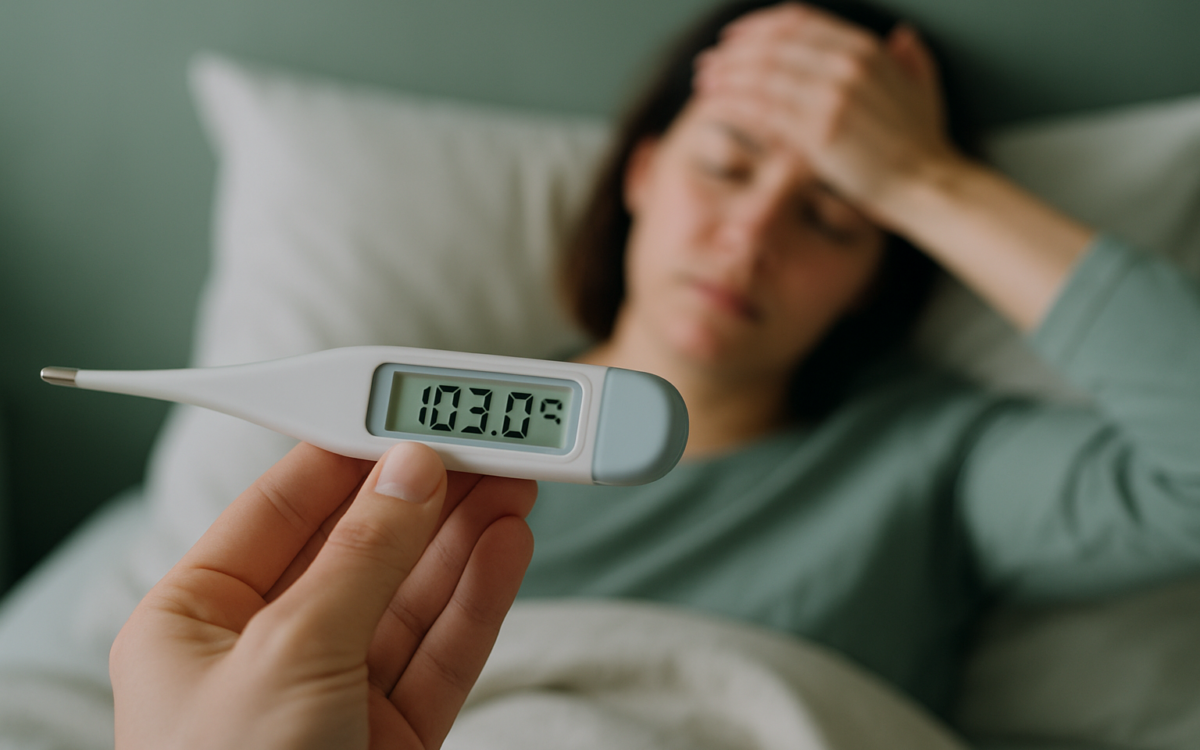
A fever, defined as a temporary increase in body temperature, often signals that your body is fighting an infection. A fever of 103°F (39.4°C) can be alarming, especially if it’s in a child or adult who may be experiencing other symptoms. Understanding the causes, symptoms, and care for a 103 fever is essential to managing it effectively.
What is a fever?
A fever is generally considered to be a body temperature above the normal range, which is typically around 98.6°F (37°C). While fever can be a discomforting experience, it’s usually a natural response to infection or illness. It occurs when the body releases substances called pyrogens, which signal the brain to increase body temperature.
Common causes of a 103 fever
- Infections: The most common cause of a 103 fever is an infection, including viral infections like the flu or common cold, and bacterial infections such as strep throat or urinary tract infections.
- Heat exhaustion: Prolonged exposure to high temperatures, especially during outdoor activities or heat waves, can raise body temperature significantly.
- Inflammatory conditions: Autoimmune diseases, such as rheumatoid arthritis or lupus, can provoke fevers due to systemic inflammation.
- Immunizations: Some vaccines can cause a temporary fever, which is usually mild and indicates the body is responding to the immunization.
Recognizing symptoms associated with 103 fever
A 103 fever may not be an isolated symptom. Other accompanying signs can help determine the underlying cause. Here are some common symptoms you might observe:
- Chills and shivering
- Excessive sweating
- Headaches
- Muscle aches and fatigue
- Loss of appetite
- Dehydration
- In children: irritability or lethargy
These symptoms can vary widely depending on age, the severity of the fever, and the underlying cause. Always consider the full clinical picture when assessing someone with a fever.
How to manage a 103 fever
Most fevers, including a fever of 103°F, can be managed at home. Here are some general tips for managing high fever:
- Stay hydrated: Drink plenty of fluids, such as water, herbal teas, and broths, to prevent dehydration.
- Rest: Ensure that you or the affected person gets plenty of rest to support the immune system.
- Dress comfortably: Wear light clothing and use light bedding to help regulate body temperature.
- Over-the-counter medications: Medications such as acetaminophen or ibuprofen can help lower fever and alleviate discomfort. Ensure to follow the dosage guidelines, especially for children.
- Seek international patient services: If you are traveling abroad and experience a high fever, consider utilizing international patient services for healthcare assistance and guidance.
While most fevers are not serious, it’s vital to monitor the situation closely. If symptoms worsen or do not improve, seeking medical attention is crucial.
When to see a doctor
Knowing when to seek medical attention for a 103 fever can be critical. Here are some guidelines:
- If a fever lasts for more than three days
- In infants three months or younger with a fever over 100.4°F (38°C)
- If the fever is accompanied by severe headache, stiff neck, rash, difficulty breathing, or persistent vomiting
- Significant lethargy, irritability, or confusion in the affected person
If you notice any of these symptoms, it’s advisable to consult your healthcare provider, who can assess the situation and recommend appropriate tests or treatments.
Conclusion
A 103 fever can be concerning, but it’s not always cause for alarm. Understanding the potential causes and symptoms associated with high fever can guide you in managing it effectively. Always err on the side of caution—if you’re unsure or if your symptoms worsen, reaching out to a healthcare provider is always a wise choice.
