
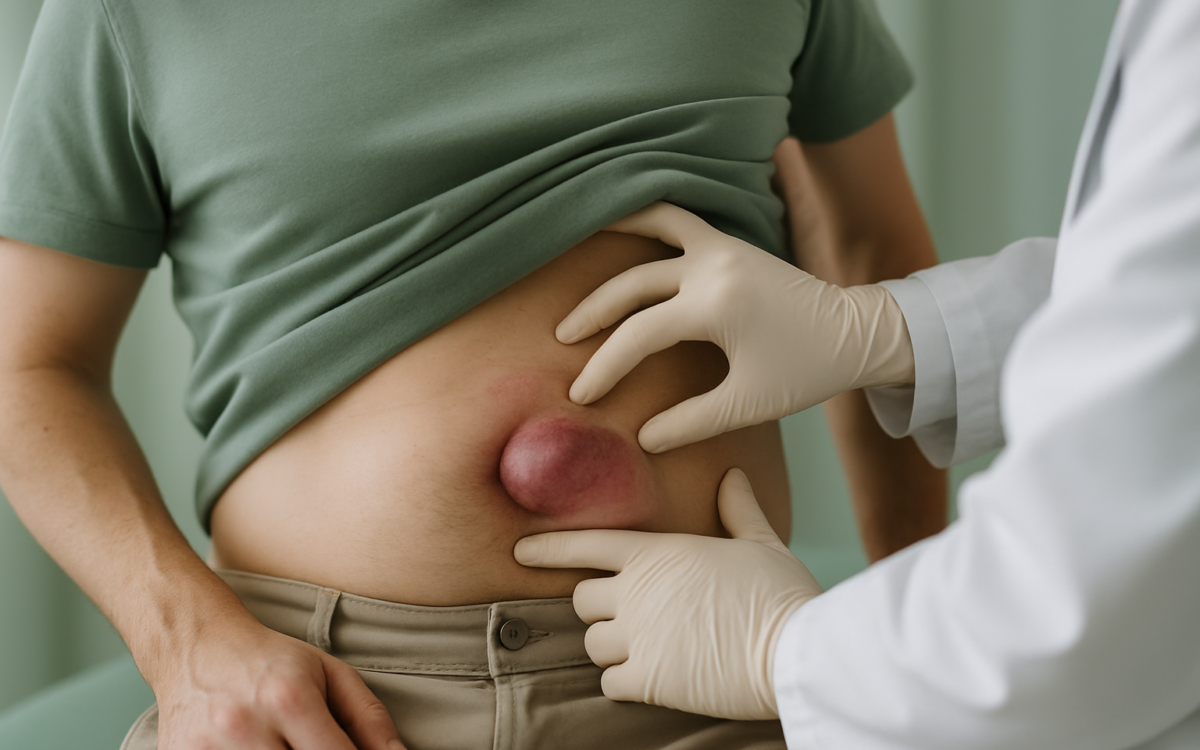
A strangulated hernia occurs when a portion of the intestine protrudes through a weak spot in the abdominal wall and becomes trapped. This condition can be serious and requires immediate medical attention. Understanding the causes, symptoms, and treatment options for strangulated hernias can help you recognize when prompt action is necessary.
What is a strangulated hernia?
A hernia is a condition where an organ or tissue pushes through an opening in the muscle or tissue that holds it in place. Common types of hernias include inguinal (groin), femoral, umbilical, and hiatal hernias. A strangulated hernia is a complication of these conditions. In this situation, the blood supply to the trapped tissue is cut off, which can lead to tissue death. This condition is critical and often requires surgery to prevent severe complications.
Causes and Risk Factors
Hernias can develop due to several factors, including:
- Weakness in the abdominal wall: This can be congenital (present at birth) or acquired through factors like obesity, heavy lifting, or previous surgeries.
- Increased pressure: Conditions that increase pressure in the abdominal cavity, such as chronic coughing, pregnancy, or constipation, can contribute to hernia development.
- Age: Older adults are more susceptible to hernias due to the weakening of muscles over time.
If a hernia is not treated promptly, it can become strangulated, resulting in severe health risks.
Recognizing Symptoms
Not all hernias are strangulated, but knowing the symptoms can help you identify a potentially dangerous situation. Common symptoms of a strangulated hernia may include:
- Severe abdominal pain: This pain may be sudden and sharp, often worsening over time.
- A bulge: You may observe a bulge under the skin, which can be painful to touch.
- Nausea and vomiting: This symptom usually arises from the body’s response to the obstruction.
- Changes in bowel movements: You may experience constipation or an inability to pass gas.
- Fever and chills: These can indicate an infection, signaling an urgent situation.
If you experience these symptoms, especially if they come on suddenly, it is crucial to seek medical attention immediately.
Diagnosis of a Strangulated Hernia
Doctors typically diagnose a strangulated hernia through a combination of physical exams and imaging tests. During a physical exam, a healthcare provider will check for any visible bulges and assess areas of tenderness. If necessary, imaging tests like ultrasound, CT scans, or MRIs can provide a clearer picture of the situation. These tests help healthcare providers determine the extent of the hernia and whether it is strangulated.
Treatment Options
Strangulated hernias are considered emergencies and often require surgical intervention. The main treatment option is typically surgery, which may involve:
- Reducing the hernia: The surgeon will attempt to push the trapped tissue back into place.
- Removing damaged tissue: If part of the intestine has died due to lack of blood flow, it must be removed.
- Hernia repair: The surgeon will often repair the weakened area of the abdominal wall to prevent future hernias.
In some cases, surgery can be performed through minimally invasive techniques, which may result in shorter recovery times and less pain. Recovery typically involves avoiding heavy lifting and strenuous activities for a period of time to allow healing.
Potential Complications
Without treatment, a strangulated hernia can lead to serious complications, including:
- Intestinal obstruction: The flow of food or waste can become blocked, which is not only uncomfortable but can also lead to further health issues.
- Necrosis: If the blood supply to a part of the intestine is cut off for too long, that section can die, leading to life-threatening infections.
- Sepsis: A severe infection can occur if bacteria enter the bloodstream, which can be fatal if not treated promptly.
Managing your risk factors and seeking treatment for hernias before they become strangulated is vital to avoiding these complications.
When to See a Doctor
While some hernias may be asymptomatic or present mild symptoms, you should see a doctor if you notice any unusual bulges, or if you experience severe pain, nausea, vomiting, or changes in bowel movements. These could be signs that your hernia is becoming strangulated.
If you have already been diagnosed with a hernia, regular monitoring is essential. Discuss any changes in symptoms with your healthcare provider to determine the right course of action.
Conclusion
Understanding strangulated hernias enables individuals to recognize symptoms and seek prompt medical care when needed. Quick action can prevent serious complications and ensure a proper recovery. If you suspect you have a hernia or are experiencing concerning symptoms, consult a healthcare professional for guidance. For more information, you can visit reputable sources such as Mayo Clinic or NIH.
