
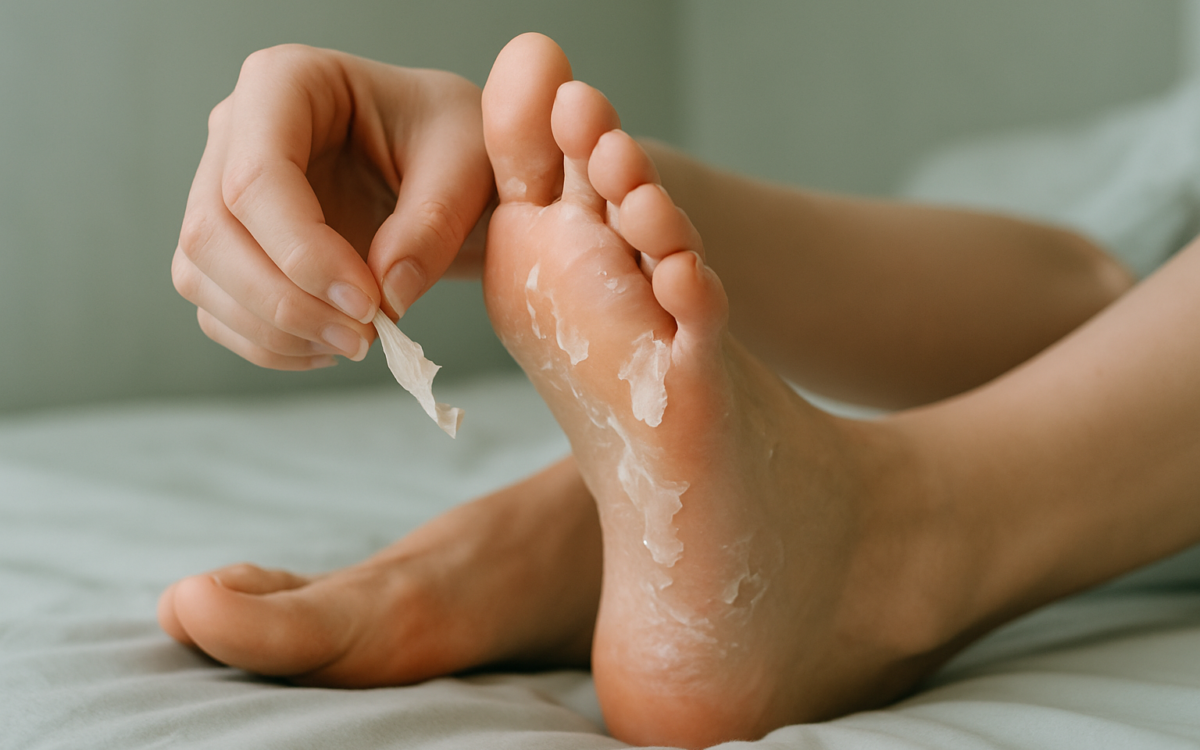
Have you recently noticed that the skin on your feet is peeling? It might seem like a minor issue, but it can be quite uncomfortable and may indicate underlying health problems. In this article, we’ll explore the various reasons why your feet might be peeling, how to address the issue, and when it’s time to see a doctor.
Common Causes of Peeling Feet
Peeling skin on the feet can be caused by a variety of factors. Understanding these can help you take the right steps towards treatment and prevention.
1. Fungal Infections
One of the most common reasons for peeling feet is a fungal infection, particularly athlete’s foot (tinea pedis). This condition thrives in warm, moist environments, making it a common problem for those who frequently wear closed shoes or go barefoot in communal places like swimming pools or gyms. Symptoms may include:
- Itching or burning sensation
- Cracked skin
- Red or flaky patches
Antifungal treatments are usually effective, but it’s essential to maintain proper foot hygiene to prevent recurrence.
2. Dry Skin
Sometimes, the peeling can simply result from dry, dehydrated skin. This may occur due to:
- Cold weather
- Hot showers
- Not moisturizing
To combat dryness, consider applying a moisturizing lotion or cream regularly to keep the skin hydrated. Look for products that contain urea or glycerin, as they are particularly effective in retaining moisture.
3. Eczema
Another potential cause of peeling skin on the feet is eczema, a chronic skin condition that leads to itchy, inflamed skin. Eczema can flare up due to environmental triggers such as allergens or irritants. In addition to peeling, symptoms of eczema can include:
- Redness
- Dry patches
- Intense itching
The management of eczema often involves the use of topical corticosteroids and other medications prescribed by a dermatologist.
4. Psoriasis
Psoriasis is another skin condition that can affect the feet. It is characterized by rapid skin cell turnover, which leads to thick, scaly patches. If your peeling is accompanied by silvery scales or plaque-like regions, you may want to consult a healthcare professional for evaluation. Treatments can range from topical medications to phototherapy.
5. Allergic Reactions
Allergic reactions to products like soap, lotion, or even laundry detergents can lead to peeling skin on your feet. If you’ve recently changed any of your personal care products, think about whether they might be the culprit. Symptoms of an allergic reaction typically include:
- Rashes
- Redness
- Swelling
In these cases, discontinuing the offending product and applying anti-itch creams can help alleviate symptoms.
6. International Treatment Perspectives
If you find that your peeling feet persist despite trying home remedies or over-the-counter treatments, exploring options for more specialized care may be beneficial. For example, acibademinternational.com offers various options for skin treatments that address advanced skin conditions, drawing on international medical expertise.
When to See a Doctor
While peeling skin can often be managed at home, there are times when it’s important to seek medical advice. Consider visiting a healthcare professional if:
- The peeling is accompanied by severe pain or swelling
- You notice signs of infection, such as pus or increased redness
- Your peeling skin is persistent and does not improve with over-the-counter treatments
- You develop additional symptoms like fever or worsening skin condition
Conclusion
Peeling skin on your feet can arise from a range of issues, from fungal infections to chronic skin conditions. By identifying the cause and taking appropriate actions, many cases of peeling can be resolved effectively. Remember, if you’re ever uncertain about the cause or how to treat your symptoms, it’s wise to consult a healthcare professional.
