
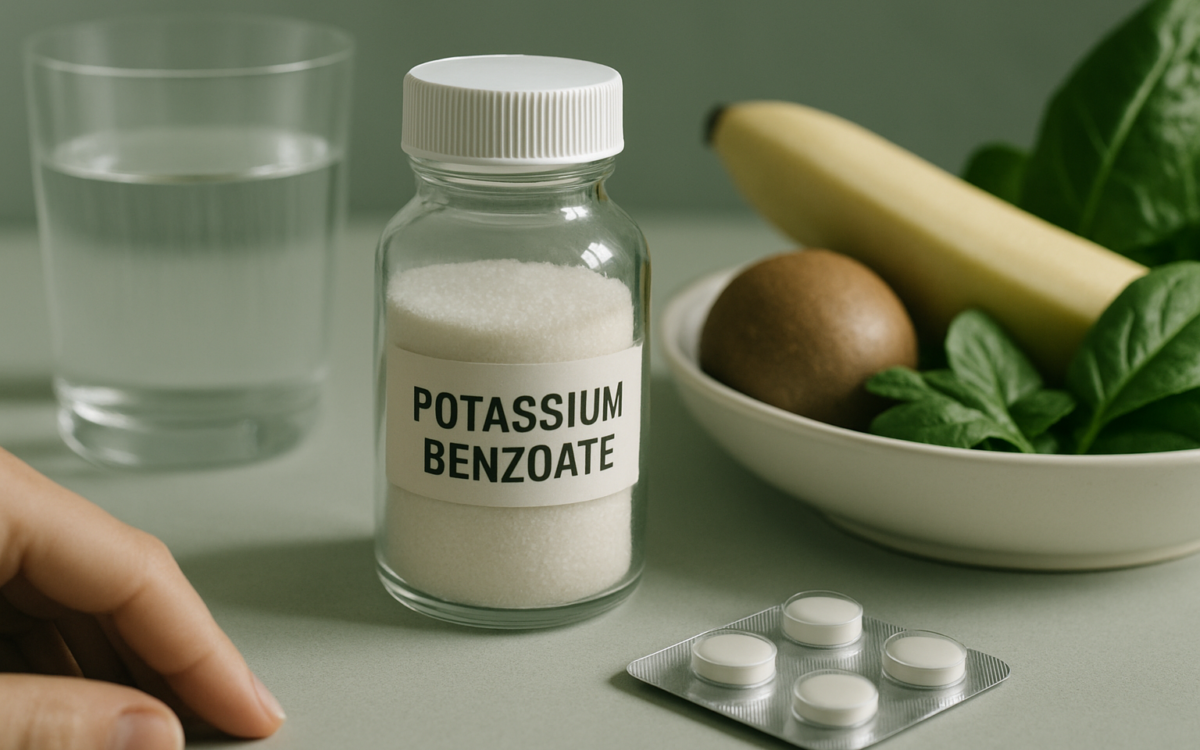
Potassium benzoate is an additive that you may find in various food and beverage products. Often used as a preservative, it helps extend the shelf life of many items by preventing the growth of harmful bacteria and fungi. However, like many food additives, potassium benzoate has sparked discussions about its safety and effects on health. In this article, we will explore what potassium benzoate is, its uses, potential health effects, and the regulations surrounding its use.
What Is Potassium Benzoate?
Potassium benzoate is the potassium salt of benzoic acid, a compound that occurs naturally in some fruits. In its pure form, it appears as a white, crystalline powder. While benzoic acid can be found in various foods, potassium benzoate is synthesized and commonly used in commercial food production.
How Is Potassium Benzoate Used?
Potassium benzoate primarily serves as a food preservative, added to many products to inhibit fungal and bacterial growth. You can often find it in:
- Soft drinks and fruit juices
- Condiments like ketchup and salad dressings
- Pickled foods
- Baked goods
In addition to food, potassium benzoate is used in cosmetics and personal care products to prevent spoilage. Its properties make it an effective choice for manufacturers looking to ensure the longevity of their products.
Safety and Regulatory Concerns
The safety of potassium benzoate has been evaluated by various health organizations. The Food and Drug Administration (FDA) recognizes it as safe when used within certain limits. According to the FDA, potassium benzoate can be used in food products at levels not exceeding 0.1% of the total weight of the food.
While potassium benzoate is generally considered safe, some studies have raised concerns. For instance, when combined with ascorbic acid (vitamin C) and exposed to light, it can form benzene, a known carcinogen. This reaction occurs in certain conditions, particularly in beverages stored in clear containers exposed to sunlight.
More research is needed to determine the long-term health effects of consuming foods containing potassium benzoate, especially in large quantities. For more detailed information, you can refer to resources from reputable health organizations like the National Institutes of Health (NIH) or the World Health Organization (WHO).
Potential Health Effects
For most people, consuming foods with potassium benzoate in moderation does not pose significant health risks. However, there are some considerations:
- Allergic Reactions: Some individuals may experience allergic reactions to potassium benzoate, leading to symptoms like skin irritation or respiratory issues.
- Hyperactivity in Children: There have been claims that certain food additives, including potassium benzoate, may contribute to hyperactivity in children. However, research results have been inconclusive.
- General Guidelines: As with any food additive, it’s wise to consume products containing potassium benzoate in moderation.
Alternatives to Potassium Benzoate
For those concerned about the health implications of potassium benzoate, there are several alternatives used in food preservation. Natural preservatives that can be considered include:
- Vinegar: A natural preservative that has been used for centuries.
- Salt: Often used in pickling, salt inhibits growth of bacteria.
- Essential Oils: Some essential oils, such as rosemary and thyme, have demonstrated antimicrobial properties.
- Fermentation: Naturally preserves foods while adding probiotic benefits.
These alternatives may provide the preservation benefits without the concerns linked to synthetic additives.
How to Read Product Labels
Understanding product labels is essential for monitoring your intake of additives like potassium benzoate. Here are some tips for navigating labels:
- Look for the ingredient list: Potassium benzoate should be listed if it is included in the product.
- Check the ‘Contains’ statement: This section might give additional context on the presence of allergens.
- Understand the context: Many products containing potassium benzoate also contain other preservatives—be aware of all additives.
Being informed empowers you to make better food choices, especially if you’re concerned about additives.
When to See a Doctor
If you experience any adverse reactions after consuming products containing potassium benzoate, such as skin rashes, digestive upset, or respiratory issues, consider seeking medical advice. This is particularly important if you have known allergies or are experiencing repeated reactions.
Conclusion
Potassium benzoate serves a vital role as a preservative in many foods, helping keep them safe and extend their shelf life. While generally safe for most consumers, it is essential to be aware of its potential health implications, especially in large quantities or specific combinations. Always read labels and consult with healthcare professionals if you have concerns about additives in your diet. Being informed can help you make choices that align with your health needs.
