
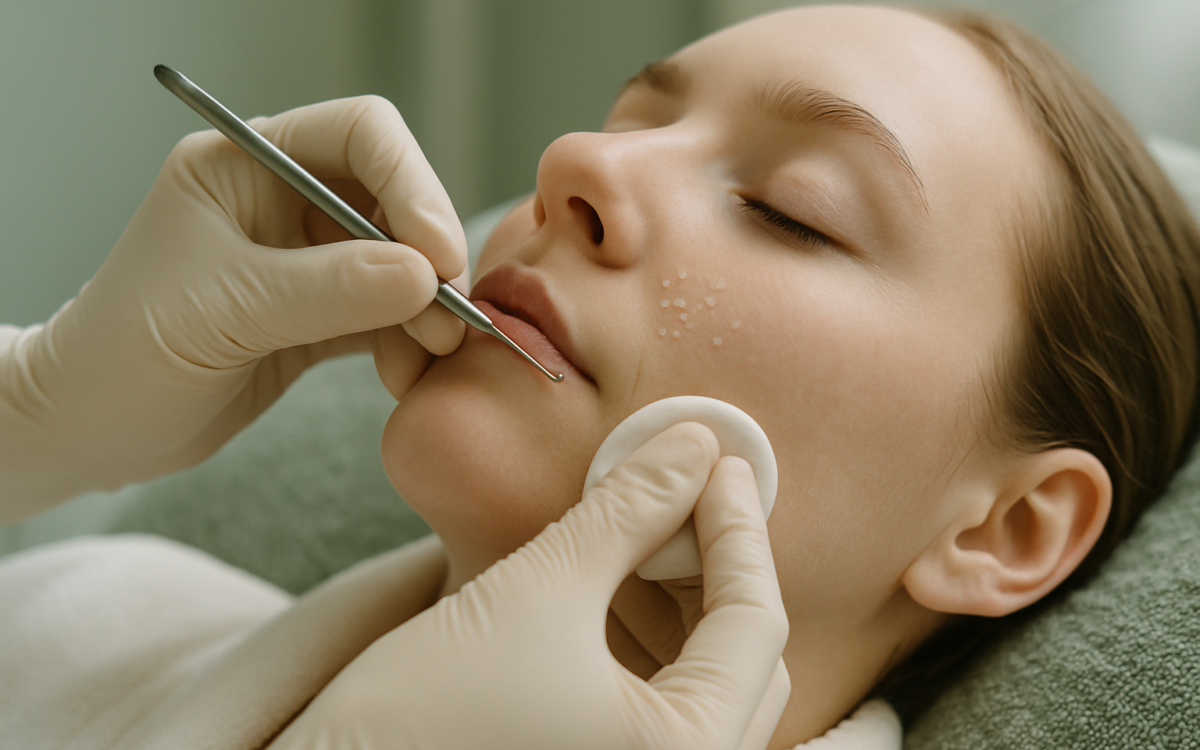
Milia are tiny, raised white bumps that can develop on your skin, often around the eyes, cheeks, and nose. They are harmless and form when keratin, a protein found in your skin, gets trapped beneath the surface. While milia can occur at any age, they are particularly common in newborns and usually disappear on their own. However, if you’re seeking solutions for persistent milia, there are several effective methods to consider. This article guides you through understanding milia, their treatment options, and preventive measures.
What causes milia?
Milia can arise from various factors and understanding these can help in prevention and treatment:
- Skin Damage: Injury to the skin from burns, rashes, or even sun exposure can lead to milia formation.
- Heavy Skincare Products: Using thick creams or oils that clog pores may contribute to milia, especially around the eyes.
- Genetics: If others in your family have milia, you might be more prone to developing them.
- Age: As we get older, skin cell turnover slows down, making milia more likely.
Home remedies to get rid of milia
For those looking to treat milia at home, there are several methods that can help:
Gentle Exfoliation
Exfoliating your skin can help remove dead skin cells and prevent clogging. Look for gentle exfoliants such as:
- Salicylic Acid: This beta hydroxy acid helps exfoliate the skin and can penetrate pores.
- Lactic Acid: A milder option, this alpha hydroxy acid can hydrate the skin while promoting cell turnover.
Always start slow, using these products a few times a week to avoid irritation.
Topical Retinoids
Topical retinoids, which are derivatives of Vitamin A, can help clear milia by promoting skin cell turnover. These products can be found over the counter or prescribed by a healthcare provider. However, be cautious, as retinoids can cause irritation in some individuals.
Natural Remedies
Some natural remedies may also help reduce the appearance of milia, although evidence supporting their effectiveness varies:
- Warm Compress: Applying a warm compress may help soften the skin and encourage drainage.
- Honey: Known for its antibacterial properties, honey can soothe the skin.
- Aloe Vera: This plant is known for its healing properties and can be applied directly to the skin.
Professional treatments for milia
If home remedies do not yield results, professional treatment might be a good option. Some common procedures include:
Extraction
A dermatologist can perform a simple extraction to remove the milia using a sterile needle or a small blade. This procedure is quick and usually does not require anesthesia.
Chemical Peels
Chemical peels involve applying a chemical solution to the skin, which exfoliates the upper layers, encouraging new skin growth. This treatment can reduce the appearance of milia while rejuvenating the skin.
Laser Therapy
For more stubborn cases, laser therapy can effectively break down the keratin in milia. This technique is precise and targets only the affected area, helping to minimize skin damage.
Preventing milia
Prevention is always better than treatment. Here are some tips to help avoid the formation of milia:
- Use Non-Comedogenic Products: Opt for skincare and makeup products labeled as non-comedogenic, which are less likely to clog pores.
- Regular Exfoliation: Incorporate regular but gentle exfoliation into your skincare routine to promote cell turnover.
- Sun Protection: Protect your skin from sun damage using broad-spectrum sunscreen to prevent skin problems.
- Hydration: Keep your skin hydrated to support its natural barrier and improve its ability to shed dead skin cells.
When to see a doctor
While milia are usually harmless, consult your dermatologist if:
- The bumps persist despite treatment.
- They accompany other skin changes.
- You are unsure whether the bumps are milia or another skin condition.
Conclusion
Milia can be frustrating, but understanding their causes and exploring treatment options can help you achieve smoother, clearer skin. Whether opting for home remedies or seeking professional help, the key is to maintain a consistent skincare routine that keeps your skin healthy and hydrated. Remember, if you have concerns or questions, it’s always best to consult your healthcare provider for personalized advice.
