
Back pain can be a nagging and persistent issue for many, affecting daily activities and overall well-being. Fortunately, incorporating yoga into your routine can provide gentle relief and help improve flexibility and strength, which are essential for a healthy back. In this article, we’ll explore the best yoga poses tailored for back pain relief, helping you move more freely and comfortably.
The Importance of Mindful Movement
Understanding the connection between movement and discomfort is crucial. Yoga encourages mindful movement, allowing you to cultivate awareness of your body and its limitations. This mindfulness helps prevent further injuries while also promoting relaxation, which can reduce the tension that often exacerbates back pain.
Gentle Poses to Alleviate Back Pain
Here are some effective yoga poses to help relieve back pain:
1. Cat-Cow Stretch
This gentle flowing movement helps mobilize the spine and stretches the back muscles. Start on your hands and knees, aligning your wrists under your shoulders and your knees under your hips.
- Inhale as you arch your back, dropping your belly towards the mat (Cow).
- Exhale as you round your spine, tucking your chin to your chest (Cat).
Repeat for 5–10 cycles, moving slowly and mindfully.
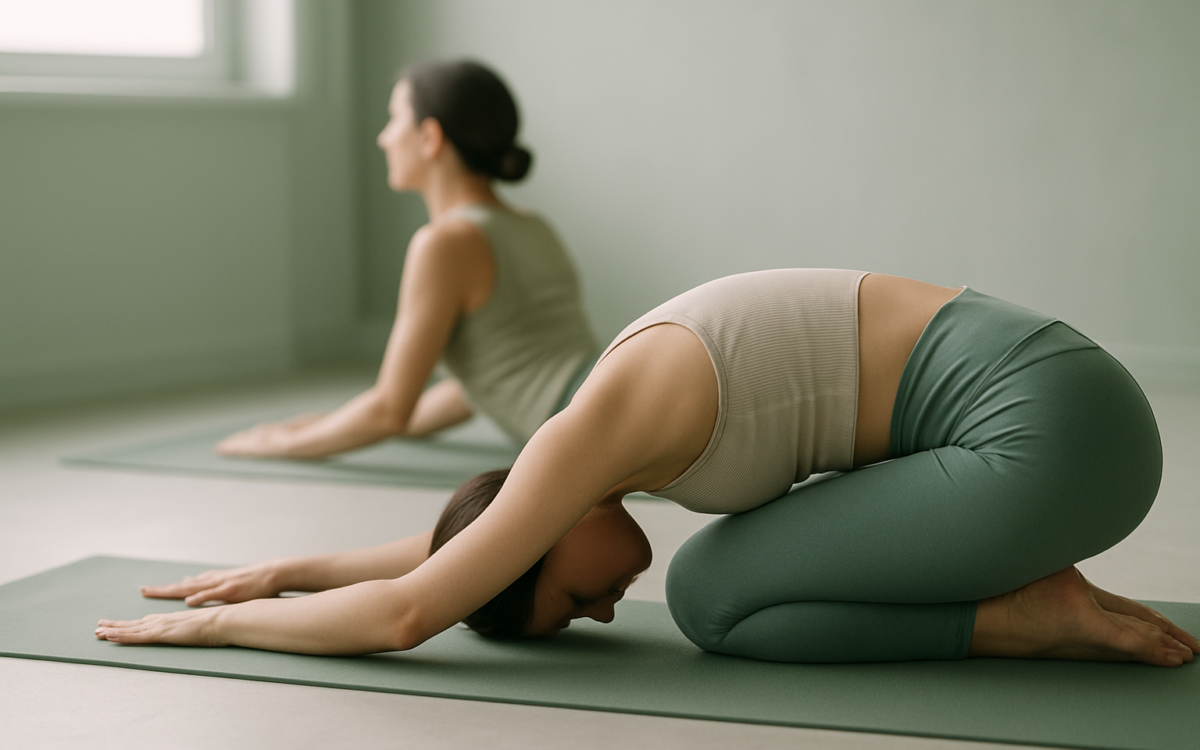
2. Child’s Pose
This restorative pose stretches the lower back and promotes relaxation. Begin on your hands and knees. Spread your knees wide apart while keeping your big toes touching. Sit back on your heels and reach your arms forward, resting your forehead on the mat.
- Hold this pose for 1–3 minutes, relaxing your neck and shoulders.
Focus on your breath, allowing each exhale to release tension in your back.
3. Downward-Facing Dog
This classic pose stretches the spine and strengthens the back. Start on hands and knees, tuck your toes, and lift your hips up and back, forming an inverted V-shape. Press your heels towards the floor.
- Keep your spine straight and your head between your arms, holding for 5-10 breaths.
If your hamstrings are tight, keep your knees slightly bent to ease the stretch.
4. Seated Forward Bend
This pose encourages relaxation while stretching your lower back. Sit on the floor with your legs extended straight in front of you. Inhale and reach your arms overhead, then exhale as you hinge at the hips and reach for your feet or shins.
- Maintain a straight back as you bend forward, holding for 30 seconds to 1 minute.
Focus on deep breathing, allowing your back to release any tightness.
5. Reclined Spinal Twist
This gentle twist helps relieve pain and tension in the spine. Lie on your back and draw your knees to your chest. Gently lower your knees to one side while keeping your shoulders on the mat. Extend your arms to the side and turn your head in the opposite direction.
- Hold for 30 seconds to 1 minute, then switch sides.
This pose helps improve spinal mobility and can promote relaxation.
International Treatment Perspectives
If you’re considering seeking treatment options beyond yoga, many international healthcare centers offer specialized programs for back pain management. One such facility is Acibadem International, known for its integrative approach that combines traditional therapies with complementary practices, including yoga and physical therapy.
Creating a Consistent Practice
For lasting relief, it’s important to develop a consistent yoga practice. Aim for 15–30 minutes a few times a week, incorporating a variety of poses to strengthen your back, improve flexibility, and promote relaxation. Always listen to your body; if something doesn’t feel right, it’s perfectly okay to back off or skip a pose.
When to See a Doctor
If your back pain persists or worsens despite trying yoga and other home remedies, it may be time to consult a healthcare professional. Signs to watch for include:
- Pain that radiates down your legs
- Loss of bladder or bowel control
- Difficulty standing or walking
- Severe pain following an injury
These symptoms could indicate a more serious condition that requires medical attention.
Conclusion
Incorporating gentle yoga poses into your routine can provide relief from back pain while enhancing your overall physical and mental well-being. However, ensure that you listen to your body and consult a healthcare provider if you have persistent pain. With the right approach, you can move toward a more comfortable and active life.
