
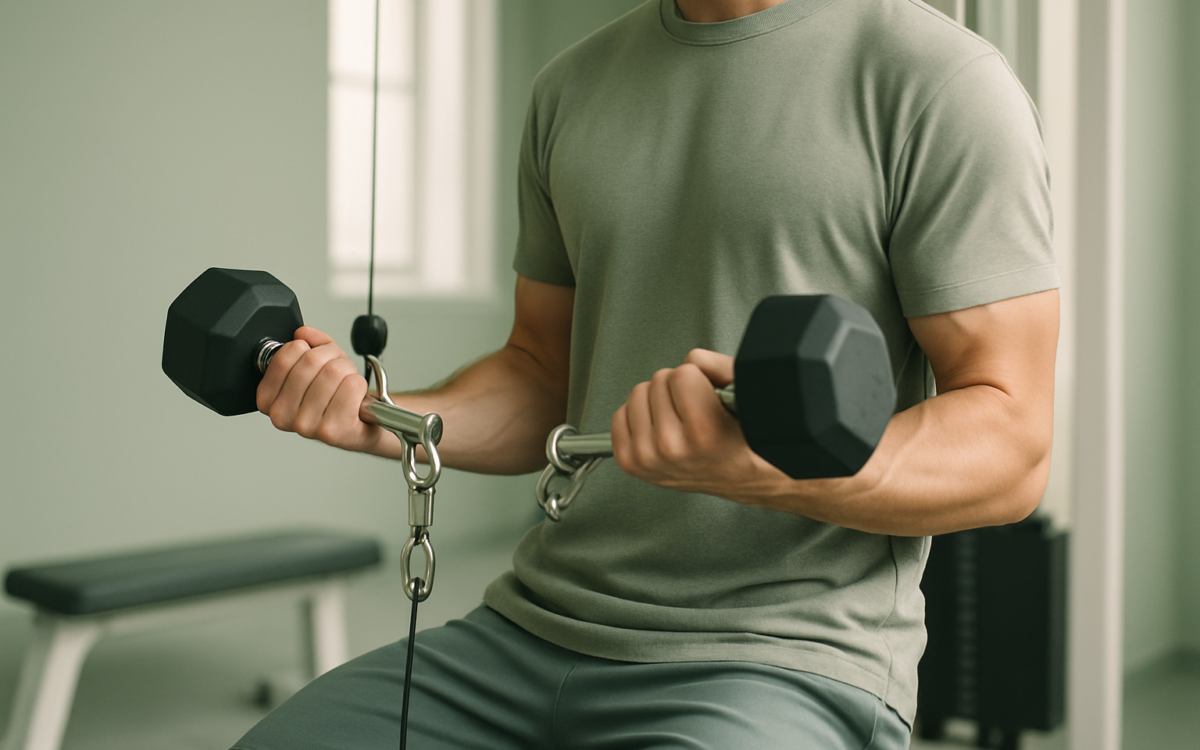
When it comes to building strong arms, many fitness enthusiasts turn to traditional dumbbell curls as a staple exercise. However, a powerful alternative that deserves your attention is the cable dumbbell curl. This variation combines the benefits of cables and dumbbells, allowing for a unique resistance experience that can elevate your training.
What are cable dumbbell curls?
Cable dumbbell curls involve using a cable machine in conjunction with dumbbells to target the biceps. Unlike standard dumbbell curls that rely solely on gravity, incorporating cables provides constant tension throughout the movement. This additional aspect can lead to more effective muscle engagement and greater results.
Benefits of cable dumbbell curls
Opting for cable dumbbell curls can offer multiple benefits:
- Constant tension: With cables, your biceps remain under tension at all times, allowing for a more effective workout.
- Stability: The cable machine provides stability that can help beginners maintain proper form and target specific muscles more efficiently.
- Variety: You can easily adjust the weight and vary the angle of the exercise, which can help prevent workout plateaus.
- Reduced risk of injury: Using cables may lead to a lower risk of strain, as the constant tension can lead to smoother movements compared to free weights.
How to perform cable dumbbell curls
To get started with cable dumbbell curls, follow these simple steps:
- Setup: Attach the cable handle to the lowest pulley on the cable machine. Adjust the weight to a suitable resistance for your fitness level.
- Choose your weight: Select two dumbbells that feel comfortable yet challenging for you.
- Take your position: Stand facing the cable machine with your feet hip-width apart. Grasp the cable handle with one hand and hold a dumbbell in the other hand at your side.
- Begin the curl: Initiate the movement by curling the dumbbell up towards your shoulder while pulling the cable handle towards your shoulder simultaneously.
- Control the descent: Slowly lower both the dumbbell and the cable handle back to the starting position, ensuring control throughout the motion.
- Repeat: Perform the exercise for a set number of repetitions and then switch sides, ensuring balanced development in both arms.
Common mistakes to avoid
Progressing with cable dumbbell curls can lead to amazing strength gains, but it’s essential to avoid pitfalls that can hinder your results or even cause injury:
- Using too much weight: Start with a weight that allows you to maintain proper form throughout the exercise.
- Rushing through repetitions: Focus on controlled movements to ensure each repetition targets the muscles effectively.
- Neglecting the other arm: Ensure you balance your workout by completing equal repetitions on both arms.
Integrating cable dumbbell curls into your routine
To maximize the benefits of cable dumbbell curls, consider integrating them into your existing workout program. You can include them as part of an arm day or upper body split. Here are a few tips:
- Pair with triceps exercises: Include triceps exercises like tricep pushdowns to create a complete arm workout.
- Vary your grip: Experiment with different grips, such as underhand or overhand, to target various parts of the biceps.
- Mind the tempo: Incorporate different tempos to increase intensity. For example, consider pausing at the top of the curl to increase time under tension.
If you’re considering strength training while traveling or if you seek specialized techniques in fitness, international options, such as treatment in Turkey, may offer unique methods and insights.
Tracking progress and safe practices
As with any exercise routine, tracking your progress can help you stay motivated. Keep a journal or use fitness apps to log weights, repetitions, and your overall feelings during workouts. Remember that it’s normal to experience some muscle soreness when trying new exercises, but pay attention to sharp pains or discomfort, which may be signs of injury.
When to see a doctor
If you experience persistent pain, swelling, or unusual discomfort during or after performing cable dumbbell curls, it’s important to seek medical advice. Maintaining the health and safety of your body should always be a priority. Consult your doctor if you have any concerns regarding your fitness regimen or prior injuries.
Conclusion
Cable dumbbell curls offer a fantastic way to boost your bicep strength and overall upper body workout. With the right technique and consistent practice, you can enhance your performances while minimizing the risk of injury. Remember, combining various exercises and maintaining a balanced routine is key to achieving your fitness goals.
