
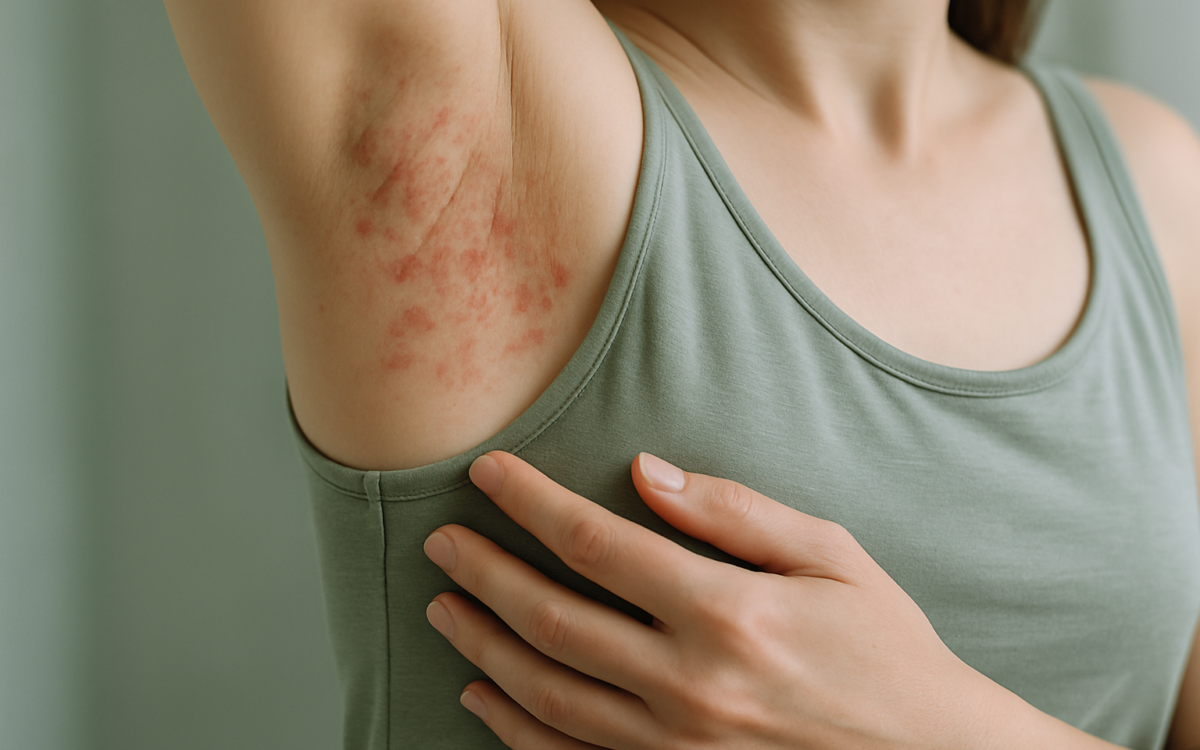
Have you ever experienced an uncomfortable rash in your armpit? You’re not alone. An armpit rash can occur for several reasons and can be a source of irritation and concern. Understanding the causes and treatments available can help you manage this condition effectively.
What Causes Armpit Rash?
Armpit rashes can be triggered by a variety of factors. Here are some of the most common causes:
- Contact Dermatitis: This is often caused by an allergic reaction to products applied to the skin. Common culprits include deodorants, laundry detergents, or soaps.
- Heat Rash: When sweat gets trapped in the pores, it can lead to a rash, especially in hot, humid environments.
- Fungal Infections: Conditions like candida or tinea can occur in warm, moist areas like the armpits, leading to itchy bumps and redness.
- Eczema: This chronic skin condition can flare up in the armpit region, causing dryness, redness, and itching.
- Bacterial Infections: Bacteria can multiply in sweaty armpits, sometimes leading to folliculitis or other infections.
Signs and Symptoms of Armpit Rash
Recognizing the symptoms of an armpit rash is key to addressing it. Common signs include:
- Redness or discoloration of the skin
- Itching or burning sensations
- Swelling or inflammation
- Rough, dry patches
- Bumps or blisters in severe cases
It’s important to note that symptoms may vary depending on the underlying cause. For instance, fungal infections might present with a more scaly appearance compared to contact dermatitis.
Home Remedies and Over-the-Counter Treatments
For mild cases of armpit rash, several home remedies and over-the-counter treatments may provide relief:
- Cool Compress: Applying a clean, cool cloth can help soothe inflammation and reduce itching.
- Moisturizers: Using unscented, hypoallergenic moisturizers can prevent dryness, especially for conditions like eczema.
- Hydrocortisone Cream: This over-the-counter cream can reduce inflammation and itchiness from rashes.
- Antifungal Creams: For fungal rashes, topical antifungal treatments can effectively eliminate the infection.
Always do a patch test with any new product to ensure it doesn’t worsen your rash.
When to Seek Professional Treatment
While many armpit rashes can be treated at home, some situations require professional medical advice. Consider consulting your healthcare provider if:
- The rash is severe or doesn’t improve with home treatment.
- You notice signs of infection, such as pus, increased pain, or fever.
- The rash spreads to other parts of your body.
- You experience significant discomfort that interferes with daily activities.
International Perspectives on Treatment Options
If you find yourself needing treatment while abroad, it’s essential to consider local healthcare options. Countries often have different approaches to skin conditions, and knowing where to go can make all the difference. For instance, international patient services can help connect you with dermatologists experienced in treating conditions like armpit rashes in various healthcare systems.
Preventing Future Rashes
Preventing future rashes is easier than you might think. Here are some helpful tips:
- Wear loose-fitting clothing to allow your skin to breathe.
- Choose hypoallergenic skincare products to avoid allergic reactions.
- Keep your armpits clean and dry, and change out of sweaty clothes promptly.
- Be mindful of any allergens that might irritate your skin.
Conclusion
An armpit rash can be caused by many factors, with each requiring different treatment options. Understanding the underlying causes and being aware of your symptoms can help you take control of your skin health. If your rash persists or worsens, don’t hesitate to seek medical advice to ensure appropriate care.
