
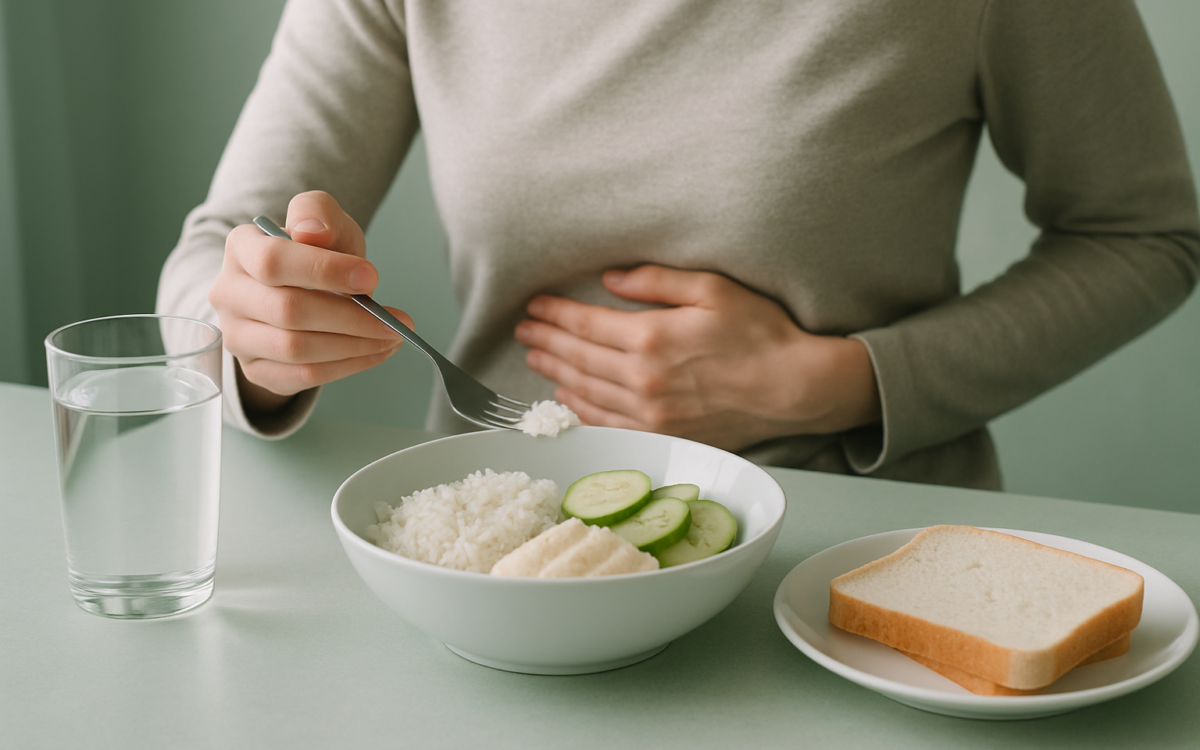
When your stomach is upset, it can be uncomfortable to think about food. You may be dealing with nausea, cramping, or even diarrhea, and your favorite meals feel far from appealing. In these moments, bland foods can be your best friend. Easy on the stomach and palatable, they are a great way to nourish yourself without causing additional distress.
What is bland food?
Bland food is simply food that is low in fiber and fat and spicy flavors. It is gentle on the stomach and can help ease digestive upset. When your tummy is upset, your body may struggle to process complex flavors and heavy meals. Instead, bland foods provide essential nutrients without overwhelming your system.
Benefits of eating bland foods
Eating bland foods during times of digestive distress offers several benefits, including:
- Reduced symptoms: Bland foods can minimize irritation in the stomach and intestines, which may help lessen the severity of symptoms like nausea and cramps.
- Easier digestion: Lower in fat and fiber, these foods are usually easier for your digestive system to break down.
- Nutritional support: Even though their flavors are mild, bland foods can still offer essential nutrients your body needs for recovery.
Common bland foods for an upset tummy
Here’s a list of common bland foods that are generally well-tolerated:
- Rice: Plain white rice is easy to digest and can help bind stool. Brown rice, while more nutritious, is higher in fiber and may be harder to digest when your stomach is upset.
- Bananas: Soft and naturally sweet, bananas are also high in potassium, which may be depleted during episodes of vomiting or diarrhea.
- Applesauce: Opt for unsweetened applesauce for a gentle source of vitamins and fiber in a form that is easier to digest.
- Toast: Plain white toast is a classic choice. It’s low in fat and won’t irritate your stomach like buttered or whole grain bread can.
- Boiled potatoes: Prepare them without skin and seasoning for a comforting food that’s high in carbohydrates and energy.
- Pasta: Plain, cooked pasta can be soothing and filling if you’re feeling up to it.
- Clear broth: Chicken or vegetable broth can provide hydration and essential nutrients while keeping your stomach happy.
Foods to avoid during digestive trouble
While bland foods are beneficial, it’s also important to know which items to steer clear of. Some foods can aggravate your stomach further, and they include:
- Spicy foods: Hot seasonings can irritate the stomach lining.
- Fatty foods: Fried and greasy foods can be hard on your digestive system.
- Dairy products: Milk, cheese, and cream can worsen symptoms for some people.
- Caffeinated beverages: Coffee and sodas may upset your stomach.
- Alcohol: It can lead to further irritation and dehydration.
When to introduce other foods
As symptoms improve, you may wonder when you can start reintroducing other foods. If you feel ready, you can try adding in gentle foods gradually. Foods like oatmeal, plain yogurt, or steamed veggies can be good options. However, watch for any return of symptoms, and take note of how your body responds to each new food.
Listening to your body is key. If you feel discomfort, go back to your bland diet until you stabilize. Hydration is also crucial, so make sure to drink water or clear broth regularly.
When to see a doctor
While many cases of an upset stomach can be managed at home with bland foods, there are times when you should seek medical advice. You should consult a healthcare professional if you:
- Experience severe abdominal pain
- Have persistent vomiting or diarrhea lasting more than 24 hours
- Notice blood in your stool or vomit
- Start to feel dizzy or dehydrated
- Are unable to keep any food or liquids down
It’s important to listen to your body and seek help when necessary. You can learn more about digestive health and when to seek help on resources like the National Institutes of Health or the Mayo Clinic.
Conclusion
Managing an upset stomach can be challenging, but incorporating bland foods into your diet can provide relief and comfort. From rice to applesauce, these options are easy to digest and can help stabilize your system. Remember to avoid spicy, fatty, or rich foods while allowing your body to recover. And always consult with your doctor if symptoms persist or worsen. Your health is paramount, and with the right care, you’ll be back on the road to feeling better in no time!
