
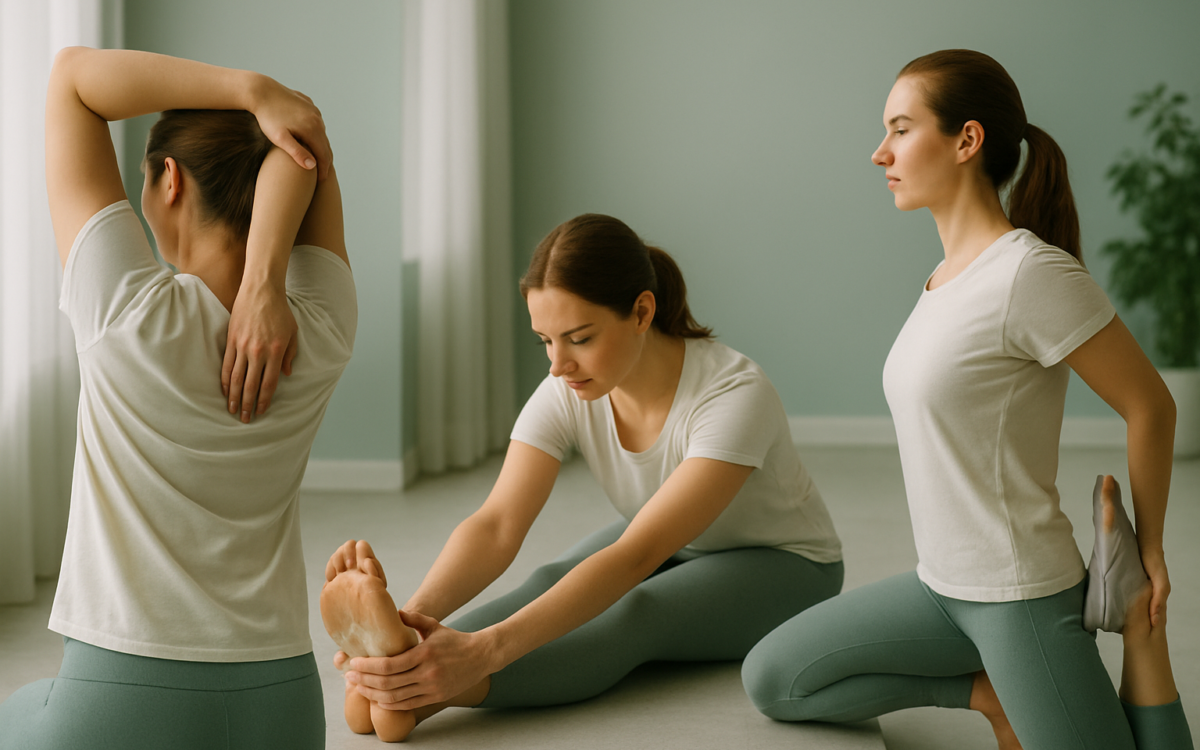
Stretching is a key element of a well-rounded fitness routine, yet many people underestimate its importance. Static stretching, in particular, is a practice that can enhance flexibility, improve range of motion, and reduce the risk of injuries. In this article, we’ll explore various static stretching examples, their benefits, and how to incorporate them into your daily routine.
What Is Static Stretching?
Static stretching involves holding a stretch for a prolonged period, usually between 15 to 60 seconds, without bouncing or moving. This type of stretching helps to elongate muscles and can gradually increase flexibility. It’s best performed after workouts when muscles are warm and more receptive to stretching.
Benefits of Static Stretching
Engaging in regular static stretching can offer numerous benefits:
- Increased Flexibility: By holding stretches, you can improve your muscle’s flexibility over time, making activities easier.
- Improved Posture: Stretching helps lengthen tight muscles which can lead to better alignment and posture.
- Enhanced Circulation: Stretching improves blood flow to muscles, which can aid recovery and decrease soreness.
- Reduced Risk of Injury: Incorporating static stretches can help prevent muscle strains and other injuries during physical activities.
Static Stretching Examples for Different Muscle Groups
Here are some effective static stretching examples for different parts of the body:
1. Hamstring Stretch
To stretch your hamstrings, follow these steps:
- Sit on the floor with your legs extended straight in front of you.
- Reach towards your toes, keeping your knees straight. Hold the stretch when you feel a gentle pull in your hamstrings.
- Hold for 15-30 seconds and breathe deeply.
2. Quadriceps Stretch
To stretch your quadriceps, try this:
- Stand upright and bend your right knee, bringing your heel towards your glutes.
- Grab your ankle with your right hand, keeping your knees close together.
- Hold the position for 15-30 seconds, feeling the stretch in the front of your thigh. Repeat with the left leg.
3. Shoulder Stretch
This stretch helps with shoulder flexibility:
- Bring your right arm across your body at shoulder height.
- Use your left arm to gently pull the right arm closer to your chest.
- Hold for 15-30 seconds and switch to the other side.
4. Calf Stretch
To target the calf muscles:
- Stand facing a wall or a sturdy object. Place your hands against it.
- Step back with one leg, while keeping the heel on the ground; bend the front knee.
- Hold the stretch for 15-30 seconds and switch legs.
5. Side Stretch
This stretch can help your obliques and torso:
- Stand tall with your feet shoulder-width apart.
- Raise your right arm overhead and lean to the left side, feeling the stretch along your right side.
- Hold for 15-30 seconds before switching sides.
Incorporating Static Stretching into Your Routine
To effectively add static stretching to your fitness routine, consider these tips:
- Warm-Up First: Always warm up your muscles with light aerobic activity before stretching to reduce the risk of injury.
- Cool Down: Perform static stretches after your workout when your muscles are warm. This is an optimal time to enhance flexibility and relaxation.
- Be Consistent: Aim to include static stretching in your routine at least 3-4 times a week for optimal benefits.
When to See a Doctor
If you experience persistent pain or discomfort while stretching, or if you have a previous injury that is aggravated by stretching, it’s important to consult a healthcare professional. While stretching can be beneficial, it’s essential to listen to your body and avoid pushing through pain. For more guidance, consider visiting reputable sources such as the National Institutes of Health or the Centers for Disease Control and Prevention.
Conclusion
Static stretching is a simple yet effective way to enhance flexibility, support recovery, and prevent injuries. By incorporating various static stretching examples into your fitness routine, you can enjoy the many benefits it brings to your body and overall well-being. Remember, consistency is key, and always listen to your body for the best results!
