
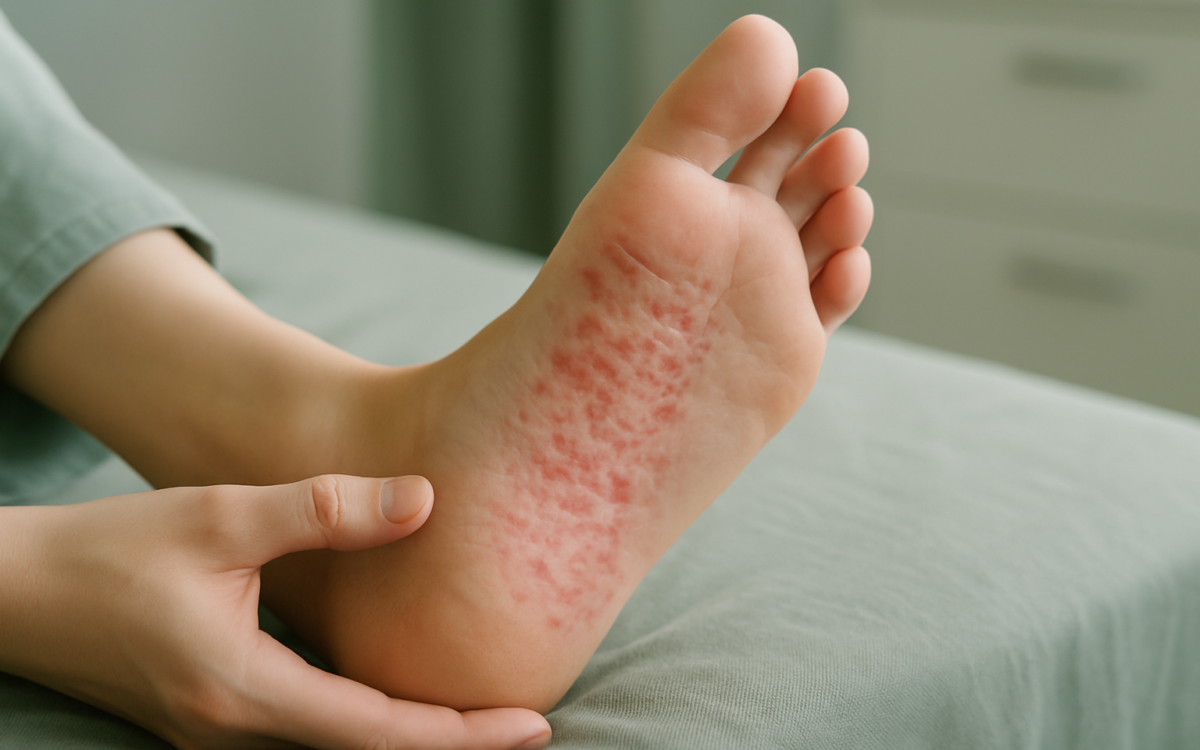
Foot rashes can be uncomfortable, itchy, and concerning. If you have noticed a rash on your feet, you are not alone. Many people experience this issue at some point in their lives. Foot rashes can arise for various reasons, including skin conditions, allergies, and infections. Understanding the potential causes, treatments, and when to seek medical attention is crucial.
Common Causes of Foot Rashes
Foot rashes can occur for many reasons, and recognizing the underlying cause is essential for effective treatment. Here are some of the most common causes:
- Contact Dermatitis: This is an allergic reaction that can develop after coming into contact with irritants such as soaps, detergents, or even certain materials in shoes.
- Fungal Infections: Conditions like athlete’s foot (tinea pedis) are caused by fungi, leading to itchy, red, and scaly rashes between the toes and on the soles of the feet.
- Eczema: This chronic skin condition can manifest as red, itchy patches on various body parts, including the feet. Eczema may flare up due to stress, allergens, or irritants.
- Psoriasis: Another chronic skin condition, psoriasis causes thick, red patches covered with white scales, which can appear on the feet.
- Heat Rash: Occurs in hot, humid conditions, leading to tiny red bumps on the skin, particularly in areas where sweat accumulates.
Identifying the Symptoms
The symptoms of a foot rash may vary depending on its cause. Here are some common signs to look out for:
- Itching or burning sensation
- Redness or discoloration
- Peeling or flaking skin
- Blisters or bumps
- Cracked or dry skin
If your foot rash is persistent or worsening, it’s important to consult a healthcare provider.
Treatment Options
Treating a foot rash often depends on its underlying cause. Here are some general treatment options:
- Corticosteroid Creams: Over-the-counter (OTC) creams may help reduce inflammation and relieve itching associated with dermatitis or eczema.
- Antifungal Medications: For fungal infections like athlete’s foot, antifungal creams or oral medications may be necessary.
- Antihistamines: Taking antihistamines can help manage allergic reactions and reduce itching.
- Moisturizers: Keeping the skin well-moisturized can prevent cracking and further irritation, especially for eczema or dry skin.
Home Remedies for Relief
In addition to medical treatments, several home remedies may provide relief from foot rashes:
- Soaking: Soaking your feet in cool water or a baking soda bath can alleviate itching and irritation.
- Oatmeal Baths: Colloidal oatmeal can help calm inflamed skin when added to a warm bath.
- Cold Compress: Applying a cold compress can reduce inflammation and soothe itchiness.
- Avoid Irritants: Wear breathable shoes and socks made from natural fibers to decrease irritation.
International Perspectives on Treatment
In some cases, individuals may seek specialized treatment for foot rashes while traveling abroad. Countries like Turkey have advanced healthcare options for treating skin conditions. Hospitals such as those found at acibademinternational.com offer dermatological services that can help diagnose and treat various skin issues, including rashes. Travel can expose you to different allergens and irritants, and getting care in a foreign land might make a significant difference in your comfort and recovery.
When to See a Doctor
While many foot rashes can be treated at home or with over-the-counter solutions, there are specific situations where you should see a healthcare professional:
- If the rash is persistent and does not respond to home remedies.
- In cases of severe pain or discomfort.
- If you notice signs of infection, such as increased redness, swelling, or discharge.
- For widespread rashes that appear to affect multiple areas of the body.
Conclusion
Foot rashes can result from a variety of causes, and identifying the underlying issue is key to finding effective relief. With appropriate treatment options available, most foot rashes can be managed successfully. Remember, if you have any concerns or the rash worsens, consulting a healthcare provider is always wise. Taking proactive steps for better foot health can help you step confidently, whatever your journey holds.
