
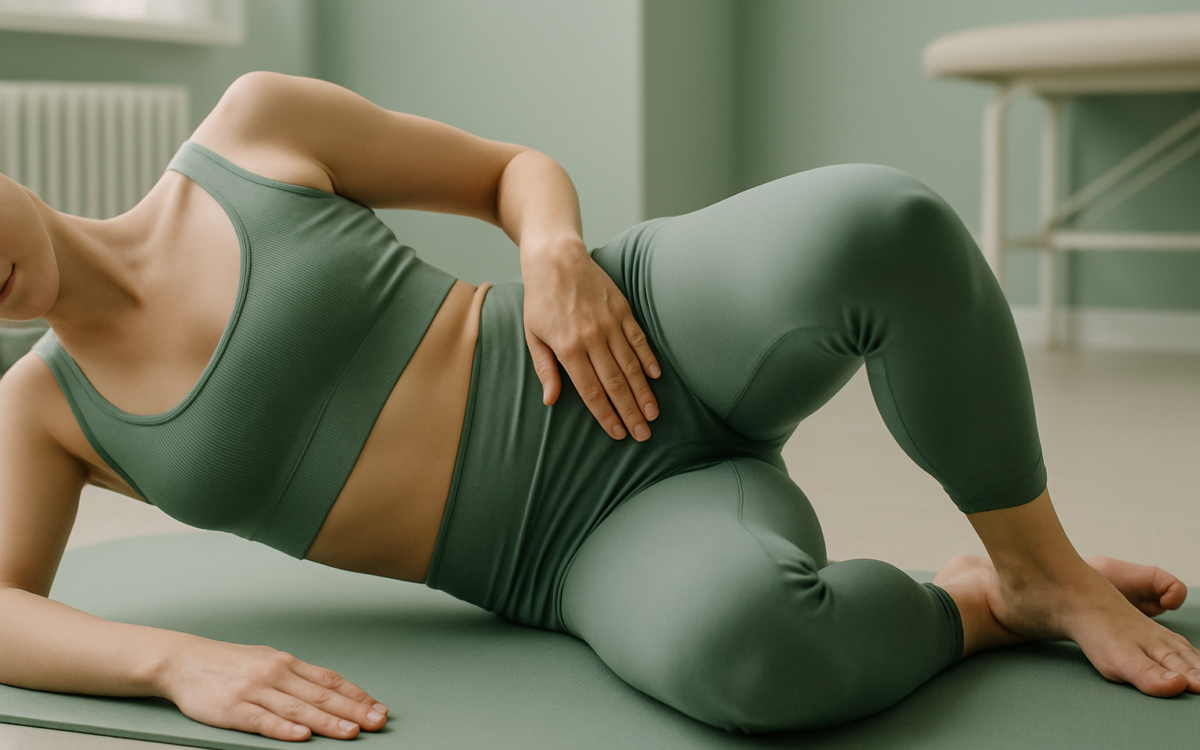
The clam shell exercise may be simple in execution, but its benefits can have a significant impact on your overall strength and mobility. Commonly used in rehabilitation and fitness routines, this exercise targets the muscles around the hips and glutes. Knowing the correct technique and understanding the benefits can enhance your workouts and help you avoid injury.
What is the clam shell exercise?
The clam shell exercise is primarily aimed at strengthening the gluteus medius, a muscle located on the side of your hip. This muscle plays a key role in stabilizing your pelvis during activities such as walking, running, and even standing. The clam shell gets its name from the way you move your legs while lying on your side, mimicking the motion of a clam opening and closing.
Benefits of the clam shell exercise
The clam shell exercise offers several advantages that can improve your physical performance and overall health:
- Strengthens hip muscles: As mentioned, this exercise primarily targets the gluteus medius, essential for hip stability.
- Improves balance: Strong hip muscles help maintain balance while performing daily activities or complex movements.
- Prevents injuries: By developing strength in the hips, you can reduce the risk of injuries in your knees, lower back, and other areas.
- Enhances athletic performance: Good hip strength contributes to better performance in sports that require running, jumping, and quick changes in direction.
Research supports these benefits, highlighting the importance of hip stability in preventing lower body injuries. According to the National Institutes of Health, exercises like the clam shell can play a vital role in rehabilitation protocols.
How to perform the clam shell exercise correctly
To reap the benefits of the clam shell, it’s essential to perform it with correct form:
- Starting position: Lie on your side on a mat or flat surface. Keep your legs stacked on top of each other, and bend your knees to about a 90-degree angle.
- Hand position: Rest your head on your lower arm. Use your upper hand to support your body for balance, or place it on your hip.
- Motion: Keeping your feet together, slowly lift your upper knee as high as possible without moving your lower leg or rotating your hips. Imagine you have a clam shell that you are trying to open.
- Hold and lower: Pause for a moment at the top of the lift, then slowly lower your knee back to the starting position.
- Repetitions: Aim for 10 to 15 repetitions on each side, and perform 2 to 3 sets as part of your routine.
As you become more comfortable with this exercise, consider adding resistance with a resistance band placed just above your knees. This can provide an extra challenge and further strengthen your hip muscles.
Common mistakes to avoid
To maximize the effectiveness of the clam shell exercise, be mindful of these common mistakes:
- Raising the foot instead of the knee: Focus on the knee lift while keeping the feet together
- Rotating the pelvis: Your hips should remain stacked throughout the exercise; avoid twisting your torso.
- Overextending: Lifting too high can cause strain; control the movement to avoid injury.
Remember, performing the exercise slowly and with control is key to effectively targeting the right muscles and preventing injury.
Incorporating clam shells into your routine
The clam shell exercise can be easily incorporated into various fitness regimes. Here are some suggestions:
- Warm-up: Use clam shells as part of your warm-up routine to engage your hip muscles before more strenuous exercises.
- Rehabilitation: This exercise is often recommended in physical therapy for hip, knee, and lower back issues. Consult your therapist on the best routine for your needs.
- Strength training: Combine clam shells with other exercises targeting different muscle groups for a comprehensive workout.
Consistency is key. Aim to include clam shells in your program two to three times a week for optimal results. Listen to your body; if you experience pain, stop and evaluate your technique or consult a healthcare provider.
When to see a doctor
If you experience persistent pain in your hips, knees, or lower back during or after performing the clam shell exercise, it may be a sign of an underlying issue. Additionally, if you have a history of hip or knee injuries, it’s wise to consult with a healthcare professional before incorporating new exercises into your routine. They can guide you on what exercises are right for you and may provide alternative options if necessary.
Conclusion
The clam shell exercise is more than just a simple movement; it’s a powerful tool for building hip strength, improving stability, and reducing the risk of injuries. By mastering the technique and integrating it into your fitness routine, you can enjoy the benefits of stronger hips and greater overall mobility. Remember to listen to your body and consult a healthcare provider when needed, ensuring that your exercise regimen is safe and effective.
