
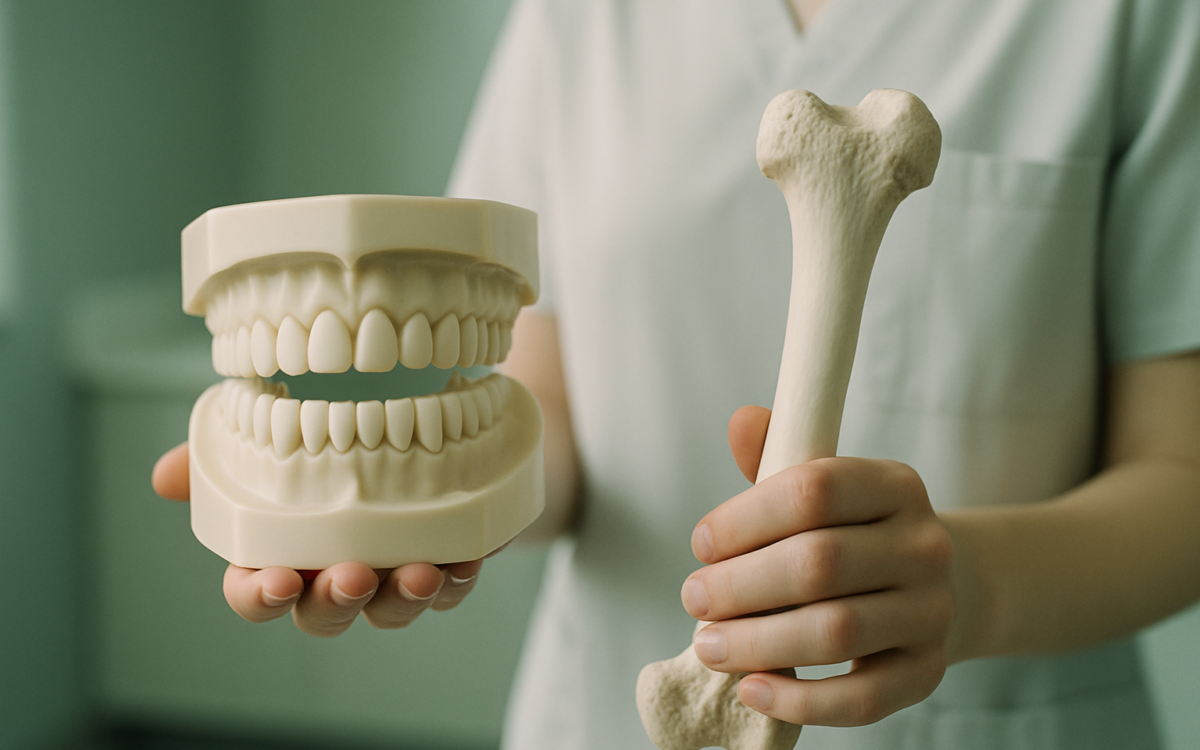
Many people often wonder, “Are teeth bones?” While both teeth and bones are essential parts of the human body that contribute to our overall health, they are distinctly different in structure, function, and composition. In this article, we will unravel the complexities of these two vital components of our anatomy—teeth and bones—and understand their similarities and differences.
The Structure of Teeth vs. Bones
Teeth and bones are made up of different materials and have unique structures.
- Teeth: Teeth are composed of several layers. The outermost layer is enamel, which is the hardest substance in the human body. Beneath the enamel is dentin, a softer material that makes up most of the tooth. The center contains the pulp, which houses nerves and blood vessels.
- Bones: Bone is living tissue made up of a dense mineral structure primarily composed of collagen and calcium phosphate. Bones are dynamic, constantly undergoing a process called remodeling, which allows them to adapt to stress and heal from injuries.
This structural difference allows bones to bear weight and support the body, while teeth are designed for biting and chewing food.
Similarities Between Teeth and Bones
Even though teeth and bones are different, they also share some common features:
- Both are made of minerals and proteins, which provide strength and structure.
- Both can undergo decay or disease. For instance, bones can suffer from osteoporosis, while teeth can develop cavities.
- Both require nutrients such as calcium and vitamin D for optimal health.
In acknowledging these similarities, it’s essential to recognize their functional roles in the body.
The Functions of Teeth and Bones
Teeth serve primarily to facilitate eating by breaking down food into smaller pieces, making digestion easier. They also play a role in speech and maintaining facial structure.
Bones, on the other hand, provide structural support for the body and protect vital organs. They also play a role in movement, as they provide a framework to which muscles can attach, allowing for mobility.
While teeth contribute to dietary health and nutrition, bones provide a protective and supportive role in overall bodily function.
How Teeth and Bones Develop
Your teeth and bones go through different development processes:
- Teeth: Teeth start developing even before birth. Babies are born with tooth buds in their jaws, and teeth emerge usually between 6 to 12 months of age. By early adulthood, most people will have their full set of permanent teeth.
- Bones: Bone growth begins in the womb and continues until adulthood. The long bones of the body grow in length until the growth plates close, which generally occurs in late adolescence to early adulthood. Bone mass reaches its peak in the late 20s.
Understanding these developmental patterns can be essential for maintaining good dental and skeletal health.
Maintaining Dental and Bone Health
Maintaining strong teeth and bones is crucial for overall health. Here are some tips:
- Calcium and Vitamin D: Consume foods rich in calcium (such as dairy, leafy greens, and fortified foods) and get adequate sunlight for vitamin D production.
- Good Oral Hygiene: Brush your teeth at least twice a day, floss daily, and visit your dentist regularly to avoid dental problems.
- Exercise: Engage in weight-bearing exercises like walking, running, or weightlifting, which can help strengthen bones.
- Avoid Harmful Substances: Limit sugary foods and drinks to protect your teeth, and avoid smoking, which can weaken bones.
Regular check-ups with healthcare providers can help monitor and maintain both dental and bone health.
Common Misconceptions About Teeth and Bones
There are many myths surrounding teeth and bones that can lead to confusion.
- Do teeth continue to grow? Unlike bones, teeth do not grow continuously. Once your adult teeth emerge, they do not regenerate.
- Can you replace teeth with bone? While dental implants use a titanium post inserted into the jawbone, it is not the same as using bone in place of teeth.
Being informed helps in debunking misconceptions and enhances overall understanding of oral and bone health.
When to See a Doctor
If you are experiencing any of the following symptoms, it’s important to consult a healthcare provider:
- Severe tooth pain or sensitivity
- Swollen or bleeding gums
- Unexplained fractures or pain in bones
- Changes in the alignment or structure of teeth
Early intervention can help prevent more serious conditions from developing.
In conclusion, while teeth and bones share some characteristics, they serve unique purposes within the body and are fundamentally different in structure and function. Understanding their roles can empower you to take better care of both your dental and skeletal health.
