
Cooking pork can be a delightful experience, whether you’re preparing a juicy pork chop, a tender pork loin, or flavorful pulled pork. However, ensuring these dishes are not only delicious but also safe to eat is essential. One crucial aspect to keep in mind is the proper cooking temperature for pork, often referred to as the ‘done temp.’ Understanding this can help you avoid foodborne illnesses and enhance your culinary skills.
Why Temperature Matters
The importance of cooking pork to the recommended temperature cannot be overstated. Undercooked pork can carry harmful bacteria and parasites, such as Trichinella spiralis, which can lead to serious illness. This is particularly critical when considering that pork is a common source of protein in many diets. The USDA has issued guidelines to help consumers cook pork safely while maximizing flavor and quality.
Recommended Cooking Temperatures
The USDA recommends that all pork products be cooked to an internal temperature of at least 145°F (63°C), followed by a 3-minute rest time before slicing or consuming. This guideline applies to:
- Pork Cuts: Chops, roasts, and loins
- Ground Pork: Sausages or mixtures featuring pork must reach 160°F (71°C)
- Pork ribs and other preparations: Cook until they reach the same internal temps
Cooking pork at the proper temperature not only ensures safety but also enhances the meat’s juiciness and flavor. When these guidelines are followed, you can be confident that your meal will be both safe and pleasing.
How to Check Pork’s Done Temperature
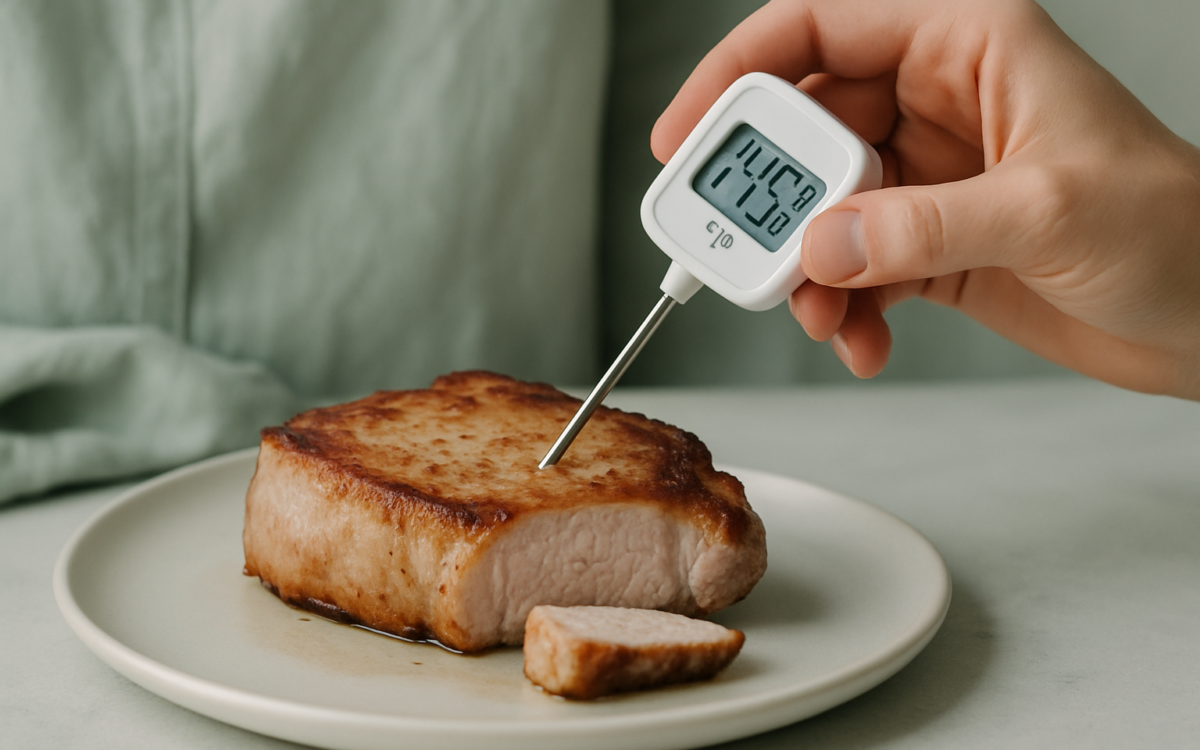
Using a meat thermometer is the most accurate way to check if your pork has reached the proper internal temperature. Here’s how to do it:
- Insert the thermometer into the thickest part of the pork, avoiding bones or fat elements.
- Wait for a few seconds until the thermometer gives a stable reading.
- Make sure that it reads at least 145°F (63°C) for whole cuts, or 160°F (71°C) for ground pork.
Some digital thermometers also have a color-coded display or a loud beep that signifies when your pork is done cooking, which can be very handy.
Color and Texture Clues
While color and texture can offer some hints about doneness, they are not foolproof indicators of safety. Many cooks look for meat that is slightly pink in the middle, especially in cuts like pork tenderloin. However, even if the pork has a pale pink hue, the key factor is the temperature. A well-cooked pork chop may still have a light shade of pink, but as long as it reaches the recommended temperature, it is safe to eat.
Furthermore, the texture of cooked pork may change. Tender pork will easily separate, while overcooked pork may feel tough and dry. The best way to ensure the right texture and avoid overcooking is to rely on a thermometer.
Common Mistakes to Avoid
Even seasoned cooks can make mistakes when it comes to cooking pork. Here are some common pitfalls to watch out for:
- Not Using a Thermometer: Failing to check the internal temperature can lead to undercooked or overcooked meat.
- Cutting into the Meat Too Soon: Slicing into pork right after cooking can release juices and result in a drier dish. Allow it to rest for 3 minutes.
- Relying Solely on Color: Assuming pork is fully cooked just by looking at it can be misleading; always double-check the temperature.
By avoiding these mistakes, you can ensure that your pork dishes are not only safe but also delicious!
Cooking Methods and Done Temp Considerations
Different cooking methods can affect how quickly the pork reaches its proper temperature. Here’s how various methods stack up:
- Grilling: Portable grills often have direct heat, which means pork can cook quickly. Monitor your temperature closely.
- Oven Roasting: A reliable method for larger cuts, roasting allows for even cooking. Use a meat probe for the best results.
- Slow Cooking: While this technique can produce tender meat, ensure the internal temperature still reaches the required level for safety.
Each of these methods can yield flavorful results, provided you keep an eye on the cooking temperature.
When to See a Doctor
If you experience symptoms like persistent nausea, vomiting, diarrhea, fever, or abdominal pain after consuming pork, it’s important to consult a healthcare professional. These can be symptoms of foodborne illness, and prompt medical advice is crucial.
Cooking pork correctly may seem daunting, but with the right knowledge and tools, you can enjoy a safe and tasty meal. Remember to always use a meat thermometer, understand the recommended temperatures, and allow your pork to rest before serving. Happy cooking!
