
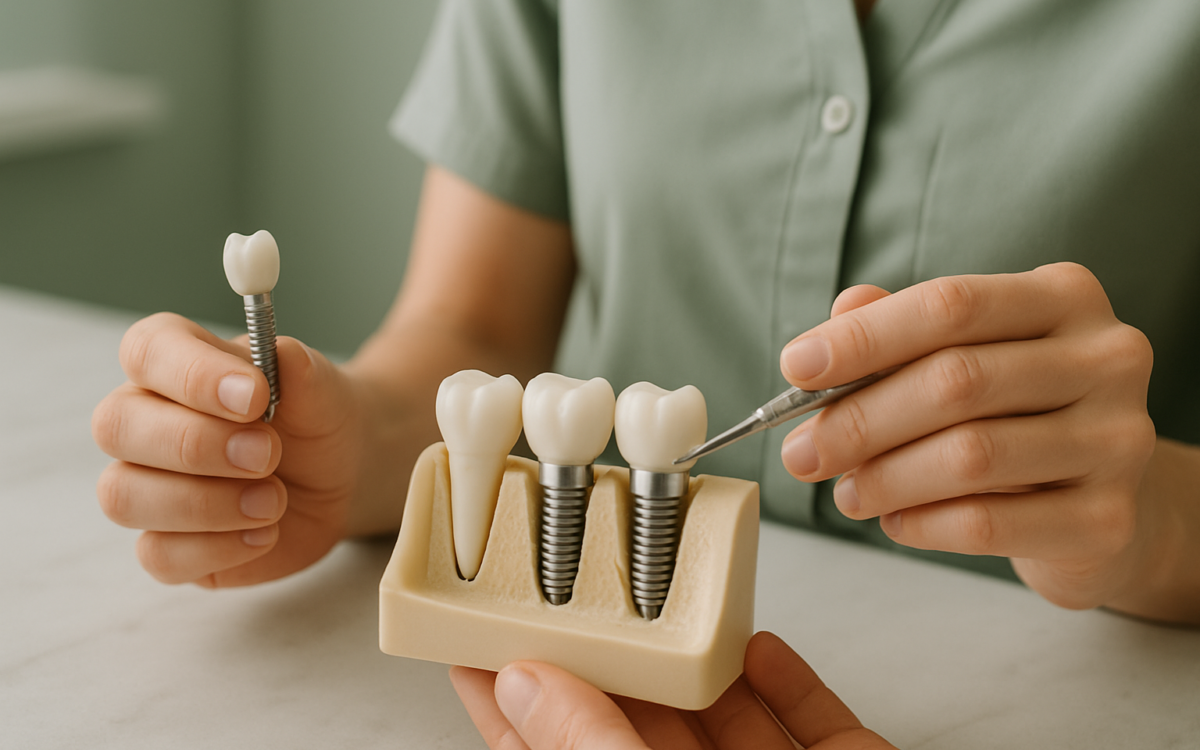
When it comes to restoring a lost tooth or teeth, dental implants have become a popular option. Not only do they look and feel like natural teeth, but they also offer improved function and comfort. However, not all dental implants are created equal—there are several types available, each designed to meet different needs and preferences. In this article, we will explore the various types of dental implants, how they work, and what might be the best option for you.
What Are Dental Implants?
Dental implants are titanium posts that are surgically placed into the jawbone, acting as artificial tooth roots. Once the implant integrates with the bone, a crown or other restorative component is attached, completing the tooth replacement. This process helps to restore not just the appearance of the smile but also the ability to chew and speak comfortably.
Endosteal Implants
The most common type of dental implant is the endosteal implant. These implants are placed directly into the jawbone and can support one or more prosthetic teeth.
How Endosteal Implants Work
During a surgical procedure, a small hole is drilled in the jawbone where the implant is inserted. Over several months, the bone grows around the implant in a process called osseointegration, ensuring that it becomes stable and secure.
Benefits of Endosteal Implants
- High success rate
- Natural feel and function
- Long-lasting solution
Subperiosteal Implants
For patients who do not have enough healthy jawbone for endosteal implants, subperiosteal implants serve as an alternative. These implants are placed beneath the gum tissue but above the jawbone.
How Subperiosteal Implants Work
Subperiosteal implants consist of a metal framework that is fixed to the jawbone. After the gums heal, posts protruding through the gum line allow for the attachment of crowns or bridges.
Benefits of Subperiosteal Implants
- Avoids the need for bone grafting
- Works for patients with limited jawbone
Zygomatic Implants
For those with severely resorbed jawbones, zygomatic implants are a specialized option. Unlike traditional implants, these are anchored into the cheekbone (zygomatic bone) instead of the upper jawbone.
How Zygomatic Implants Work
The placement procedure for zygomatic implants involves a more complex surgical technique. These implants are longer and can provide anchorage even in cases where jaw reconstruction or grafting isn’t feasible.
Benefits of Zygomatic Implants
- Great choice for patients with insufficient upper jawbone
- Reduced recovery time
Mini Implants
Mini dental implants are smaller in diameter than standard implants and are often used in situations where there isn’t enough bone width for a traditional implant.
How Mini Implants Work
These are inserted directly into the jawbone with less invasive techniques. Mini implants can be used to secure dentures or replace single teeth.
Benefits of Mini Implants
- Less invasive procedure
- Quicker healing time
- Cost-effective option
Implant-Supported Bridges and Dentures
In cases where multiple teeth are missing, dental implants can also support bridges or dentures, providing enhanced stability and functionality.
How They Work
A series of implants can be strategically placed to create a sturdy base for bridges or dentures, reducing the movement that often occurs with traditional dentures.
Benefits of Implant-Supported Options
- Enhances comfort and chewing ability
- Improves aesthetics
- Long-term dental health benefits
Choosing the Right Type of Dental Implant
The right type of dental implant for you will depend on your specific dental condition and overall health. Factors such as bone density, gum health, and personal preferences will influence your decision. Consulting with a dental professional is essential to determine the best course of action.
When to See a Doctor
If you are considering dental implants, it’s essential to consult with a qualified dental professional. They can provide an evaluation, address any concerns, and develop a treatment plan tailored to your needs.
Conclusion
Dental implants offer versatile solutions for tooth replacement, with various types catering to different needs. Understanding the differences between endosteal, subperiosteal, zygomatic, mini implants, and implant-supported options can help you make an informed choice. For more information, consult trusted resources such as the National Heart, Lung, and Blood Institute or the Mayo Clinic.
