
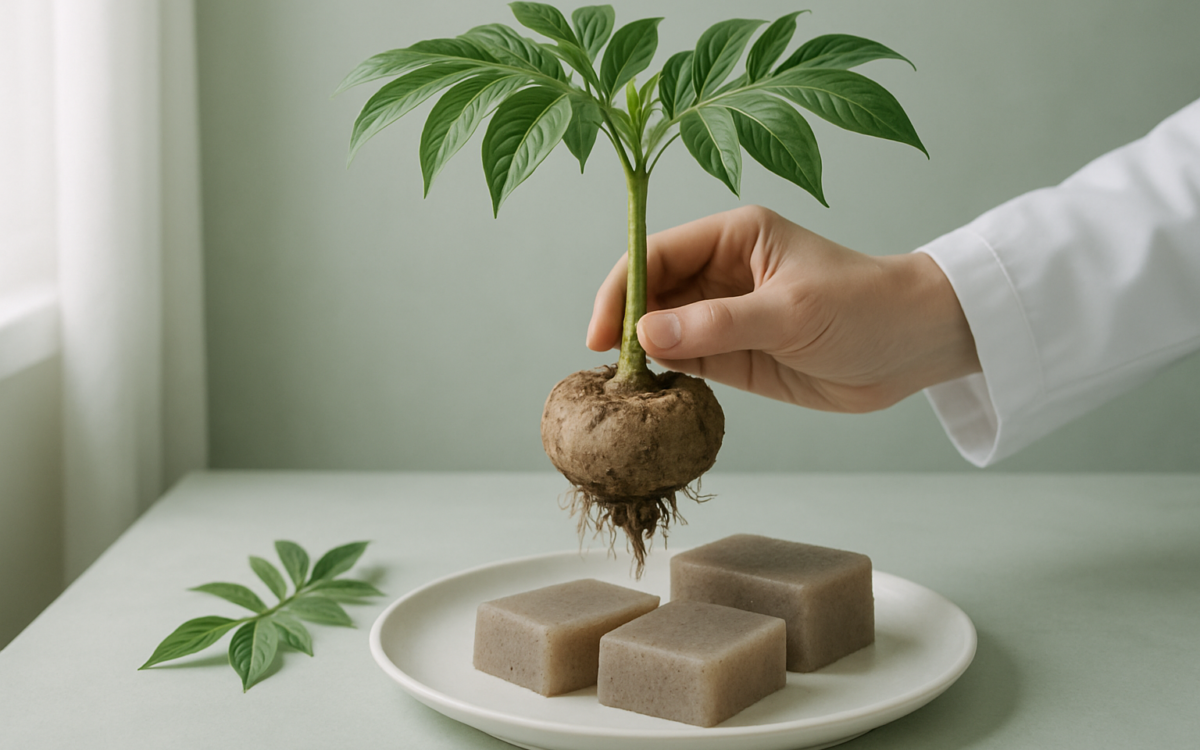
The konnyaku plant, also known as konjac or devil’s tongue, has been gaining attention for its culinary uses and potential health benefits. Native to Asia, particularly Japan and China, the konnyaku plant has a rich history in traditional medicine and cuisine. Its unique properties have made it a staple for health-conscious individuals seeking natural and wholesome food options. Let’s delve into this fascinating plant, uncover its benefits, and learn how you can incorporate it into your diet.
What is the Konnyaku Plant?
The konnyaku plant (Amorphophallus konjac) is a perennial tuber native to tropical and subtropical regions. It can grow up to 1 meter tall and features a large, umbrella-like leaf. The plant is known for producing a starchy root that serves as the source of konjac flour, which is the primary ingredient in several popular foods, including konnyaku jelly and shirataki noodles.
Konnyaku is often praised for its low-calorie content and high fiber levels. The primary component of konjac flour is glucomannan, a natural polysaccharide that is largely responsible for the plant’s health benefits and culinary versatility.
Nutritional Profile of Konnyaku
One of the most notable aspects of konnyaku is its impressive nutritional composition. A typical serving of konnyaku contains:
- Low calories: Typically around 10-20 calories in a 3.5 oz (100 g) serving.
- High fiber: Approximately 4 grams of glucomannan fiber, which makes up most of its weight.
- Minimal carbohydrates: Very low in digestible carbs, making it a favored food among those monitoring their carb intake.
- No sugar: Contains no added sugars and is free from fats.
This unique combination of low calories and high fiber makes konnyaku particularly appealing for those looking to manage weight while still feeling full and satisfied after meals.
Health Benefits of Konnyaku
The konnyaku plant is associated with various health benefits, primarily due to its high fiber content. Here are some notable advantages:
1. Weight Management
Due to its low calorie and high fiber content, konnyaku may aid in weight loss. The fiber helps create a feeling of fullness, reducing overall calorie intake. Research published by the NIH indicates that fiber can help manage weight by promoting feelings of satiety.
2. Digestive Health
The soluble fiber glucomannan from konnyaku supports digestive health by promoting bowel regularity and helping to prevent constipation. It absorbs water in the gut, resulting in softer stools. Studies suggest a fiber-rich diet can benefit overall gut health, as noted by the World Health Organization.
3. Blood Sugar Control
Fiber-rich foods like konnyaku can help stabilize blood sugar levels. Glucomannan may slow down carbohydrate absorption, which can be beneficial for individuals with diabetes. Research shows that incorporating low-glycemic index foods can help manage blood sugar levels more effectively.
4. Heart Health
Consuming high-fiber foods is linked to improved heart health. Glucomannan has been shown to lower cholesterol levels, reducing the risk of heart disease. The Mayo Clinic highlights that fiber intake can contribute to heart health by maintaining healthy cholesterol levels.
Culinary Uses of Konnyaku
Konnyaku is most commonly found in Japanese cuisine and can be enjoyed in various forms, including:
- Shirataki Noodles: These are made from konjac flour and water. They are low in calories and often used as a substitute for traditional pasta in many dishes.
- Konnyaku Jelly: A popular dessert, konnyaku jelly is made by adding water and flavorings to konjac powder. It has a unique chewy texture.
- Mixed dishes: In Japan, konnyaku is sliced into blocks, cubes, or strips and added to soups, stews, and hotpots.
When cooking with konnyaku, it’s essential to remember that it has a very mild flavor, making it an excellent base for absorbing sauces and seasonings.
How to Incorporate Konnyaku into Your Diet
Adding konnyaku to your meals is simple and versatile. Here are some tips to include this superfood in your diet:
- Use shirataki noodles in stir-fries: Substitute regular noodles for shirataki noodles in your favorite stir-fry recipes.
- Add konnyaku to soups: Include sliced konnyaku in miso soup or any broth-based soups for added texture.
- Enjoy konnyaku jelly for dessert: Settle those sweet cravings with tasting konnyaku jelly, flavored with fruits or sweeteners.
- Experiment with salads: Dice konnyaku and toss it in salads for a unique chewy component.
When purchasing konnyaku products, look for options that don’t contain added sugars or preservatives for the healthiest choice.
When to See a Doctor
If you experience gastrointestinal discomfort, such as bloating or abdominal pain, after consuming konnyaku, it’s a good idea to consult with your healthcare provider. This could be due to the high fiber content, which may not be suitable for everyone, especially those with specific digestive conditions.
Conclusion
The konnyaku plant is more than just a culinary ingredient—it’s a nutritional powerhouse with a variety of health benefits. Incorporating konnyaku into your meals not only adds uniqueness to your diet but also supports overall wellness. As with any dietary change, listening to your body and consulting with a healthcare professional can help ensure you reap the maximum benefits from this intriguing plant.
