
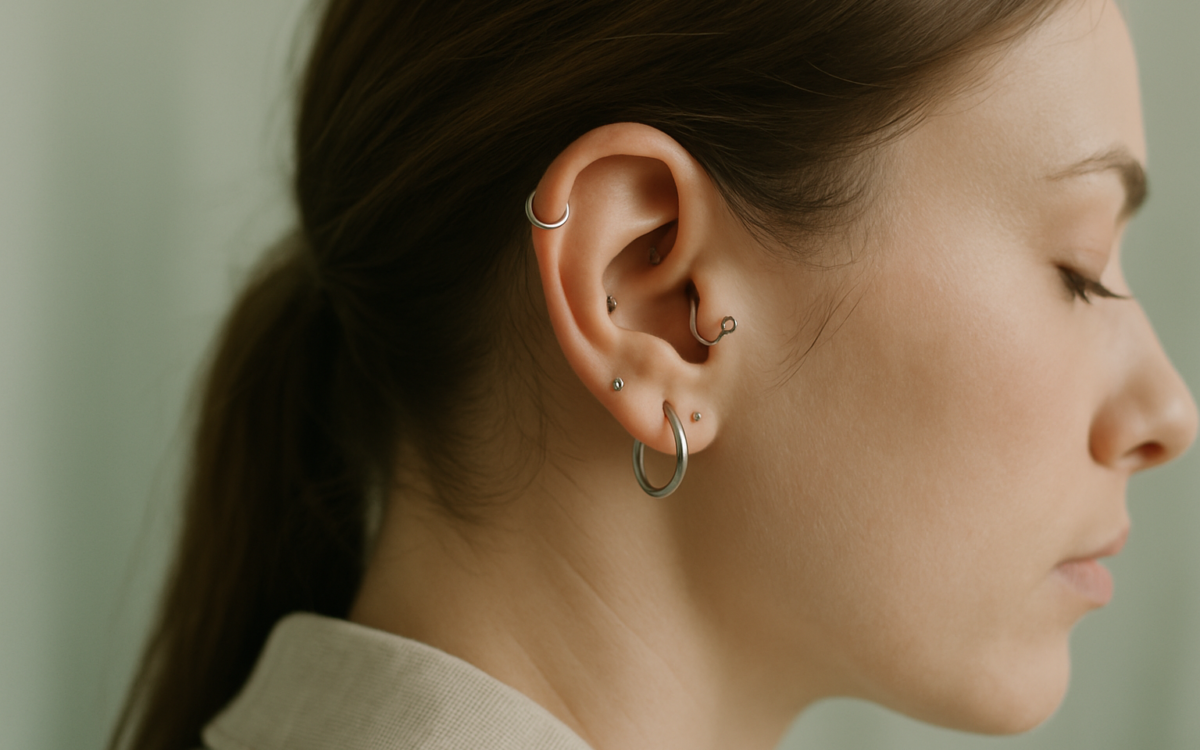
When it comes to personal expression, ear piercings offer a unique opportunity to showcase your style. From simple lobe piercings to intricate cartilage designs, the range of options can be both exciting and overwhelming. In this article, we’ll explore the various types of ear piercings, their specific styles, and important care tips for your new look.
Lobe Piercings
Lobe piercings are perhaps the most common type of ear piercing. Located at the soft lower part of the ear, these piercings have been around for centuries and are often considered a rite of passage for many. They can accommodate a wide variety of jewelry, including studs, hoops, and dangling earrings.
Cartilage Piercings
Cartilage piercings are located in the harder upper part of the ear and can take several forms. Here are a few popular types:
Helix Piercing
A helix piercing is done on the outer rim of the ear. It’s versatile and allows for multiple piercings along the helix, which can be styled in various ways. This piercing tends to heal slower than lobe piercings, and you may want to opt for lighter jewelry during the healing process.
Industrial Piercing
The industrial piercing combines two piercings in one. A barbell connects the two holes, typically on the upper ear. This edgy look is popular among those who want a bold statement and can be adorned with various designs.
Tragus and Anti-Tragus Piercings
Tragus piercings go through the small flap of cartilage that partially covers the ear canal. The anti-tragus, on the other hand, is located opposite the tragus. Both can be adorned with studs or small hoops, making them unique alternatives to traditional lobe piercings.
Daith Piercing
The daith piercing goes through the cartilage fold above the ear canal. It has gained popularity for its unique position and is often recommended for its potential connection to alleviating migraine symptoms, although more research is needed to substantiate this claim. Always consult with a healthcare provider for medical advice.
Rook Piercing
A rook piercing is situated in the crease above the tragus. This piercing can be a bit more painful due to the thickness of the cartilage but is loved for its subtlety and stylish appeal. As with other cartilage piercings, this one may take longer to heal.
Conch Piercing
The conch piercing is done in the middle part of the ear’s cartilage. It can be a stunning way to showcase a hoop or stud. There are two types of conch piercings: inner and outer. Inner conch piercings are located closer to the ear canal, whereas outer conch piercings are further out on the ear.
Styles and Jewelry Options
With so many types of ear piercings, the jewelry choices are as diverse as the piercings themselves. Here are some popular types:
- Studs: Simple and understated, studs are versatile and can be worn in almost any type of ear piercing.
- Hoops: Adding flair, hoops can be small or large and are particularly popular in lobe and cartilage piercings.
- Barbells: Used in industrial piercings and some helix piercings, barbells can be adorned with various decorative ends.
- Dangling Earrings: These come in various lengths and styles, perfect for lobe piercings.
Caring for Your Piercings
Proper aftercare is crucial to avoid complications such as infections or rejection. Here are some general tips:
- Keep your hands clean: Always wash your hands before touching your new piercings.
- Clean regularly: Use a saline solution or a recommended antiseptic to clean the piercings without irritation.
- Avoid swimming: Steer clear of pools and oceans during the initial healing period to minimize infection risk.
- Be cautious with jewelry: Choose hypoallergenic materials like surgical steel or titanium to reduce the risk of allergic reactions.
When to See a Doctor
If you experience any severe pain, prolonged redness, or discharge from your piercing, it’s crucial to consult a healthcare provider. Issues such as infections may arise, and early intervention can prevent further complications.
With an array of styles to choose from, ear piercings offer a fun way to express yourself. Whether you opt for a classic lobe piercing or something more adventurous like a daith or conch, remember that proper care can make all the difference in ensuring your new look is both beautiful and healthy.
