
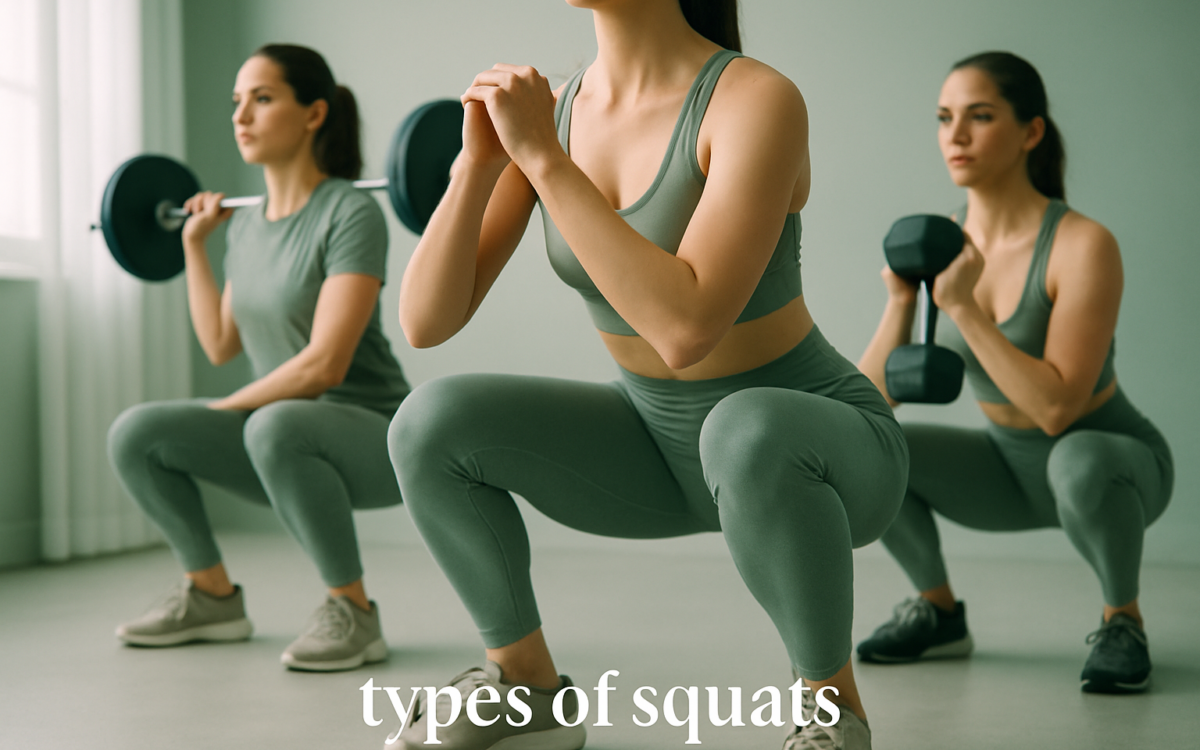
Squats are one of the most effective exercises for building strength, enhancing mobility, and improving overall fitness. They work multiple muscle groups, including your thighs, hips, and lower back. Whether you’re a beginner or a seasoned athlete, there are various types of squats to suit different fitness levels and goals. In this article, we’ll explore several popular squat variations, teaching you how to perform them properly and highlighting their benefits.
1. Bodyweight Squat
The bodyweight squat is the foundation of all squats and is perfect for beginners. It requires no equipment and can be done anywhere. This squat focuses on your thighs, hamstrings, and glutes, along with improving your balance and flexibility.
How to Perform:
- Stand with your feet shoulder-width apart and toes slightly pointed outward.
- Keep your chest up and shoulders back.
- Push your hips back and bend your knees to lower your body as if sitting back in a chair.
- Make sure your knees don’t go past your toes.
- Lower until your thighs are parallel to the ground, then push through your heels to return to standing.
2. Goblet Squat
The goblet squat adds a challenge to the bodyweight squat by incorporating a weight, usually a dumbbell or kettlebell, held close to your chest. This variation helps improve form and stability.
How to Perform:
- Hold a dumbbell or kettlebell at your chest with both hands.
- Stand with feet shoulder-width apart, toes pointed slightly out.
- Engage your core and squat down, keeping the weight close to your chest.
- Push through your heels and stand back up to the starting position.
3. Sumo Squat
Sumo squats change your stance to engage your inner thighs and glutes more than a traditional squat. This variation is often more comfortable for people with hip mobility issues.
How to Perform:
- Stand with your feet wider than shoulder-width apart and toes pointed outwards at about a 45-degree angle.
- As you lower, push your hips back and bend your knees, keeping them aligned with your toes.
- Lower your body as far as comfortable while keeping your chest lifted, then return to standing.
4. Front Squat
The front squat targets the quadriceps and requires good upper body strength and flexibility. This variation is beneficial for improving core stability.
How to Perform:
- Stand with feet shoulder-width apart and hold a barbell or dumbbells in front of your shoulders, with elbows high.
- Squat down by pushing your hips back and bending your knees.
- Keep your chest up and back straight as you return to standing.
5. Single-Leg Squat
Single-leg squats enhance balance and coordination and engage stabilizing muscles. While they are more advanced, they can offer substantial rewards in strength building.
How to Perform:
- Stand on one leg with the other leg extended in front of you.
- Lower your body into a squat while keeping your extended leg off the ground.
- Keep your knee aligned with your toes and return to the standing position.
6. Bulgarian Split Squat
This squat variation includes an elevated surface behind you, like a bench or step. It provides a deeper range of motion and targets your quads and glutes effectively.
How to Perform:
- Stand a few feet in front of a bench and place one foot behind you on the bench.
- Lower your body into a squat while keeping your front knee aligned with your ankle.
- Push through your front heel to return to standing.
Benefits of Incorporating Different Types of Squats
Incorporating various types of squats into your routine can lead to numerous benefits, including:
- Muscular Strength: Each squat variation targets different muscle groups, allowing balanced development.
- Improved Flexibility: Squats help enhance flexibility in the hips, ankles, and knees.
- Better Balance: Many squat variations require balance and stability, improving your overall coordination.
- Increased Core Strength: Squats engage your core, contributing to a stronger midsection.
As you progress in your fitness journey, consider mixing different types of squats to keep your workouts fresh and effective.
When to See a Doctor
If you experience joint pain, persistent discomfort, or any unusual symptoms while performing squats, it’s essential to consult a healthcare professional. They can help determine if there are underlying issues that need addressing.
In conclusion, squats are a versatile and effective exercise that can be customized to suit your fitness levels and goals. By exploring the various types of squats, you can enhance your strength, agility, and overall fitness. Always remember to maintain proper form and listen to your body as you try out these different squat variations.
