
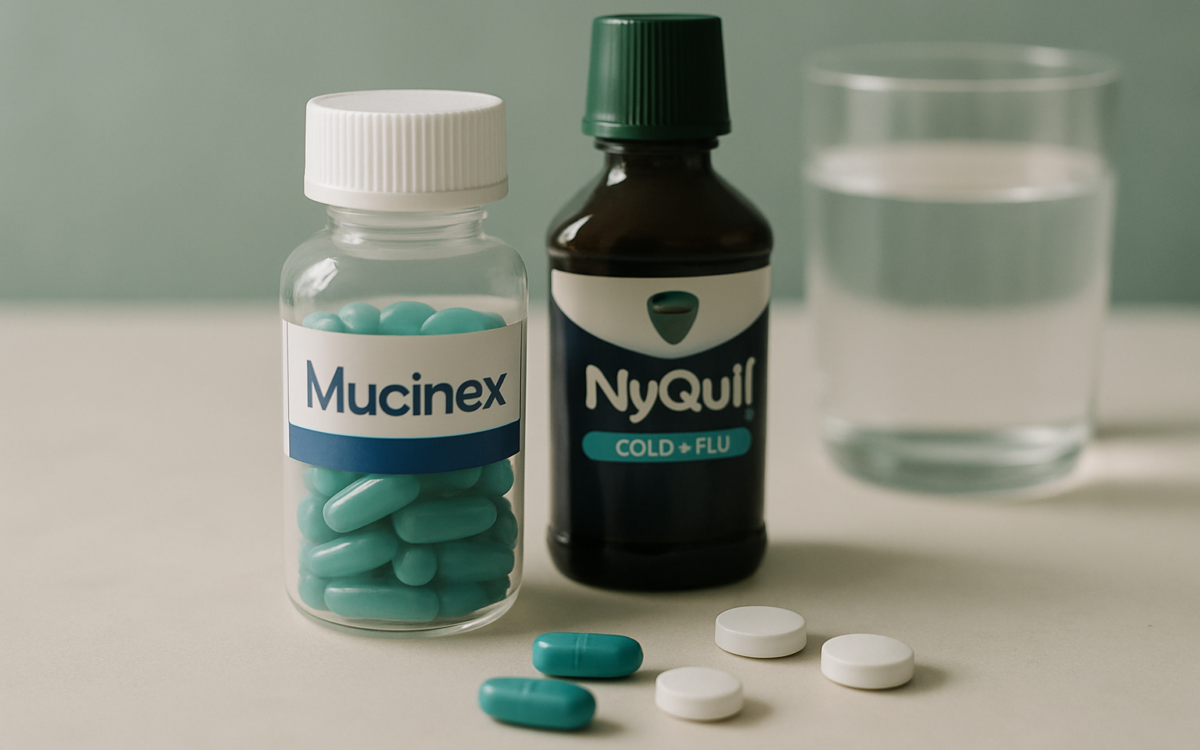
Cold and flu season can bring a wave of sniffles, coughs, and general discomfort. For many, over-the-counter medications like Mucinex and NyQuil provide relief. But when you’re feeling under the weather, you might wonder, “Can I take Mucinex and NyQuil together?” Understanding how these medications work and their potential interactions can help you make informed decisions during cold season.
What is Mucinex?
Mucinex is a brand name for guaifenesin, an expectorant that helps loosen mucus in the airways, making it easier to cough up. It’s primarily used to relieve chest congestion caused by colds, infections, or allergies. By thinning out the mucus in your respiratory tract, Mucinex makes it easier for you to breathe and reduces the discomfort associated with congestion.
What is NyQuil?
NyQuil is a multi-symptom relief medication that contains a combination of ingredients, typically including acetaminophen, diphenhydramine, and dextromethorphan. It targets various cold symptoms such as cough, sore throat, headache, and fever, promoting better sleep. The diphenhydramine in NyQuil is an antihistamine that can cause drowsiness, which is helpful if you are struggling with sleep due to your cold.
Understanding Interactions
When considering whether to take Mucinex and NyQuil together, it’s essential to look at their active ingredients. Mucinex (guaifenesin) focuses on breaking up mucus, while NyQuil targets multiple symptoms, including cough and discomfort.
Many people safely combine these medications, as they work differently in the body. However, it’s crucial to check the exact formulation of NyQuil you plan to use. Some varieties may contain additional medications that could interact adversely with guaifenesin.
Benefits of Combining Mucinex and NyQuil
For those who suffer from a combination of congestion and other cold symptoms, using both Mucinex and NyQuil can provide a multi-faceted approach to symptoms:
- Enhanced relief: Mucinex can help clear mucus, while NyQuil manages cough and sleep disturbances, allowing for a more restful night.
- Convenient symptom management: When fighting off a cold, managing multiple symptoms can be more convenient than taking separate medications at different times.
Important Considerations
While the combination can be effective, certain precautions should be observed:
- Follow dosage instructions: It’s essential to adhere to the recommended dosages of both medications. Overusing either can lead to side effects.
- Watch for side effects: Common side effects of NyQuil include drowsiness, dizziness, and dry mouth. Ensure you’re in a safe environment if taking it.
- Avoid alcohol: Mixing alcohol with NyQuil can increase drowsiness and may lead to dangerous side effects.
- Consult a doctor: If you have chronic conditions, are pregnant, or are taking other medications, consulting your healthcare professional is crucial before combining these medications.
When to See a Doctor
While over-the-counter medications can be effective for mild symptoms, it’s important to seek medical advice in the following situations:
- If your symptoms worsen or persist beyond 7-10 days.
- If you experience severe headaches, a high fever, or difficulty breathing.
- If you have underlying health conditions that could complicate your treatment.
- Consult with a doctor if you are unsure about interactions with other medications.
Conclusion
Combining Mucinex and NyQuil can effectively target multiple symptoms of a cold, providing relief for both congestion and discomfort. However, safety is paramount, so always follow dosage instructions and consult your doctor if you have any uncertainties. By being informed and cautious, you can navigate your cold symptoms more effectively and get back to feeling your best.
