
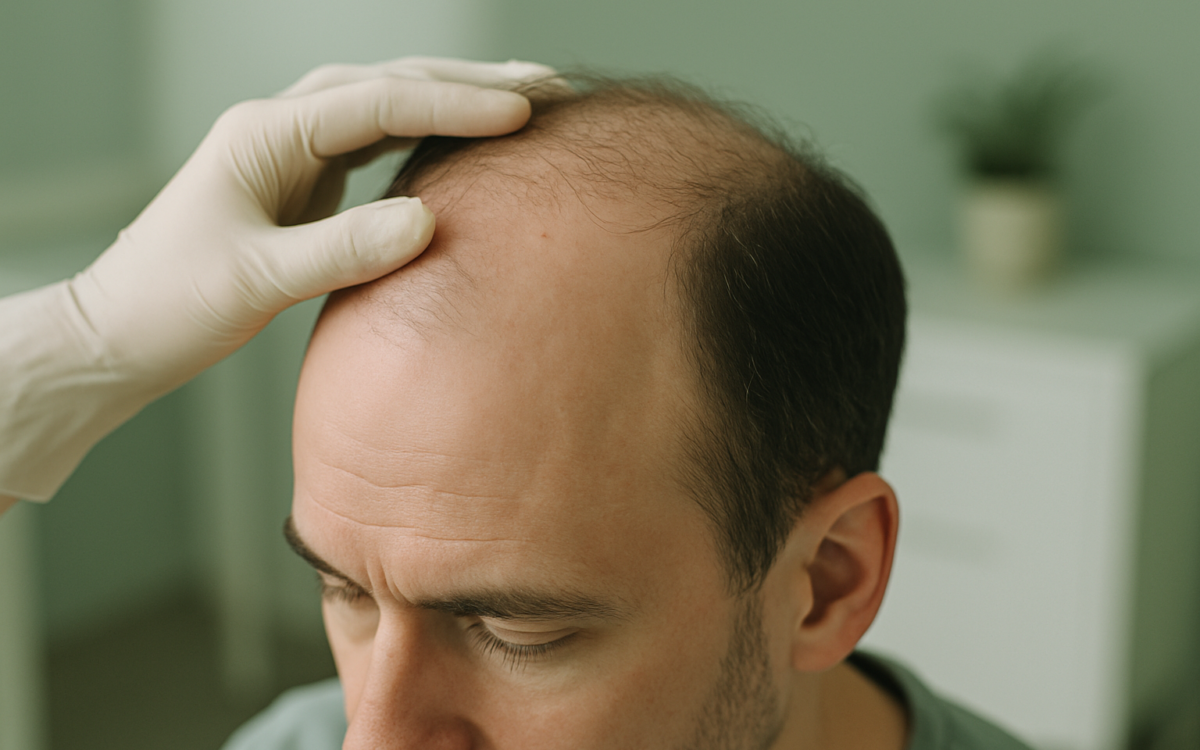
Hair loss can feel overwhelming, especially when you notice your hairline is changing. A receding hairline is a common concern for many people, particularly men. It can affect your self-image and confidence, but understanding its causes and exploring potential solutions can make a significant difference. In this article, we will go through what contributes to a receding hairline and what you can do about it.
What is a receding hairline?
A receding hairline typically indicates hair loss, where the hair at the front of the scalp moves backward. This can create an M-shaped appearance on the forehead and generally requires attention because it can signal the onset of male or female pattern baldness, a hereditary condition known as androgenetic alopecia.
Common Causes of a Receding Hairline
Several factors contribute to a receding hairline. Understanding these can help you identify what might be influencing your hair loss.
- Genetics: The most significant factor is often heredity. If your family has a history of hair loss, you may be more likely to experience it yourself. Genetic hair loss usually starts with a receding hairline in men.
- Hormones: Hormonal changes, particularly involving androgens, can affect hair follicles. In men, testosterone can convert to dihydrotestosterone (DHT), which may shrink hair follicles and encourage hair loss.
- Age: As you get older, your hair naturally thins out. Aging leads to a reduction in the number of hair follicles and may slow hair regeneration.
- Stress: Physical or emotional stress can also contribute to hair loss. Conditions such as telogen effluvium can cause hair to fall out more than normal when the body is under stress.
- Health Conditions: Certain medical conditions, such as thyroid disorders and autoimmune diseases, can cause hair loss. Conditions like alopecia areata can lead to patches of hair loss, including the hairline.
Signs to Watch For
If you’re worried about a receding hairline, observe the following signs:
- Visible hair thinning at the temples or forehead.
- A widening part in your hair.
- Hair loss around the crown of your head.
- Hair falling out in clumps, particularly with stress or hormonal changes.
Exploring Treatment Options
While a receding hairline can be disheartening, several treatment options may help slow down hair loss or promote regrowth. Here are some common solutions:
Topical Treatments
One of the most widely used treatments is minoxidil (Rogaine), which is an over-the-counter topical treatment. It can be applied directly to the scalp and has been shown to help some individuals regrow hair or slow down loss. Available in liquid or foam, minoxidil is easier to use for most people.
Medications
Finasteride (Propecia) is a prescription medication for men that helps block the production of DHT, which contributes to hair loss. Always consult with your healthcare provider before starting any medication to discuss potential side effects.
Hair Transplant Surgery
For those with significant hair loss, hair transplant surgery can be an option. This involves moving hair follicles from areas of your scalp where hair is fuller to areas where the hair is thinning. Talk to a specialist to understand if this is the right choice for you.
Lifestyle Changes to Support Hair Health
In addition to medical treatments, lifestyle changes can significantly impact hair health. Here are some tips to consider:
- Healthy Diet: Eating a balanced diet rich in vitamins and minerals, especially vitamin D, B vitamins, zinc, and iron, can help promote hair health. Foods like fish, nuts, spinach, and eggs are beneficial.
- Reduce Stress: Stress management techniques such as yoga, meditation, or regular exercise can help reduce levels of stress-related hair loss.
- Proper Hair Care: Using natural shampoos and avoiding excessive heat from styling tools can minimize damage to your hair.
When to See a Doctor
If you’re experiencing a receding hairline and are concerned about it, consider scheduling an appointment with a healthcare provider or dermatologist. This is especially important if hair loss occurs suddenly, or if you notice patches of hair loss. A professional can help determine the underlying cause and recommend appropriate treatment options. For more information on hair loss and potential conditions, visit the Mayo Clinic website.
Conclusion
A receding hairline can be distressing, but it’s important to understand that you are not alone in this experience. By recognizing the causes and seeking out treatments or lifestyle changes, you can take proactive steps toward managing your hair loss. Remember that it’s always wise to consult a healthcare professional for personalized advice and guidance.
