
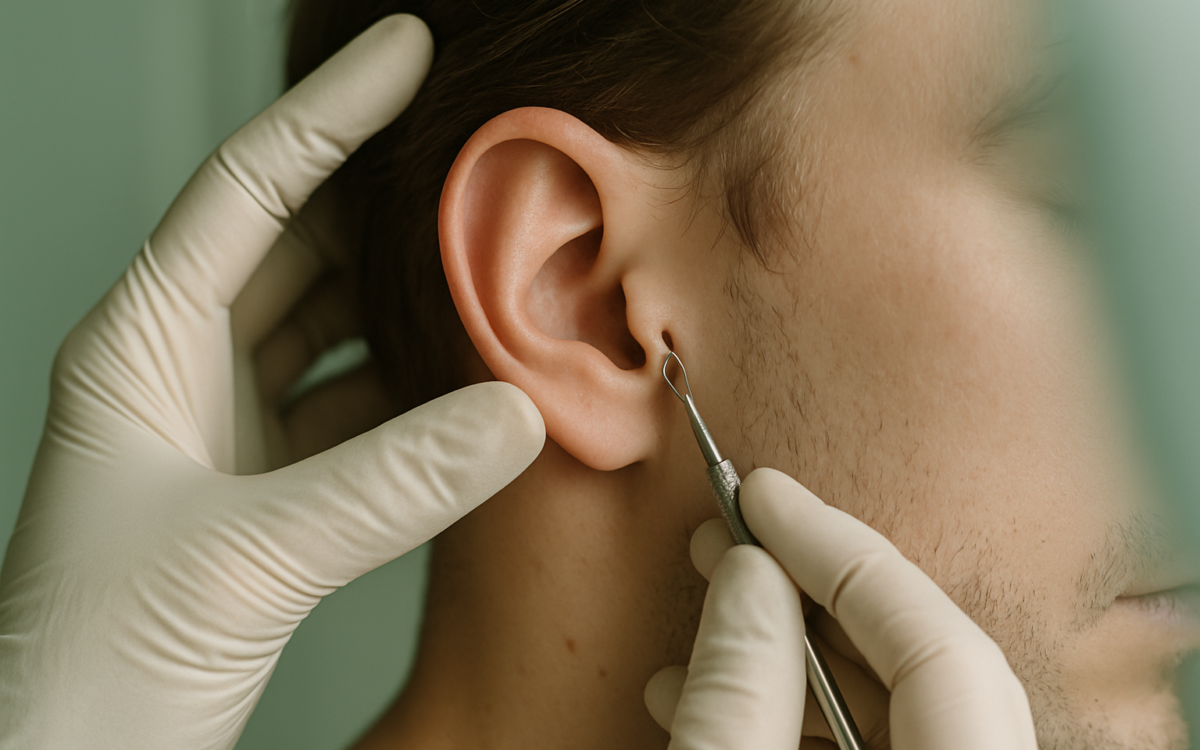
Many people are familiar with blackheads, those small dark spots that often appear on the face and nose. But did you know that they can also form in your ears? Ear blackheads may not be as visible as those on your face, but they can still be bothersome. In this article, we will explore what ear blackheads are, why they form, and how you can effectively manage and prevent them.
What Are Ear Blackheads?
Ear blackheads are a type of acne that occurs when hair follicles in the ear become clogged with excess oil, dead skin cells, and bacteria. The clogged pore becomes a comedo, which can be open to the air. This exposure to oxygen causes the trapped material to oxidize and turn black, giving rise to the term “blackhead.” Ear blackheads can appear in the ear canal, on the outer ear, or behind the ear.
Causes of Ear Blackheads
Several factors contribute to the formation of ear blackheads:
- Excess oil production: The oil glands in your skin can become overactive, particularly in response to hormonal changes, leading to more oil in the ear area.
- Dead skin cells: When skin cells don’t shed properly, they can accumulate and mix with oil, blocking the hair follicles.
- Hygiene practices: Infrequent cleaning of the ears can lead to a buildup of debris and dead skin, increasing the risk of clogged pores.
- Hair products: Hair gels, sprays, and other styling products can migrate to the ear area and contribute to blocked follicles.
Symptoms of Ear Blackheads
Ear blackheads often don’t cause significant discomfort, but they can be noticeable. Common signs include:
- Small dark spots in the ear region.
- Slight redness or inflammation around the blocked pores.
- Occasionally, a feeling of itchiness or irritation.
Treatment Options for Ear Blackheads
If you’re dealing with ear blackheads, several effective treatment options can help:
1. Gentle Cleansing
Using a gentle cleanser regularly can help remove excess oil and prevent clogged pores. It’s essential to avoid harsh scrubs, as the skin in and around the ears is sensitive.
2. Topical Treatments
Over-the-counter products that contain salicylic acid or benzoyl peroxide can help clear up blackheads. These ingredients work to exfoliate the skin and reduce oil production. Always follow the instructions on the packaging and be cautious of sensitive skin.
3. Regular Ear Hygiene
Maintaining a routine for ear hygiene can help prevent blackheads from forming. Use a soft cloth to clean the external part of your ears during your regular shower or bath.
4. Extractions
In some cases, it’s possible to remove blackheads manually. However, this should be done with caution or by a dermatologist to avoid skin damage. Do not attempt to squeeze or pick at blackheads yourself, as this can lead to irritation or infections.
Preventing Ear Blackheads
Prevention is often easier than treatment. Here are some steps to help you avoid ear blackheads in the first place:
- Practice good hygiene by cleaning your ears with a soft cloth regularly.
- Avoid using too many hair products, especially around the ear area.
- Keep your skin type and climate in mind when selecting skincare and hair products. Choose non-comedogenic options that won’t clog pores.
- Consider using oil-free moisturizers to prevent excess oil buildup.
When to See a Doctor
If you find that your ear blackheads become painful, inflamed, or do not respond to over-the-counter treatments, it may be time to consult a healthcare professional. Additionally, if you notice any unusual changes in your ear skin or if you develop any signs of infection, such as pus or fever, seek medical attention.
Conclusion
Ear blackheads are common and manageable with proper care and hygiene. By understanding what causes them and implementing effective prevention strategies, you can reduce the likelihood of their occurrence. Remember, though, that consulting a healthcare provider for persistent issues is always a wise choice. Taking care of your skin, even in less visible areas like your ears, is an essential part of your overall health.
