
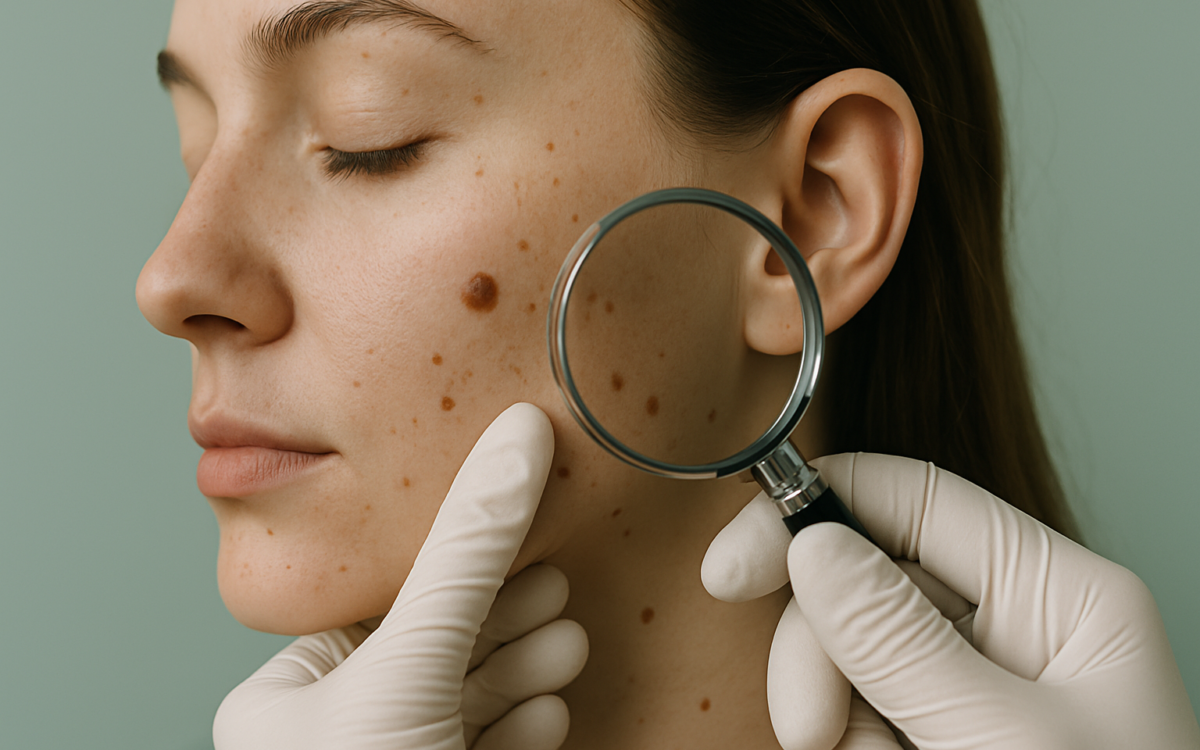
Moles are a common skin feature that many people have, particularly on the face. While most moles are harmless, they can sometimes raise concerns about skin health. Understanding moles and their characteristics can help you identify what’s normal and what may need further attention.
What Are Moles?
Moles, also known as nevi, are small growths on the skin that can appear anywhere on the body, including the face. They occur when pigment-producing cells called melanocytes grow in clusters. The appearance of moles can vary widely; they can be flat or raised, smooth or rough, and range in color from tan to dark brown, or even pink and red.
Common Characteristics of Facial Moles
Facial moles can be classified based on several characteristics:
- Size: Moles generally range from tiny dots to larger spots over a quarter of an inch.
- Shape: Most moles are symmetrical in shape. A mole that is irregularly shaped could be a cause for concern.
- Color: Even pigmentation is typical, but variations in color can indicate changes in the mole’s health.
- Texture: Moles can be smooth or somewhat raised. New changes in texture should be noted.
Most moles develop in childhood or young adulthood and tend to remain unchanged. However, monitoring their appearance over time is essential.
Types of Moles to Know
There are several types of moles that you may encounter on your face:
- Common moles: The typical benign moles you see on many people.
- Atypical moles: These moles are larger and have irregular shapes and colors. They can sometimes indicate a higher risk of skin cancer.
- Congenital moles: Present at birth, these moles can be larger and may carry a slightly increased risk of melanoma.
Identifying the type of mole you have can be essential for ongoing skin monitoring.
Causes of Moles on the Face
While the exact cause of mole development isn’t fully understood, several factors can contribute:
- Genetics: Family history can play a significant role in mole formation. If your parents have many moles, you might develop more, too.
- Sun exposure: Excessive exposure to ultraviolet (UV) rays from the sun can lead to the formation of moles over time.
- Hormonal changes: Hormonal shifts, especially during puberty or pregnancy, can cause existing moles to darken or new ones to form.
Keeping skin protected from the sun by wearing sunscreen can be a proactive step in managing mole development.
Monitoring Your Moles
It’s vital to keep an eye on your moles for changes. Here are some guidelines to help you monitor:
- Check for size, shape, and color changes regularly.
- Note any itching, bleeding, or crusting.
- Keep a photographic record if you notice changes over time.
The ABCDE rule is a helpful guide to remember:
- A: Asymmetry — One half doesn’t match the other.
- B: Border — Irregular, scalloped, or blurred edges.
- C: Color — Varied from one area to another (brown, black, tan, red, white, or blue).
- D: Diameter — Larger than a pencil eraser.
- E: Evolving — A mole that changes in size, shape, or color.
When to See a Doctor
Consult a healthcare professional if you notice any of the following changes in your moles:
- Changes in size, shape, or color.
- New moles appearing after age 30.
- Itching, bleeding, or any signs of inflammation.
- Any mole that looks different from your others.
Regular skin checks can help catch any potential concerns early, leading to better outcomes.
Conclusion
Moles on the face are common, often harmless, and can even be a unique part of your beauty. However, being mindful of changes and knowing when to seek medical advice is crucial for maintaining skin health. Regular check-ups with a dermatologist and practicing sun safety can go a long way in ensuring that your skin remains healthy and radiant.
For more information about skin health and moles, you can visit resources provided by the National Institutes of Health, Mayo Clinic, and the Centers for Disease Control and Prevention.
