
Thigh stretches play an essential role in enhancing flexibility, promoting better mobility, and preventing injuries. Whether you’re an athlete, a fitness enthusiast, or someone who primarily sits for long periods, incorporating thigh stretches into your routine can yield significant benefits. In this article, we’ll explore some effective thigh stretches, when to perform them, and how they contribute to overall well-being.
Understanding the anatomy of your thighs
Your thighs consist of several key muscles, primarily the quadriceps at the front and the hamstrings at the back. The quadriceps help extend your knee, while the hamstrings are responsible for bending it. Keeping these muscles flexible is essential for maintaining peak performance during physical activities as well as for everyday movements like walking and climbing stairs.
Benefits of thigh stretches
Incorporating thigh stretches into your routine can offer several advantages:
- Improved flexibility: Regular stretching helps lengthen muscles and increase your range of motion.
- Enhanced performance: Flexible thighs can boost your performance in sports and other physical activities.
- Reduced risk of injury: Stretching prepares your muscles for activity, decreasing the likelihood of strains and sprains.
- Better posture: Flexible thighs contribute to improved alignment and reduce the risk of discomfort while sitting or standing.
- Stress relief: Stretching can also promote relaxation and alleviate tension in your muscles.
When to do thigh stretches
Timing is crucial when it comes to stretching. Here are two key occasions to consider:
Warm-up before exercise
Performing thigh stretches as part of your warm-up is an excellent way to prepare your muscles for the physical activity ahead. It increases blood flow and helps your muscles become more pliable, reducing the risk of injury during your workout.
Cool-down after exercise
After you finish exercising, including thigh stretches in your cool-down routine can help facilitate recovery. Stretching helps to relax your muscles and may prevent soreness by removing built-up lactic acid.
Effective thigh stretches to try
Here are a few simple yet effective thigh stretches that anyone can perform:
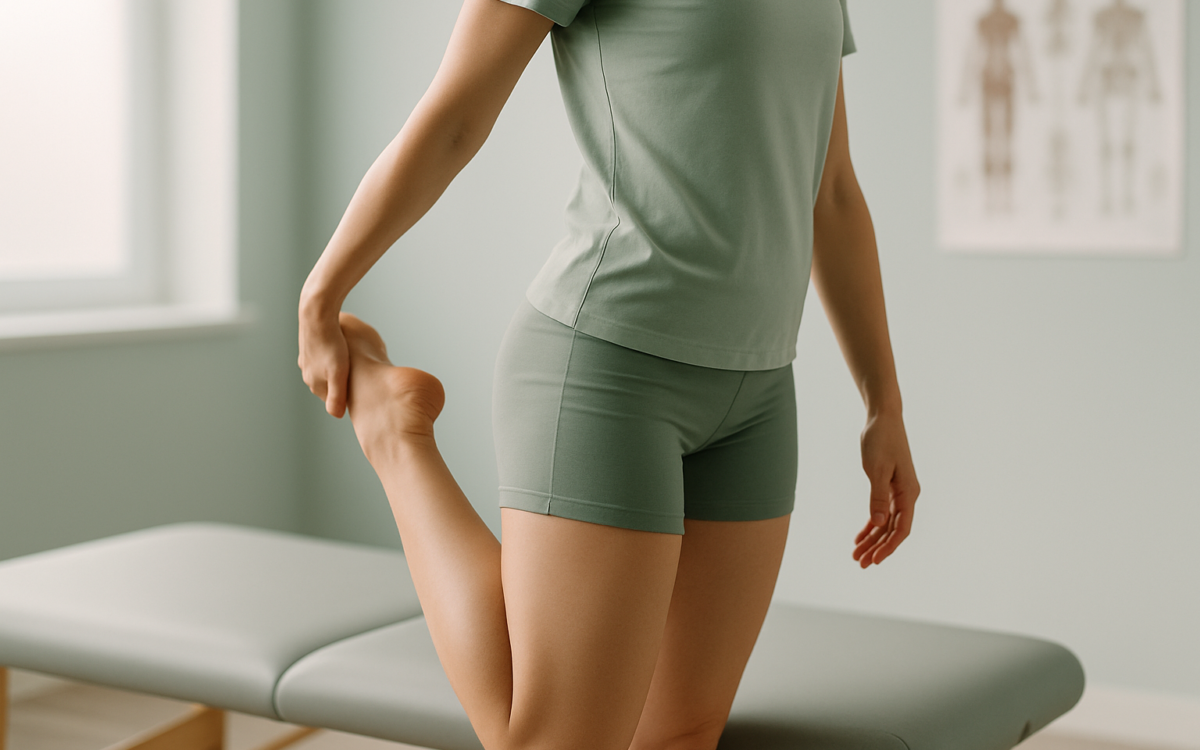
1. Standing quadriceps stretch
- Stand tall with your feet hip-width apart.
- Bend your right knee and bring your heel towards your glutes.
- Grab your ankle with your right hand and gently pull your foot closer to your body.
- Hold the stretch for 15-30 seconds, keeping your knees together.
- Repeat on the left side.
2. Hamstring stretch on the floor
- Sit on the floor with both legs extended straight in front of you.
- Slowly reach forward, trying to touch your toes or your shins, depending on your flexibility.
- Keep your back straight and hold the stretch for 15-30 seconds.
3. Butterfly stretch
- Sit on the floor and bring the soles of your feet together.
- Allow your knees to fall out to the sides.
- Gently push your knees towards the floor for a deeper stretch.
- Hold for 15-30 seconds while breathing deeply.
4. Lying quadriceps stretch
- Lie on your stomach with both legs extended.
- Bend your right knee and grab your ankle with your right hand.
- Gently pull your foot towards your glutes while keeping your pelvis down.
- Hold for 15-30 seconds, then switch sides.
Common mistakes to avoid
While stretching is beneficial, it’s important to practice proper technique to avoid injury:
- Don’t bounce: Stretch in a smooth, controlled motion. Bouncing can lead to muscle strains.
- Don’t stretch too far: Only stretch to the point of mild discomfort, never pain.
- Warm-up first: Always warm-up your muscles before stretching to reduce the risk of injury.
When to see a doctor
If you experience persistent pain or discomfort while stretching, it may be a sign of an underlying injury or condition. Consult a healthcare professional if:
- You have ongoing pain that does not improve with rest or stretching.
- You notice swelling or bruising in your thigh area.
- You experience difficulty walking or performing daily activities due to thigh pain.
For more information on muscle strains and injuries, you can visit resources such as NIH or the Mayo Clinic.
Conclusion
Thigh stretches are a simple yet powerful way to enhance flexibility, prevent injuries, and improve your overall fitness experience. By incorporating these stretches into your warm-up and cool-down routines, you’ll support your body in everyday activities and athletic pursuits. Remember to listen to your body, stretch safely, and consult a healthcare professional if you have any concerns about your musculoskeletal health.
