
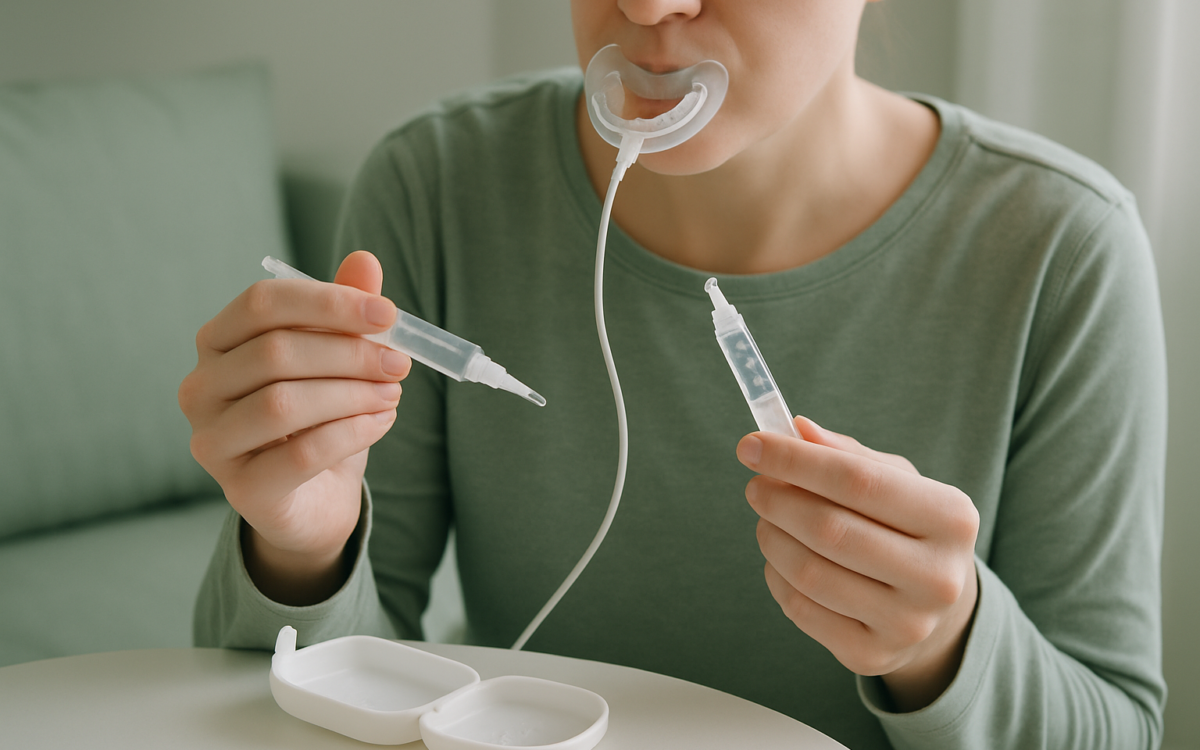
The desire for a bright, white smile has led many to explore various teeth whitening options. At-home dental bleaching offers a convenient and cost-effective solution that you can manage in your own space. However, it’s essential to understand the methods available, how they work, and the precautions to consider to ensure a safe experience.
Understanding at-home dental bleaching
At-home dental bleaching refers to the various methods you can use to lighten the color of your teeth from the comfort of your home. Unlike professional treatments, which are conducted by dentists with custom solutions, at-home products usually include whitening strips, gels, and trays that can be easily applied without the need for dental supervision.
These products often contain hydrogen peroxide or carbamide peroxide, both of which are effective bleaching agents. When applied to the teeth, they penetrate the enamel and break down the stains, resulting in a whiter appearance.
Types of at-home dental bleaching products
There are several options you can choose from when considering at-home dental bleaching:
- Whitening Strips: These thin, flexible plastic strips are coated with a gel that contains a bleaching agent. They’re designed to stick to your teeth and can be conveniently used for about 30 minutes a day for a set period.
- Whitening Gels: Offered in tubes or syringes, these gels can be applied directly to your teeth with a brush or tray. They often require longer wear times than strips.
- Whitening Trays: Custom-fitted or over-the-counter trays can be filled with a bleaching solution and worn for a prescribed period. Custom trays are more effective as they fit your teeth perfectly, allowing for even application of the gel.
- Whitening Toothpastes: While not as potent as gels and strips, certain toothpastes may help remove surface stains and maintain your whitening results.
How to effectively use at-home dental bleaching products
To achieve the best results from at-home dental bleaching, follow these tips:
- Follow the Instructions: Always adhere to the manufacturer’s guidelines for usage and duration. Overusing these products can lead to tooth sensitivity and gum irritation.
- Maintain Oral Hygiene: Regular brushing and flossing can help prevent further staining and enhance the effects of whitening treatments.
- Limit Staining Foods and Drinks: Be mindful of beverages like coffee, tea, and red wine, as well as foods with strong colors, as they can reverse your whitening efforts.
- Consult Your Dentist: Before starting any at-home treatment, it’s a good idea to speak with your dentist, especially if you have any underlying dental issues.
Precautions to consider
While at-home dental bleaching can be effective and safe, it’s important to take certain precautions:
- Check for Sensitivity: Many users experience increased tooth sensitivity after using bleaching products. If you notice prolonged sensitivity, stop the treatment and consult your dentist.
- Gum Health: Ensure that your gums are healthy before starting a whitening regimen. Bleaching solutions can cause irritation or discomfort if there are underlying gum issues.
- Excessive Use: Using bleaching products too frequently can lead to enamel erosion. Stick to recommended usage limits.
Individuals considering international treatments can also explore options such as international patient services, where various dental specialists can provide professional whitening solutions, sometimes with a unique perspective on at-home use guided by their expertise.
What results can you expect?
Results can vary significantly depending on the type of product used, the initial shade of your teeth, and adherence to the treatment schedule. Generally, most users report a noticeable difference within a few applications. However, there’s a limit to how white your teeth can get, especially for individuals whose discoloration is quite severe or linked to intrinsic factors such as age or genetics.
It’s worth noting that while at-home whitening treatments improve surface-level stains, they may not address deeper discoloration related to dental trauma or certain medications. In such cases, consulting with a dentist for professional whitening options might be more effective.
When to see a dentist
If you experience any of the following, it’s advisable to consult your dentist:
- Prolonged tooth sensitivity that persists after stopping treatments.
- Gum irritation or bleeding.
- Witnessing no results after consistent use.
- Concerns about the safety of using whitening products.
Conclusion
At-home dental bleaching can be an excellent way to achieve a brighter smile without the need for professional services, offering convenience and cost savings. However, it’s important to approach this method with caution. Understanding the options available, following usage guidelines, and ensuring you maintain good oral health will enhance your results and safety. Remember, consulting with your dentist can provide tailored advice and recommendations based on your unique dental needs.
