
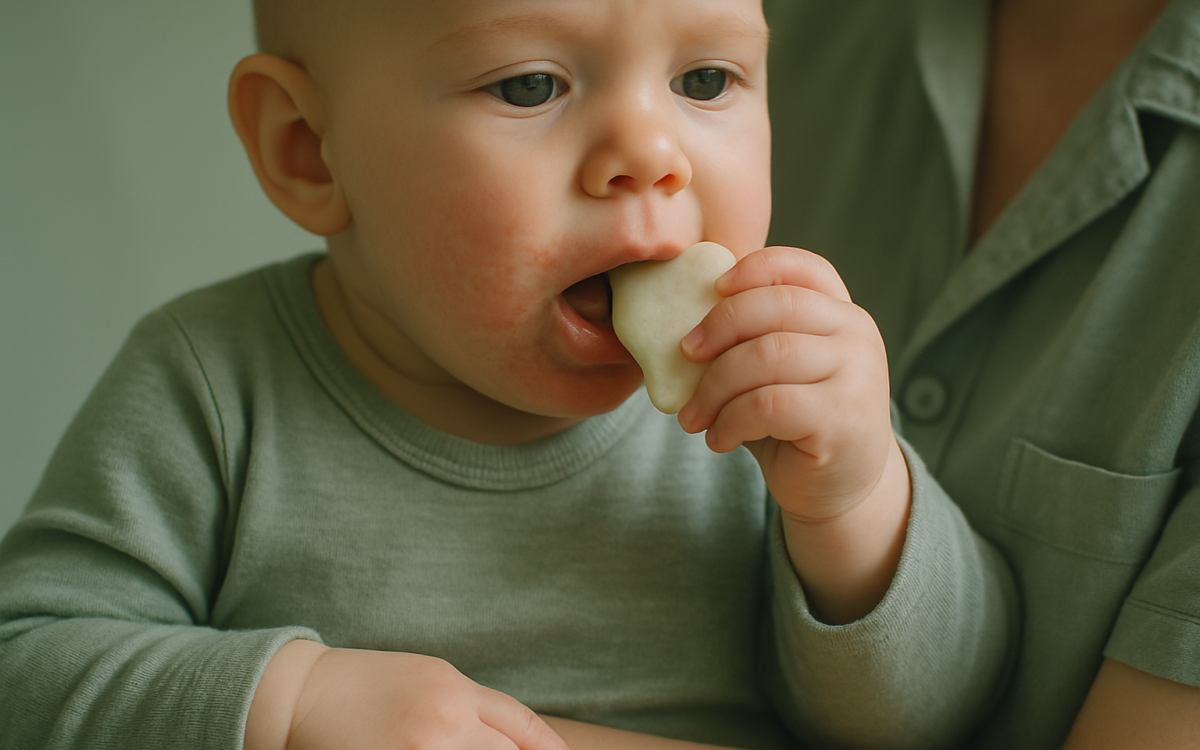
When your baby starts teething, it can be a challenging time filled with both excitement and discomfort. Amidst the drool and cranky moods, another issue may arise: teething rash. A teething rash is a common skin condition that can affect your baby’s delicate skin during this developmental stage.
What is Teething Rash?
Teething rash is a type of irritation that typically appears on a baby’s face and chin during the teething process. As babies begin to teeth, they often produce more saliva, which can irritate the skin, leading to redness, bumps, or a slight rash.
Causes of Teething Rash
The primary cause of teething rash is the increased drooling that often occurs when babies are teething. The extra saliva can cause skin irritation, especially in the areas where drool pools, such as:
- The chin
- The cheeks
- The neck
- Under the mouth
Other factors can exacerbate the rash, including:
- Friction from wipes or bibs
- Skin sensitivity
- Temperature changes
Signs and Symptoms
Recognizing a teething rash is essential for effective management. Symptoms include:
- Red or irritated skin around the mouth and chin
- Dry or chapped skin
- Small bumps or pimples
- Persistent drooling
While a teething rash can be uncomfortable for your baby, it usually isn’t severe and will often resolve itself as teething progresses and drooling decreases.
Treating and Managing Teething Rash
Management of teething rash focuses on relieving symptoms and protecting the skin. Here are some effective strategies:
1. Keep the Area Dry
Regularly wipe your baby’s chin and face with a soft cloth to remove excess saliva. Be gentle to avoid further irritation. You can also apply a dry bib to help absorb drool.
2. Use Barrier Creams
Applying a barrier cream, such as zinc oxide or petroleum jelly, can help protect the skin from moisture and further irritation. These products create a protective layer between the drool and your baby’s skin.
3. Choose Gentle Cleansers
When cleaning your baby’s face, opt for mild, fragrance-free cleansers that are less likely to aggravate sensitive skin. Pat the area dry gently, as rubbing can worsen irritation.
4. Monitor for Other Skin Conditions
Sometimes, teething rash can be mistaken for other skin conditions, such as eczema or impetigo. Watch for other symptoms, like fever or pus, which may indicate a different issue.
When to Seek Medical Help
While teething rash is typically not a cause for alarm, it is essential to know when to consult a healthcare professional. Consider reaching out to your child’s pediatrician if:
- The rash worsens or spreads
- There are accompanying symptoms like fever, swelling, or discharge
- Your baby appears to be in pain or discomfort beyond usual teething symptoms
Always remember that it’s better to be cautious when it comes to your baby’s health. If you have any concerns, don’t hesitate to contact your doctor for further guidance.
Conclusion
Teething rash is a common condition that many infants experience as they embark on their teething journey. While it can be uncomfortable for your baby, understanding its causes and management strategies can ease the process for both of you. Keeping the affected area dry, using barrier creams, and being gentle in your hygiene routine can significantly help. And as always, trust your instincts as a parent; if you’re concerned, reach out to a healthcare professional for advice.
