
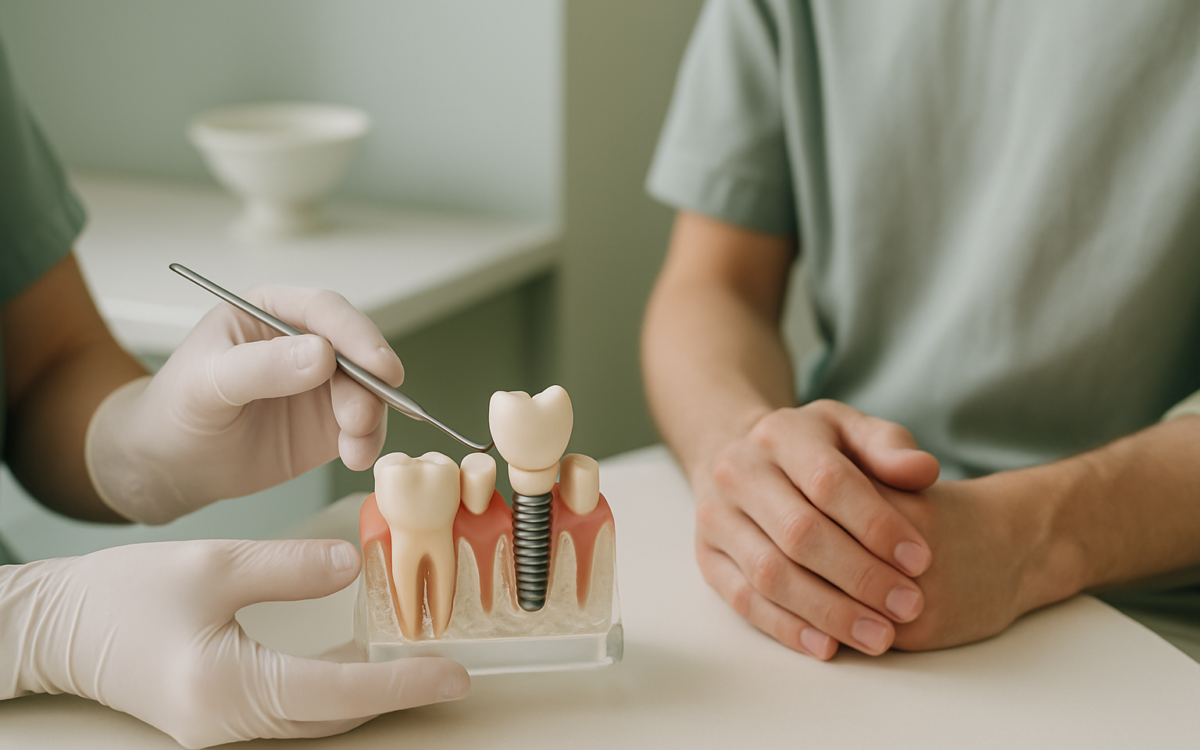
When it comes to restoring lost teeth, dental implants have become a popular and effective solution. Unlike dentures, which can slip and slide, implants are securely anchored in your jawbone, providing a stable and durable foundation for replacement teeth. However, the dental implant process can seem daunting at first. This article breaks down each step so you can feel more informed and confident about your dental journey.
What Are Dental Implants?
Dental implants are artificial tooth roots made of titanium that are placed in your jawbone. They serve as a sturdy base for fixed or removable replacement teeth. Due to their metal composition, implants fuse with your bone, ensuring they remain anchored and stable. According to the Mayo Clinic, thanks to their durability and functionality, dental implants often provide better aesthetics than traditional dentures.
Initial Consultation and Planning
The first step in the dental implant process is the initial consultation. Your dentist or oral surgeon will assess your oral health and discuss your medical history. They may perform certain diagnostic tests, such as X-rays or 3D imaging, to evaluate bone density and structure. This information is crucial for determining if you’re a good candidate for implants.
During this consultation, your dentist will explain the entire process, including what to expect during each phase and the estimated timeline for your treatment. It’s a good time to ask questions and address any concerns you may have.
The Surgical Procedure
If you’re deemed a suitable candidate, the next step is the surgical procedure. This is usually done in a dental office or surgical center. Here’s how the surgery typically unfolds:
- Anesthesia: Before starting, you will be given local anesthesia to numb the area. Sedation options may also be available for those who prefer a more relaxed experience.
- Implant Placement: The dentist will create a small incision in the gum to expose the bone, where the implant will be placed. A tiny hole is drilled into the bone, and the implant is inserted.
- Healing Time: After the implant is placed, it takes time for the bone to heal and fuses with the implant in a process called osseointegration. This can take several months.
During this healing period, you may receive a temporary crown to maintain your appearance and function while the implant integrates.
Placing the Abutment
Once the implant has properly fused with the jawbone, the next step is placing the abutment. The abutment is a small connector that will hold the replacement tooth or crown. This procedure may involve a second surgery, where the gum is reopened to attach the abutment to the implant.
After the abutment is placed, your gums will need time to heal again. This healing typically takes about two weeks. Once healed, your dentist will take impressions of your teeth to create a custom crown that matches your natural teeth.
Getting the Final Crown
The final step in the dental implant process is attaching the crown, which is the artificial tooth that sits on top of the abutment. Your dentist will place the crown, ensuring it fits comfortably and aligns correctly with your bite. Crowns can be made from various materials, such as porcelain or resin, to mimic the appearance of natural teeth.
After the crown is placed, your dentist will provide instructions on how to care for your implants. Good oral hygiene and regular dental visits are essential to maintain the health of your implants.
Considering International Treatment Options
If you’re considering getting dental implants, you might find that international treatment options can be appealing due to cost savings or unique specialist practices. acibademinternational.com offers insights into various dental clinics around the world, which can help you explore quality care while traveling. Just be sure to do thorough research and verify the credentials of any overseas provider before making a decision.
Potential Risks and Complications
Like any surgical procedure, dental implants come with certain risks. Possible complications include infection, nerve damage, or sinus issues (if the implant protrudes into the sinus cavity). However, with the right aftercare and by following your dentist’s instructions, the success rate for dental implants is very high, usually around 95%. It’s essential to keep an open and ongoing dialogue with your dentist throughout your treatment journey.
When to See a Doctor
If you experience prolonged pain, swelling, or bleeding following your dental implant surgery, it’s essential to contact your dentist. Other signs that warrant a visit include excessive sensitivity or difficulty chewing. Early intervention can help prevent potential complications.
Dental implants can significantly enhance your quality of life, restoring both the function and appearance of your smile. Understanding the dental implant process can help ease anxieties and prepare you for a successful outcome. Always consult your dentist for personalized advice and recommendations tailored to your unique situation.
