
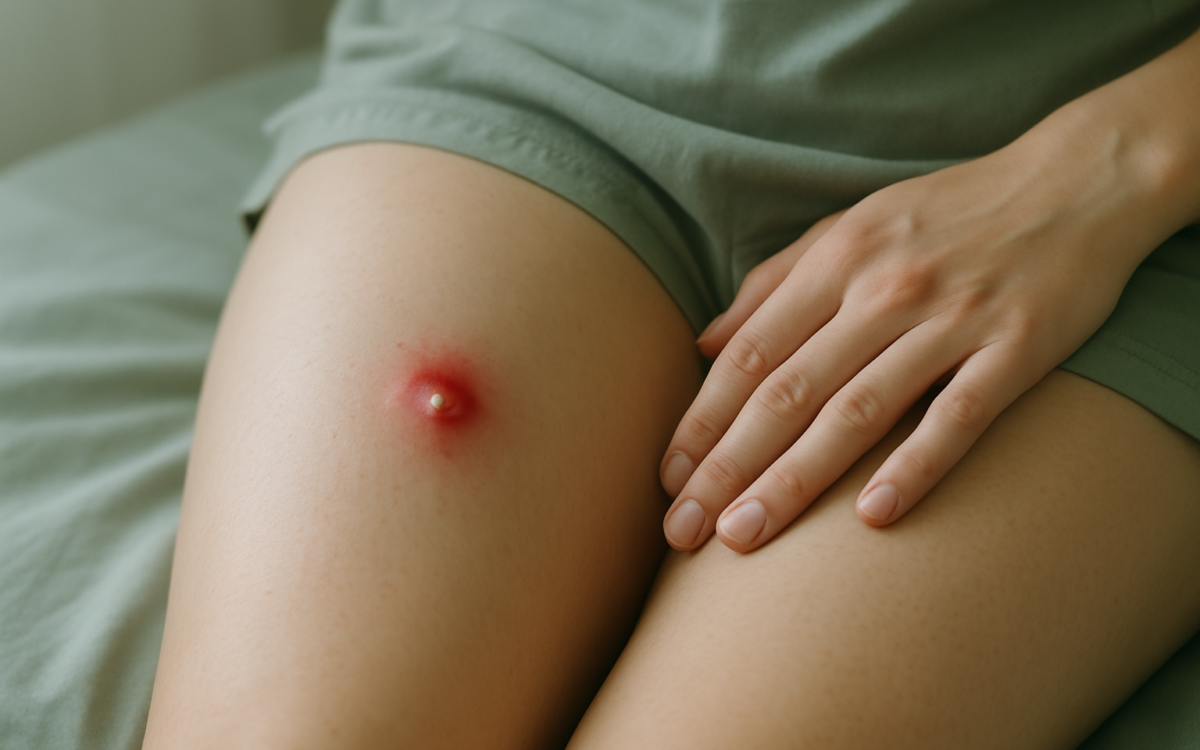
Inner leg boils can be uncomfortable and frustrating, often causing both physical pain and emotional distress. These painful lumps can occur for various reasons, ranging from bacterial infections to blocked hair follicles. Understanding what causes these boils and how to care for them can help you manage symptoms and prevent future occurrences.
What are inner leg boils?
Inner leg boils, medically known as furuncles, are pus-filled bumps that develop beneath the skin due to bacterial infection, specifically by Staphylococcus aureus. These infections often result from hair follicles becoming blocked or inflamed, leading to painful lumps.
Causes of inner leg boils
Boils can arise for various reasons, some of which are common and preventable. Here are some of the primary causes:
- Bacterial infection: The most frequent cause of boils is an infection by Staphylococcus aureus bacteria, which can enter the body through small cuts or abrasions.
- Poor hygiene: Lack of regular washing or inadequate wound care can contribute to the development of boils. Keeping your skin clean is essential for preventing infections.
- Friction and irritation: Constant rubbing or irritation of the skin can lead to boils. This can happen in areas where skin frequently rubs against skin or clothing, such as the inner thighs.
- Underlying health conditions: Certain conditions, like diabetes or weakened immune systems, can make individuals more prone to developing boils.
- Clogged hair follicles: If hair follicles are blocked by dead skin cells or oils, they can become infected, leading to a boil.
Recognizing the symptoms
Inner leg boils often present with specific symptoms. Being aware of these can help you identify the issue early:
- Pain and tenderness: Boils typically cause localized pain and tenderness in the affected area.
- Redness and swelling: The skin around the boil is usually red and swollen, indicating inflammation.
- Pus formation: You may notice a white or yellow center on the boil, which is pus.
- Fever: In some cases, especially if the infection is severe, you might experience a fever.
Treatment options
Most inner leg boils can be managed at home, but some may require medical attention. Here are typical management strategies:
Home care
If you notice a small boil on your inner leg, consider these home remedies:
- Warm compress: Applying a warm, moist cloth to the boil can help reduce pain and promote drainage.
- Keep it clean: Gently wash the area with soap and water to prevent further infection.
- Avoid squeezing: Do not attempt to pop or squeeze the boil, as this can spread infection or push bacteria deeper into the skin.
When to seek medical treatment
If the boil doesn’t improve within a few days, or if you experience severe pain, increased swelling, or fever, it is important to consult a healthcare professional. They may need to drain the boil or prescribe antibiotics to clear the infection.
Preventing inner leg boils
Prevention is often the best strategy when it comes to boils. Here are several tips to help reduce your risk:
- Practice good hygiene: Regular bathing and proper skin care can help keep your skin clean and minimize the risk of infections.
- Wear loose-fitting clothing: Avoid clothes that rub against your skin, especially in the inner thigh area, to prevent irritation.
- Manage underlying conditions: If you have diabetes or other conditions that affect your skin or immune system, work with your doctor to manage these issues effectively.
- Keep skin moisturized: Keeping your skin hydrated can help prevent dryness and irritation that can lead to boils.
When to see a doctor
It’s essential to monitor any boil that develops on your inner leg. Seek medical attention if:
- The boil is very painful, enlarges, or does not improve within a few days.
- You develop a fever or feel unwell.
- You have recurring boils or other skin problems.
Conclusion
Inner leg boils may be a common skin issue, but they can cause significant discomfort. By understanding their causes, recognizing symptoms, and knowing effective treatment and prevention strategies, you can better manage this condition. Always consult a healthcare professional if symptoms persist or worsen to ensure you receive the appropriate care.
