
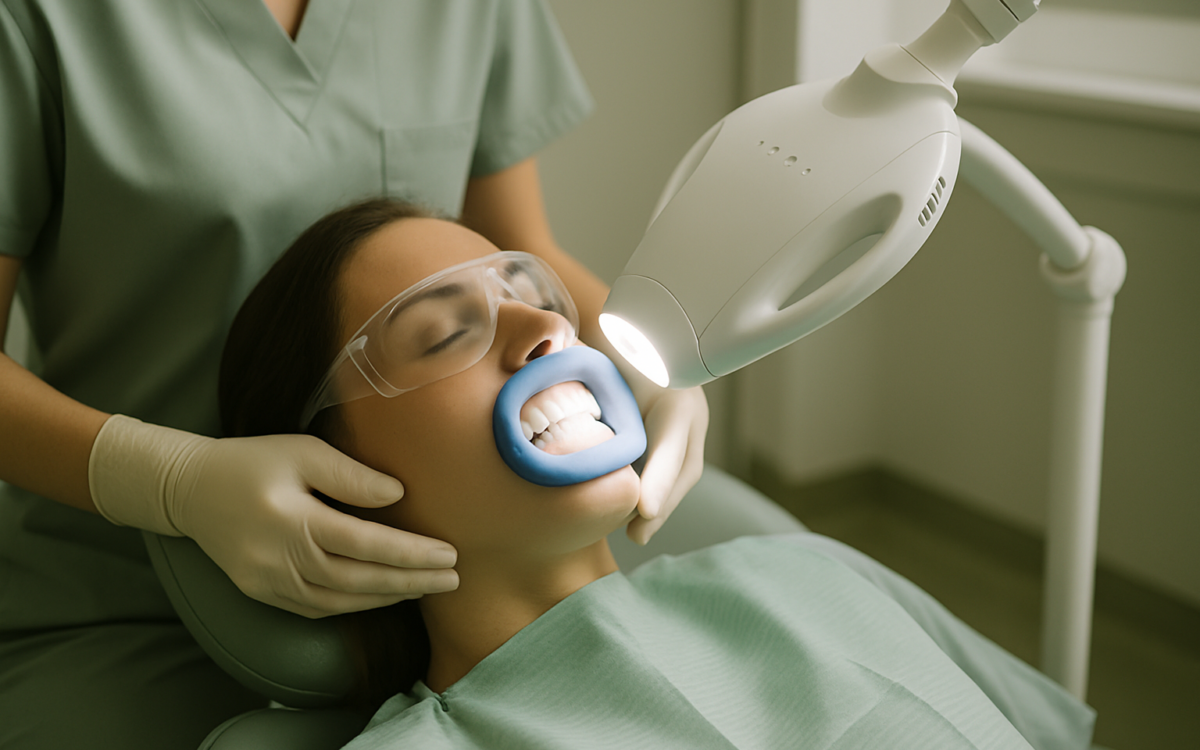
A bright, white smile is often seen as a sign of health and attractiveness. Many people seek ways to achieve that radiant look, and in-office dental bleaching has become a popular option. This procedure is designed to brighten your teeth quickly and effectively under the care of a professional. But what does the process entail, and how does it compare to other whitening methods? Let’s take a closer look at in-office dental bleaching to help you decide if it’s right for you.
What is in-office dental bleaching?
In-office dental bleaching, also known as chairside whitening, is a cosmetic dental procedure that lightens the color of your teeth. It is performed by a qualified dentist or dental hygienist who uses professional-grade bleaching agents. The process generally takes about one to two hours, depending on the desired results and the method used.
How does it work?
The in-office bleaching procedure typically follows these steps:
- Consultation: Before the procedure, your dentist will evaluate your oral health and discuss your expectations.
- Preparation: Your dentist will start by cleaning your teeth to remove any plaque or debris. This ensures that the whitening agents work effectively.
- Application: A barrier may be applied to protect your gums and soft tissues. The dentist then applies a bleaching gel containing hydrogen peroxide or carbamide peroxide to your teeth.
- Activation: Some methods use a special light or laser to activate the bleaching agent. This enhances the whitening effect, allowing for faster results.
- Rinsing: After a specific amount of time, the dentist rinses your mouth to remove the bleaching agent.
- Post-Care: Your dentist may recommend a follow-up visit or specific care tips to maintain your newly whitened smile.
The benefits of in-office dental bleaching
There are numerous advantages to choosing in-office dental bleaching over at-home whitening kits:
- Immediate results: Many people notice a significant difference in their tooth color after just one session.
- Professional oversight: A trained professional performs the procedure, reducing the risk of gum irritation or uneven results.
- Custom treatment: Your dentist tailors the strength of the whitening agent to fit your specific needs.
- Enhanced safety: In-office procedures generally have lower risks compared to over-the-counter products.
Potential side effects
While in-office dental bleaching is safe for most people, some may experience mild side effects. Common issues include:
- Tooth sensitivity: Many patients report temporary sensitivity in their teeth, especially to hot or cold foods and drinks.
- Gum irritation: The bleaching agents can cause irritation in the gums if they come into contact with them, though barriers can minimize this.
- Uneven results: Some individuals may notice that certain teeth lighten more than others, especially if you have restorations like crowns or fillings.
Most side effects fade within a few days. If you experience persistent issues, it is best to consult your dentist for guidance.
Considering options for international patients
For those seeking dental treatments abroad, in-office dental bleaching can be a valuable option. Many dental clinics worldwide offer competitive pricing and high-quality care. If you are considering traveling for cosmetic dental work, it’s wise to research clinics carefully. Organizations like international patient services can help you find verified facilities and navigate the process smoothly. They often have resources to ensure that your treatment is performed by qualified professionals, contributing to both safety and satisfaction.
How to maintain your results
After investing in your smile through in-office dental bleaching, maintaining those results is important. Here are some tips:
- Practice good oral hygiene: Brush twice a day and floss daily to keep your teeth and gums healthy.
- Avoid staining substances: Foods and drinks like coffee, tea, red wine, and berries can stain your teeth. Use a straw when possible, and rinse your mouth with water after consuming these products.
- Regular dental check-ups: See your dentist regularly, who can help monitor and maintain your whitening results.
When to see a dentist
If you are considering in-office dental bleaching, it is essential to consult with your dentist first. They can assess your oral health, determine whether you are a good candidate for the procedure, and discuss your expectations. Additionally, anyone experiencing prolonged sensitivity or discomfort after treatment should reach out to their dentist for advice.
In conclusion, in-office dental bleaching can be a great solution for those looking to brighten their smiles effectively and safely. With professional guidance and good care, you can enjoy compelling results that enhance your overall appearance and confidence.
