
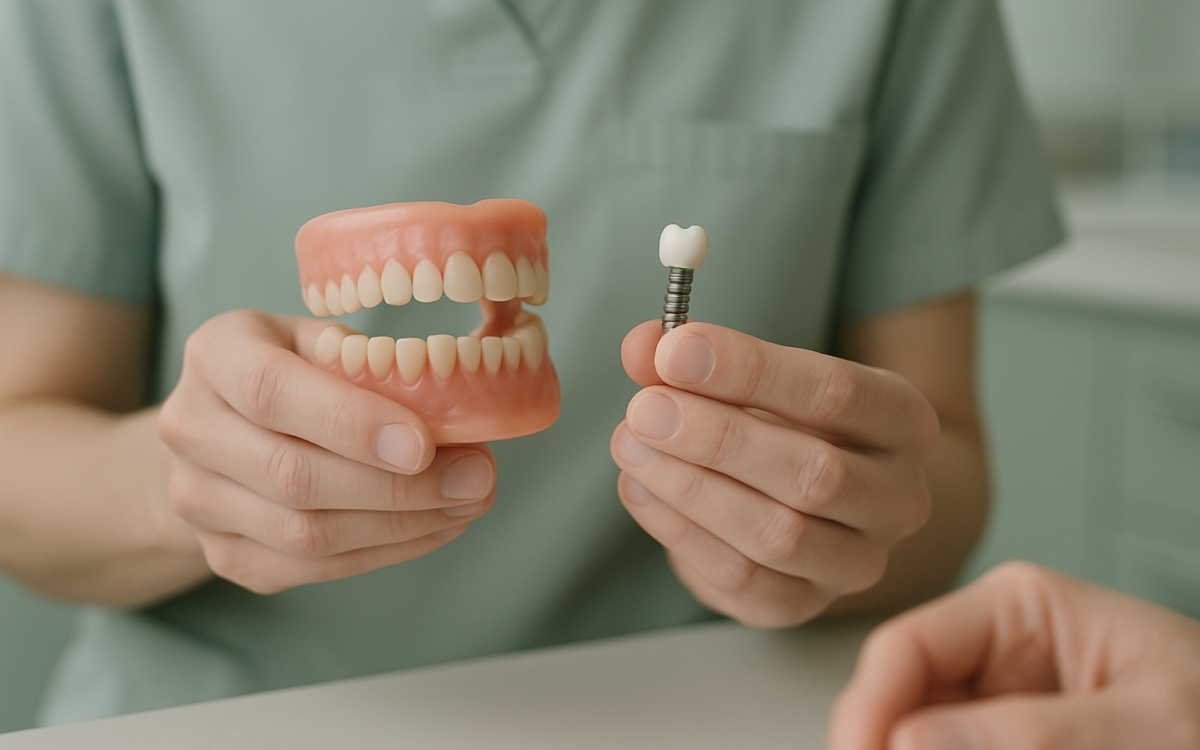
If you’re one of the millions who wear dentures, you know that while they can help with everyday functions like eating and speaking, they are not without challenges. One of the most common complaints is discomfort, often caused by the force of chewing or slipping in the mouth. This is where dental implants come into the picture, offering a solution that promises more stability and comfort. In this article, we will explore how dental implants work with dentures, their benefits, and what to expect from this combined treatment.
Understanding Dental Implants
Dental implants are artificial tooth roots made of titanium that provide a strong foundation for fixed or removable replacement teeth. Unlike traditional dentures that rest on the gums, implants are surgically placed into the jawbone, allowing them to bond with the bone in a process called osseointegration. This provides a sturdy base for dental prosthetics, including removable dentures, making them more stable and functional.
Types of Denture Solutions with Implants
Dental implants can be used to support various types of dentures, enhancing your experience significantly. Here are the main types:
-
Implant-Supported Overdentures
This is one of the most common solutions. Two to four implants are placed in the jaw, which then supports the overdenture. The removable denture clicks onto the implants, reducing movement and allowing for better chewing.
-
Implant-Retained Dentures
These dentures are secured to implants using clips or attachments. They are mostly removable, giving patients the flexibility to take them out for cleaning while ensuring a secure fit during daily activities.
-
Fixed Implant Dentures
For those looking for a more permanent solution, fixed implant dentures can be attached to multiple implants. Unlike traditional dentures, these stay in place and do not need to be removed for cleaning.
The Advantages of Using Implants for Dentures
Integrating dental implants with dentures offers several advantages:
- Improved Stability: Implants help to anchor dentures, minimizing movement and discomfort during eating or talking.
- Enhanced Comfort: The fixed nature of implants reduces the irritation often caused by traditional dentures, alleviating sore spots.
- Better Oral Health: Since implants stimulate the jawbone, they help prevent bone loss that can occur after tooth loss. This is crucial for maintaining facial structure and overall oral health.
- Improved Self-Esteem: A stable denture solution can significantly boost confidence when eating or speaking, allowing individuals to engage more freely in social situations.
The Procedure: What to Expect
The process of receiving dental implants for dentures involves several steps. Here’s a general overview:
- Consultation: Your dentist will evaluate your mouth, gums, and jawbone, possibly using imaging techniques. This is crucial to determine your eligibility for dental implants.
- Surgery: The dentist will place the dental implants into the jawbone. Typically, this is done under local anesthesia. Post-surgery, a healing period of several months is required for osseointegration.
- Placement of Dentures: Once the implants have integrated with the bone, your dentist will attach the dentures to the implants. This is often a simple procedure, allowing you to leave with a new, improved smile!
Caring for Your Dental Implants and Dentures
Caring for your implants and dentures is essential for ensuring their longevity:
- Daily Cleaning: Brush your dentures daily and use a soft-bristle toothbrush to avoid scratches on the implant surface.
- Regular Dental Visits: Routine check-ups are vital to monitor the condition of both the implants and gum health.
- Avoid Hard Foods: Be cautious with hard or sticky foods that may damage your dentures or dislodge implants.
Potential Risks and Considerations
While dental implants for dentures offer many benefits, it’s essential to be aware of potential risks:
- Infection: As with any surgical procedure, there is a risk of infection at the implant site.
- Bone Loss: Inadequate bone density may require a bone graft before implant placement. Your dentist will help determine if this is necessary.
- Cost: Dental implants can be more expensive than traditional dentures, so understanding coverage through insurance or financing options is crucial.
When to see a doctor
If you experience persistent discomfort, shifting of your dentures, or signs of infection (like swelling or discharge) around your implants, consult your dentist promptly. Early intervention is key to maintaining your oral health and the success of your implants.
In conclusion, dental implants can significantly improve the experience of wearing dentures. By offering a stable, comfortable, and functional solution to missing teeth, they help restore not only your smile but also your confidence and quality of life. Always consult with your dentist to determine if this option is right for you and to discuss any individual concerns you may have.
