
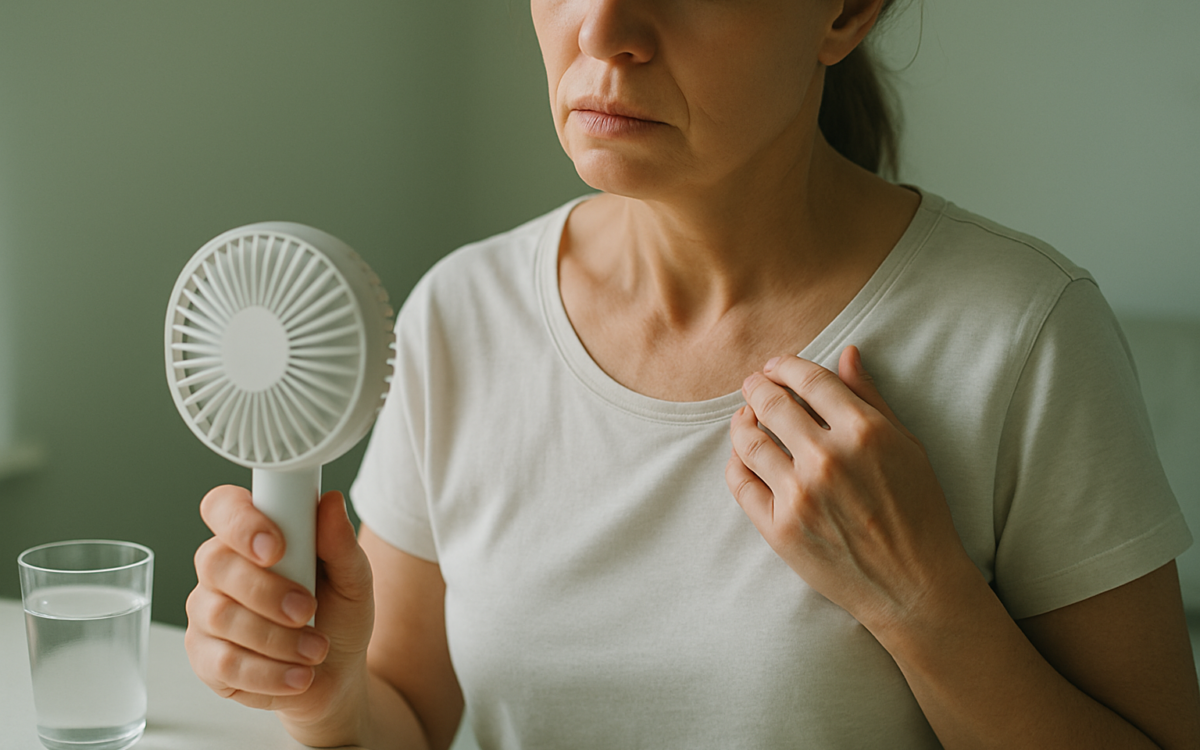
Hot flushes are a common experience for many women, especially during menopause. These sudden feelings of warmth, often accompanied by sweating, can be uncomfortable and sometimes even embarrassing. The good news is that there are numerous strategies you can adopt to minimize these effects and feel more at ease. This article will explore various ways to help you manage hot flushes, so you can navigate this phase of life with confidence.
Understanding hot flushes
Hot flushes occur when the body’s temperature regulation is disrupted, particularly due to hormonal changes associated with menopause. Fluctuations in estrogen levels can impact how your body responds to heat, leading to sudden episodes of warmth. While these can happen at any time, they are often triggered by factors such as stress, spicy foods, alcohol, or caffeine.
Dietary adjustments
Your diet can significantly influence the frequency and intensity of hot flushes. Here are some dietary modifications that might help:
- Stay Hydrated: Drinking plenty of water throughout the day can help regulate your body temperature. Aim for at least eight glasses daily.
- Avoid Trigger Foods: Identify and limit foods that may trigger hot flushes, such as spicy dishes, caffeinated drinks, and alcohol.
- Balance Your Plate: Incorporate more fruits, vegetables, whole grains, and lean proteins into your meals. These nutrient-rich foods can support overall health and help you feel better.
Cooling techniques
There are several simple methods you can use to cool down when a hot flush occurs:
- Dress in Layers: Wear loose-fitting, breathable clothing made from natural fibers like cotton. This allows for better airflow and makes it easier to remove layers during a hot flush.
- Use Fans: Keep a fan nearby or use a portable one that you can carry around. Personal cooling devices can offer immediate relief when needed.
- Cooling Baths or Showers: Taking a cool bath or shower can help lower your body temperature. A quick rinse can work wonders after a hot flush.
Mindfulness and relaxation techniques
Stress can worsen hot flushes, making relaxation crucial. Consider incorporating the following practices into your routine:
- Meditation: Spend a few minutes each day in quiet meditation to help calm your mind and body.
- Deep Breathing Exercises: When you feel a hot flush coming on, try deep breathing techniques to reduce stress and manage the episode more effectively.
- Yoga or Tai Chi: Gentle movements through yoga or Tai Chi not only help to soothe the mind but can also enhance your body’s ability to cope with physical symptoms.
Hormonal and non-hormonal treatments
If lifestyle changes aren’t enough to control hot flushes, you might want to explore medical options. Discuss with your healthcare provider whether hormone replacement therapy (HRT) or non-hormonal medications could be suitable for you. HRT can alleviate many menopausal symptoms, including hot flushes, by restoring hormone levels. However, it isn’t suitable for everyone, so it’s crucial to weigh the benefits and risks with your doctor.
Alternative treatments, like herbal supplements—a popular choice among some women—are another avenue to consider. Some studies suggest that certain herbs like black cohosh may help, but it’s essential to consult with a healthcare professional before starting any supplements.
Keeping a diary
Track your hot flushes, triggers, and any strategies that help you cope. Maintaining a diary can help identify patterns and factors that worsen your symptoms. This information can be beneficial when discussing treatments with your healthcare provider.
Embracing the change
While hot flushes can be an uncomfortable aspect of menopause, it’s essential to remember that they are temporary. Embracing this transition with the right mindset and strategies can significantly improve your quality of life. Many women find that after the initial phase, their symptoms dissipate, leading to a new era of stability. Ensuring you have a supportive network of friends or family who understand what you’re experiencing can also make a world of difference.
When to see a doctor
If your hot flushes are severe, persistently disrupt your daily life, or are accompanied by other concerning symptoms, it’s essential to consult with a doctor. They can help rule out other causes and offer personalized treatment options. For more information on menopause and related symptoms, the National Institutes of Health provides valuable resources.
In conclusion, managing hot flushes is about finding what works best for you. By making informed choices about diet, lifestyle, and possibly medical treatments, you can take control of your experience during this natural phase of life. Remember, you are not alone, and many resources are available to help you through.
