
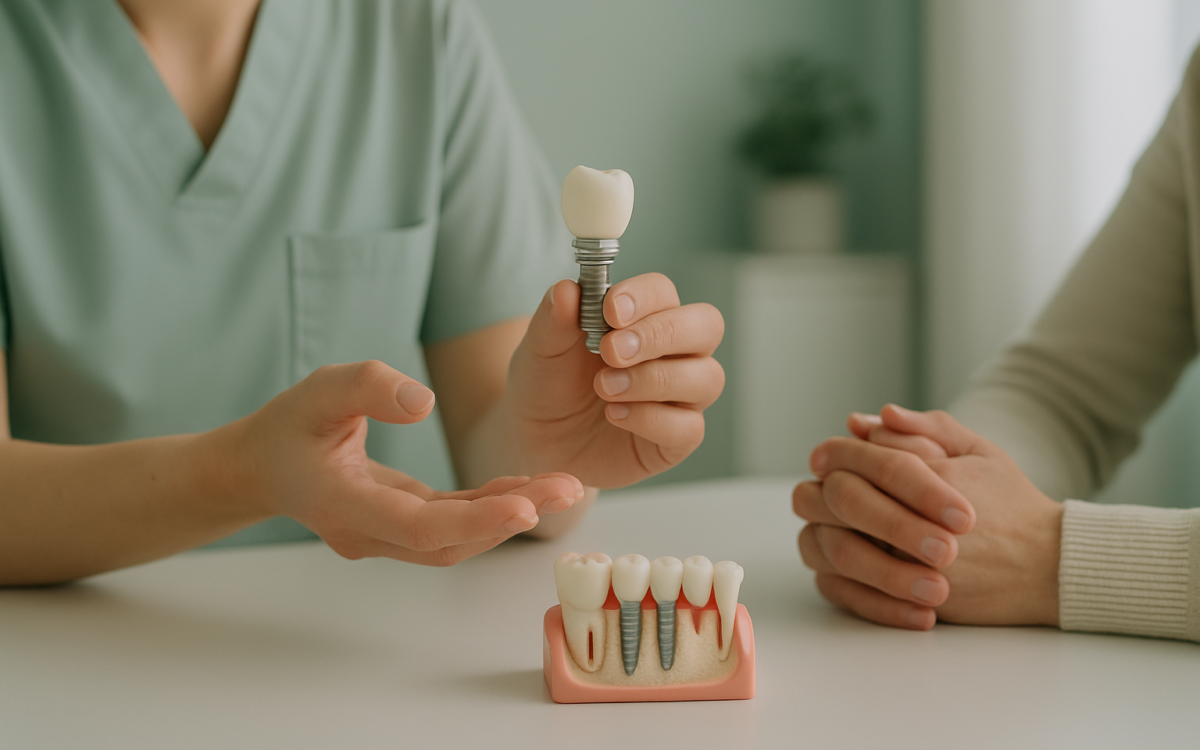
If you’re missing one or more teeth, dental implants can be a great solution to restore not only your smile but also your confidence. Unlike dentures, which can shift or slip, dental implants are anchored securely in your jawbone, offering a more permanent and natural-feeling option. But with various types of dental implants available, how do you choose the best option for you? Let’s break down the different types of dental implants and what you need to know.
Understanding Dental Implants
Dental implants are titanium posts that serve as artificial tooth roots. They are surgically placed into your jawbone, where they fuse with the bone over time through a process called osseointegration. This process provides the stability needed for the replacement teeth.
Implants can support individual crowns, bridges, or even full dentures. They can be a great option for anyone missing teeth due to decay, injury, or other reasons. According to the National Institutes of Health, dental implants can improve oral health, enhance appearance, and boost the ability to chew and speak comfortably.
Types of Dental Implants
There are several types of dental implants, each designed to meet different needs and preferences:
- Endosteal Implants: These are the most common type of dental implants. They are inserted directly into the jawbone and are typically shaped like small screws. After the implant merges with the bone, a crown is placed on top.
- Subperiosteal Implants: These are placed under the gum but above the jawbone. They are less common and usually reserved for patients who may not have enough healthy jawbone left for an endosteal implant.
- Zygomatic Implants: These are an option for patients with severe bone loss in the upper jaw. They are implanted into the cheekbone (zygoma) rather than the jawbone. Because of their complexity, zygomatic implants must be inserted by experienced oral surgeons.
The Implant Procedure
Getting dental implants typically involves several steps, often over several months. Here’s an overview of the process:
- Initial Consultation: Your dentist will evaluate your oral health, discuss your medical history, and take X-rays to determine if implants are right for you.
- Surgical Placement: During the first surgery, the dental implant is placed into the jawbone. Local anesthesia or sedation is usually used to minimize discomfort.
- Healing Period: The healing process can take several weeks to months, during which the implant fuses with the bone. Your dentist may provide a temporary crown during this time.
- Abutment Placement: Once healed, an abutment (a connector piece) is attached to the implant. This is where the crown or prosthetic tooth will eventually connect.
- Crown Placement: Finally, a custom-made crown is affixed to the abutment, completing the restoration.
Benefits of Dental Implants
Dental implants offer several advantages over traditional tooth replacement options:
- Natural Look and Feel: Dental implants are designed to mimic the appearance and function of natural teeth.
- Durability: With proper care, dental implants can last many years, even a lifetime.
- Bone Health: Implants help maintain jawbone integrity by preventing bone loss that often occurs with missing teeth.
- Improved Function: They restore your ability to chew and speak effectively without the worry of slippage.
Considerations Before Choosing Implants
While dental implants can be an excellent solution, there are some factors to consider:
- Bone Density: Adequate bone density is essential for a successful implant. If you have experienced bone loss, procedures to restore bone may be necessary.
- Overall Health: Certain medical conditions, such as uncontrolled diabetes or heart disease, may affect your ability to undergo the procedure.
- Costs: Dental implants can be more expensive than other options, such as dentures. Check with your insurance provider to understand your financial responsibilities.
When to See a Doctor
If you’re considering dental implants, consult with a dental professional to discuss if they’re a suitable option for your specific situation. Look for a qualified oral surgeon or a dentist experienced in implantology. Any concerns about existing dental issues should also be addressed before moving forward with the procedure.
Whether you’re facing tooth loss or want to enhance your smile, understanding the different dental implant options is crucial to making the best decision for your health and lifestyle. Speak with your dentist to explore which type of implant might be the right choice for you.
Conclusion
Dental implants provide a reliable and aesthetically pleasing solution for missing teeth and can significantly improve your quality of life. With various types of implants available, it’s important to weigh your options carefully. By discussing your unique needs with a dental professional, you’ll be better equipped to choose the implant that best meets your goals for a healthy, beautiful smile.
