
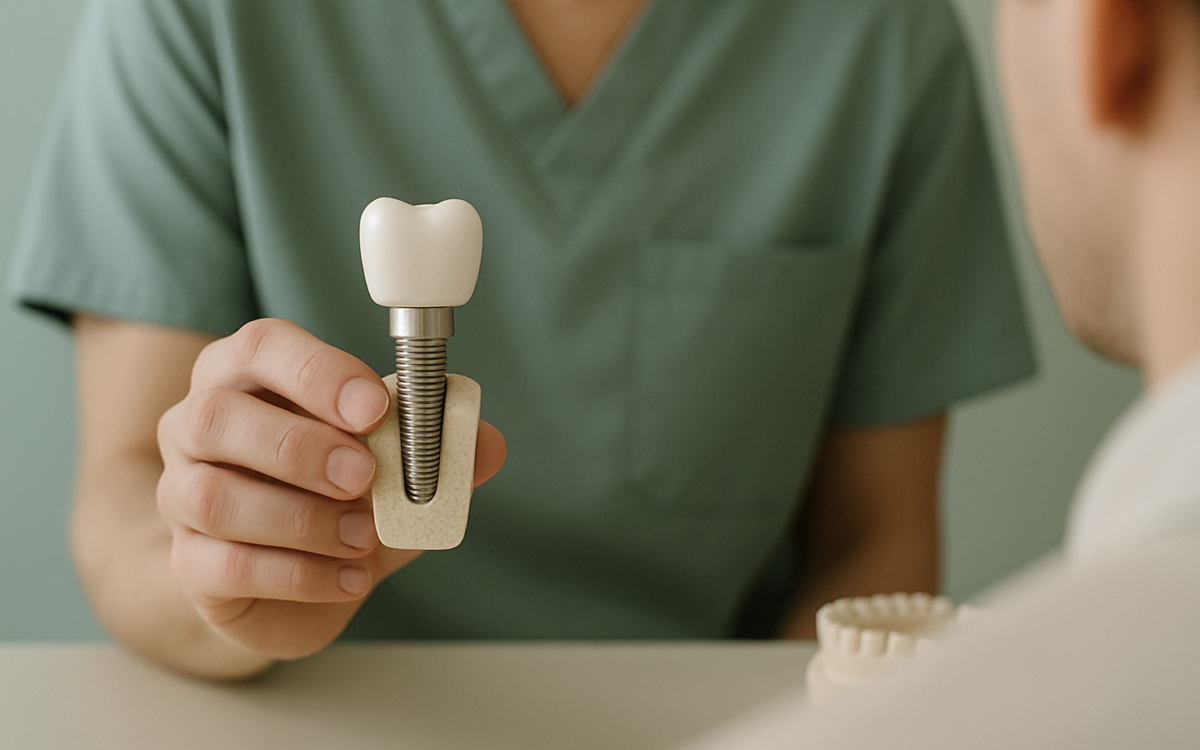
For many, losing a tooth can feel like a significant blow, not only affecting appearance but also impacting everyday activities such as eating and speaking. Dental implants are a popular solution that can restore your smile and improve your quality of life. This guide will explore what dental implants are, how they work, and what you should know before considering this option.
What are dental implants?
A dental implant is a small titanium post that is surgically placed into the jawbone to act as the root of a missing tooth. Over time, the bone heals around the implant, anchoring it securely in place. A crown, which is the visible part of the tooth, is then attached to the implant, restoring functionality and appearance.
Benefits of dental implants
Dental implants offer several advantages over other tooth replacement options like dentures or bridges. Here are some key benefits:
- Natural look and feel: Implants look and function like natural teeth, allowing you to eat, speak, and smile confidently.
- Durability: With proper care, dental implants can last many years, often outlasting other dental restoration methods.
- Bone health: Implants stimulate the jawbone, preventing bone loss that occurs when teeth are missing.
- Improved oral health: Unlike bridges, implants don’t require modification of adjacent teeth, preserving your natural tooth structure.
The dental implant procedure
The process of getting a dental implant typically involves several steps:
1. Initial consultation
During your first visit, your dentist will assess your oral health and take X-rays to determine if you’re a good candidate for implants. They will discuss your goals and any concerns you might have.
2. Surgical placement
Once approved, the dental implant will be surgically inserted into your jawbone under local anesthesia. This procedure usually takes one to two hours, and you may be prescribed pain medication for any discomfort.
3. Healing period
After the implant placement, a healing period of several months is typically required. During this time, the jawbone fuses with the implant in a process called osseointegration, ensuring stability.
4. Abutment placement
Once fully healed, an abutment is attached to the implant. This piece connects the implant to the crown and is usually done under local anesthesia.
5. Crown placement
Finally, a custom-made crown is placed on the abutment, completing the procedure. Your dentist will ensure that the crown matches your natural teeth for a seamless appearance.
Aftercare for dental implants
Caring for your dental implants is essential to ensuring their longevity. Here are some tips to maintain good oral hygiene:
- Brush your teeth twice a day with a non-abrasive toothpaste.
- Floss daily to remove plaque and prevent gum disease.
- Visit your dentist regularly for check-ups and cleanings.
- Avoid hard foods that could damage the implant or crown.
Potential risks and complications
While dental implants are generally safe, there are potential risks involved. Some complications can include:
- Infection at the implant site
- Damage to surrounding teeth or tissues
- Nerve damage causing pain, numbness, or tingling
- Sinus issues if the implants are placed in the upper jaw
It’s crucial to discuss these risks with your dentist before proceeding with surgery. Most complications can be minimized with careful planning and a skilled practitioner.
Are dental implants right for you?
Dental implants aren’t suitable for everyone. Factors such as the condition of your jawbone, overall health, and whether you smoke can affect your eligibility. A thorough consultation with your dentist will help determine if implants are the best option for you.
When to see a doctor
If you experience any of the following signs after getting a dental implant, it may be time to consult your dentist:
- Persistent pain or swelling at the implant site
- Difficulty chewing or discomfort when using the implant
- Signs of infection, such as fever or discharge
Conclusion
Dental implants can be a transformative solution for those missing teeth, offering a range of benefits from improved aesthetics to enhanced oral health. Understanding the procedure, aftercare, and potential risks is crucial for making an informed decision. If you’re considering dental implants, consult with your dentist to explore your options further and determine the best course for your dental health.
