
A bright, white smile can boost your confidence and help you make a great impression. While many people turn to professional treatments to whiten their teeth, at-home teeth whitening kits have become increasingly popular for their convenience and affordability. But with so many options available, it can be challenging to determine which kits are the best. In this article, we will explore various at-home teeth whitening methods, their effectiveness, and what to consider when choosing the right kit for you.
Understanding Teeth Stains
Before diving into teeth whitening options, it’s essential to understand why our teeth become discolored. There are two main types of stains:
- Extrinsic stains: These are surface stains caused by food, drinks, and habits, such as smoking. Common culprits include coffee, tea, red wine, and certain fruits.
- Intrinsic stains: These occur within the tooth and may be caused by factors such as aging, certain medications, or tooth trauma.
Knowing the type of stains you’re dealing with can help you choose the right whitening solution.
Types of At-Home Teeth Whitening Kits
At-home whitening kits come in various forms, each with its unique strengths and weaknesses. Understanding these types can help you find the best one for your needs:
1. Whitening Strips
Whitening strips are thin, flexible plastic strips coated with a whitening gel containing hydrogen peroxide or carbamide peroxide. They are easy to use and can be applied directly to the teeth for a specified time, usually 30 minutes to an hour per session. Many users report visible results within a few days.
2. Whitening Trays
Whitening trays come in two forms: customizable and pre-filled. Custom trays, which mold to fit your teeth, can offer more effective results, while pre-filled trays are convenient but may not deliver as uniform coverage. Both methods usually require wearing the trays for several hours or overnight.
3. Whitening Toothpaste
Whitening toothpaste contains mild abrasives and chemical agents that help remove surface stains. While they may not provide dramatic results, they can be effective for maintaining a bright smile when used regularly.
4. LED Whitening Kits
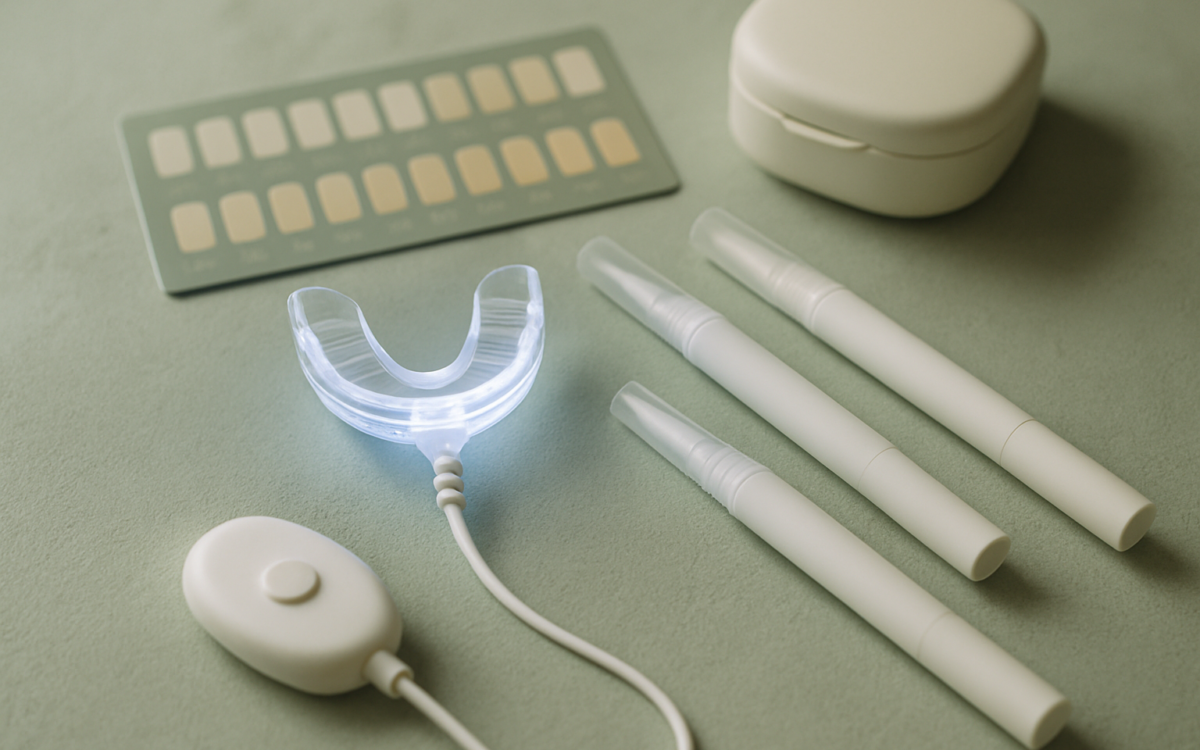
Some at-home kits use LED lights in combination with whitening gels to enhance the whitening process. The idea is that the light activates the gel, making it more effective. While some users claim to have seen results, scientific support for the efficacy of LED methods is still limited.
How to Choose the Right Kit
Selecting the best at-home teeth whitening kit for your needs requires some consideration. Here are some essential factors to think about:
- Type of Stains: Choose a product that targets the type of stains you have on your teeth.
- Ingredients: Check the active ingredients in the whitening agents. Products containing less than 10% hydrogen peroxide are usually safer for at-home use.
- Time Commitment: Some kits require longer application times than others. Ensure you select a product that fits your schedule.
- User Reviews: Look for reviews from other users. They can provide insights into the effectiveness and ease of use of the product.
Safety Considerations
While at-home teeth whitening kits can be effective, it’s essential to use them safely. Overuse can lead to tooth sensitivity and gum irritation. Always follow the manufacturer’s instructions and perform a patch test, if possible, to see how your teeth and gums react to the product. Additionally, consult your dentist if you have concerns about the safety or appropriateness of a kit for your dental health.
The Mayo Clinic suggests that anyone considering teeth whitening treatments should consult with their dentist, especially if they have existing dental issues.
When to See a Doctor
If you experience significant tooth sensitivity or gum discomfort during or after using a whitening kit, it’s important to consult your dentist. Other signs that you should seek professional advice include:
- Persistent pain or discomfort
- Bleeding gums
- Unusual changes in mouth sensation
Regular dental check-ups can also help monitor the overall health of your teeth and gums.
Conclusion
At-home teeth whitening kits can be an excellent option for those looking to brighten their smiles conveniently and affordably. It’s crucial to choose the right product based on your specific needs while keeping safety in mind. With a little research and careful selection, you can find a kit that provides effective and pleasing results. Remember, a radiant smile is often just a few treatments away!
