
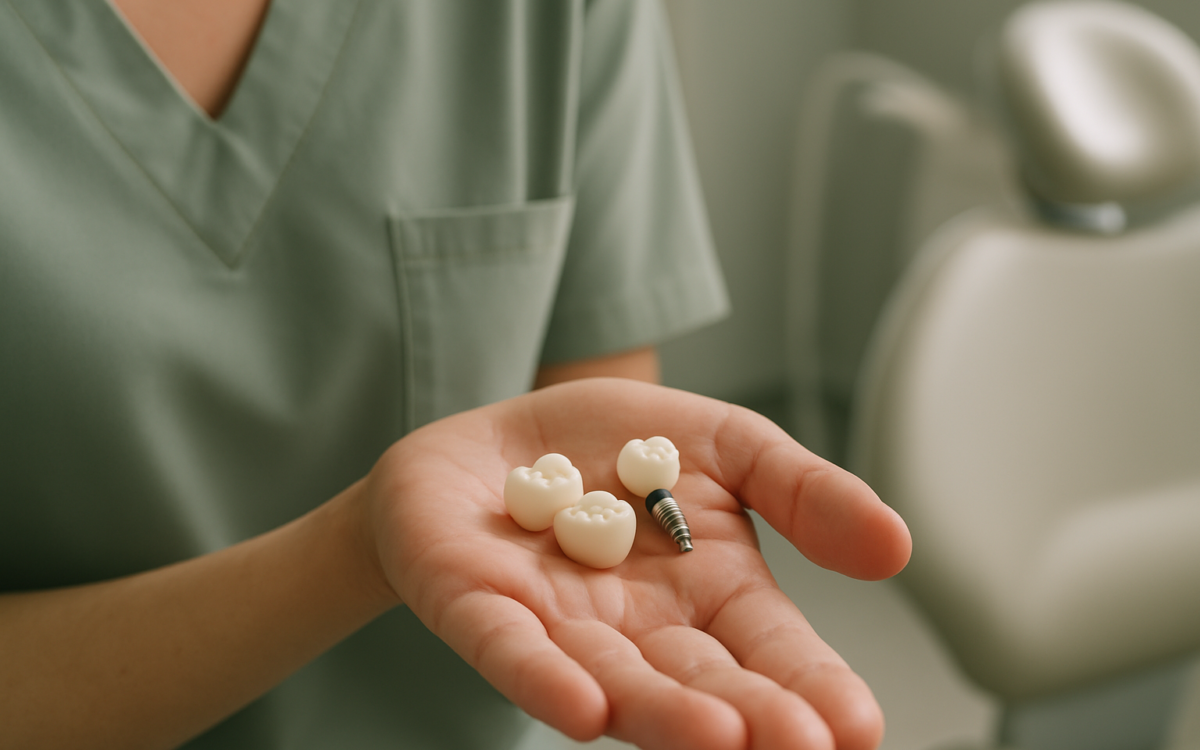
When it comes to dental health, maintaining a beautiful smile is often as important as ensuring proper function. Two common solutions that help restore teeth are dental crowns and implants. Both serve significant roles in restorative dentistry, but they are used for different purposes. In this article, we will explore what crowns and implants are, how they work, their benefits, and the differences between them.
What Are Dental Crowns?
A dental crown is a cap placed over a damaged or weakened tooth to restore its shape, size, strength, and appearance. It can be made from various materials, including ceramic, metal, and resin. Crowns are often used in situations where a tooth has decayed significantly, cracked, or after a root canal treatment.
When Are Crowns Recommended?
- Cracked or worn-down teeth: If a tooth is severely damaged from grinding or injury, a crown can protect it.
- Decayed teeth: Crowns can cover a tooth that has significant decay that can’t be fixed with a filling.
- Root canal treatment: After a root canal, a tooth needs additional support, and a crown can provide it.
- Cosmetic enhancements: Some people use crowns to enhance their smile and create a more uniform appearance.
How Are Crowns Placed?
The process for getting a dental crown usually involves two visits. During the first visit, the dentist will assess the tooth and prepare it by shaping it appropriately. An impression of the tooth is then taken, and a temporary crown may be placed until the permanent one is ready. The permanent crown generally takes a few weeks to construct and is placed during the second visit.
What Are Dental Implants?
A dental implant is a permanent fixture surgically placed into the jawbone to replace a missing tooth. It acts as a root for a replacement tooth, known as a crown, which is attached afterward. Implants are typically made from titanium, a material well-accepted by the body, ensuring a solid foundation for the crown.
When Are Implants Recommended?
- Missing teeth: Implants are ideal for individuals who have lost a tooth due to injury, decay, or gum disease.
- Stable teeth structure: Implants help maintain the structure of the jawbone and prevent further dental issues.
- Improved confidence: Many choose implants for aesthetic reasons; they can restore a natural-looking smile.
How Are Implants Placed?
The implant process can take several months and typically involves multiple steps. Initially, a dentist or oral surgeon will place the titanium implant into the jawbone during a surgical procedure. Once it has integrated with the bone, which may take several months, an abutment is attached to hold the crown. Finally, a custom-made crown is placed on the abutment, completing the implant process.
Comparing Crowns and Implants
While both crowns and implants are used to restore teeth, they serve different needs. Crowns are applied over existing, damaged teeth, while implants serve as replacements for missing teeth. Here are key differences:
- Function: Crowns protect damaged teeth; implants replace missing teeth.
- Structure: A crown goes over an existing tooth; an implant is surgically fixed into the jawbone.
- Longevity: Both can last a long time with good care, but implants often offer a more permanent solution.
Care for Crowns and Implants
Taking care of both crowns and implants is essential for longevity. Here are some care tips for each:
Caring for Crowns:
- Brush your teeth at least twice a day with fluoride toothpaste.
- Floss around the crown daily to remove plaque buildup.
- Visit your dentist regularly for check-ups and cleanings.
Caring for Implants:
- Maintain a rigorous oral hygiene routine—brush twice a day and floss daily.
- Consider using a soft-bristled toothbrush to avoid irritating the gums.
- Regular dental visits are crucial for monitoring the health of your gums and implants.
When to See a Dentist
If you are experiencing tooth pain, notice a change in your crown or implant, or have any questions about restorative options, it’s essential to consult your dentist. They can evaluate your situation and recommend the best course of action. Regular visits and open communication with your dentist can help ensure your oral health remains in optimal condition.
In conclusion, dental crowns and implants both play vital roles in preserving your smile and oral functionality. By understanding the differences and similarities between them, you can better navigate your dental health needs. Always consult your dentist for tailored advice, as they can guide you through your options and ensure that you receive the best care possible.
