
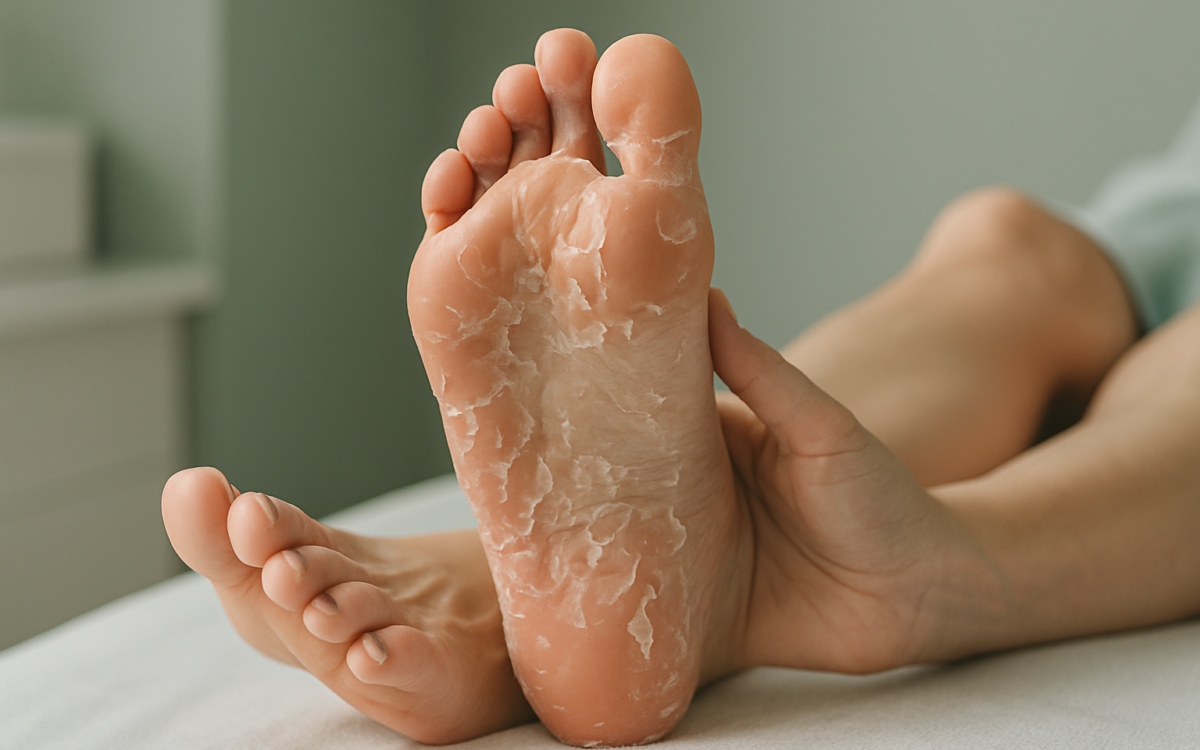
Peeling skin on your feet can be uncomfortable and concerning. It may seem like a minor issue, but it can be a sign of underlying conditions or require proper care to maintain skin health. Understanding the causes and learning how to manage them can help you keep your feet healthy and comfortable.
Common Causes of Peeling Skin on Feet
Peeling skin on your feet can be attributed to a variety of factors. Understanding these can help in addressing the issue effectively. Here are some common causes:
- Dry Skin: One of the most common reasons for peeling skin, often exacerbated by cold weather, low humidity, or excessive washing without proper moisturizing.
- Fungal Infections: Conditions like athlete’s foot can lead to redness, itching, and peeling of the skin between toes or on the soles of the feet. This type of infection is contagious and requires specific antifungal treatments.
- Psoriasis: This chronic autoimmune condition can affect feet, leading to thick, scaly skin that may peel. It’s important to consult a healthcare provider for management options.
- Eczema: Atopic dermatitis may appear on the feet as red, itchy patches that can peel. Moisturizing and avoiding irritants can help manage eczema flare-ups.
- Allergic Reactions: Contact dermatitis may occur from exposure to certain soaps, lotions, or materials in shoes, causing skin peeling and irritation.
Environmental Influences on Foot Skin
Many people underestimate how environmental factors can impact skin health. Here are some things to consider:
- Humidity Levels: Dry climates can lead to dehydrated skin, making it more prone to peeling. Conversely, high humidity can foster fungal infections.
- Footwear Choices: Shoes that don’t allow your feet to breathe can trap moisture, leading to fungal growth. Opt for breathable materials and proper fitting to promote healthy skin.
Home Remedies for Peeling Skin
If you’re dealing with peeling skin on your feet, there are several home remedies you can try to soothe and treat the condition:
- Moisturize Regularly: Apply a thick foot cream or lotion to keep skin hydrated. Look for emollients containing urea or lactic acid that help retain moisture.
- Soak Your Feet: Regular foot soaks in warm, not hot, water can help soften skin. Adding Epsom salt or oatmeal can provide additional soothing benefits.
- Exfoliate Gently: Use a pumice stone or a gentle scrub to remove dead skin, but avoid over-exfoliating as this can worsen irritation.
- Wear the Right Socks: Choose moisture-wicking socks, particularly if you tend to sweat. Change socks regularly to keep feet dry.
When to Seek Professional Help
While many cases of peeling skin can be treated at home, there are situations where you should consult a healthcare provider:
- If peeling is accompanied by severe itching, redness, or pain.
- If there are signs of infection, such as swelling, warmth, or discharge.
- If over-the-counter treatments do not alleviate the discomfort.
Medical professionals can provide insights and treatments that address the root cause of your symptoms. Persistent peeling skin can sometimes indicate conditions that may need intervention.
Preventing Peeling Skin on Your Feet
Taking proactive steps can help prevent peeling skin before it starts. Here are some tips to maintain foot health:
- Stay Hydrated: Drink plenty of water to keep your body and skin hydrated from the inside out.
- Use Sunscreen: When spending time outdoors, apply sunscreen to your feet to protect against UV damage.
- Keep Feet Clean and Dry: Regularly wash and thoroughly dry your feet to reduce fungal growth.
- Avoid Harsh Products: Choose gentle, hypoallergenic soaps and lotions that are free from irritants.
Conclusion
Peeling skin on your feet can happen for various reasons, from dry conditions to infections. Understanding the underlying causes and employing simple remedies can go a long way in managing this issue. Always consult with a healthcare professional if your symptoms don’t improve or become severe, ensuring that your feet remain healthy and comfortable.
For more detailed health information, resources such as the NIH and CDC can be helpful.
