
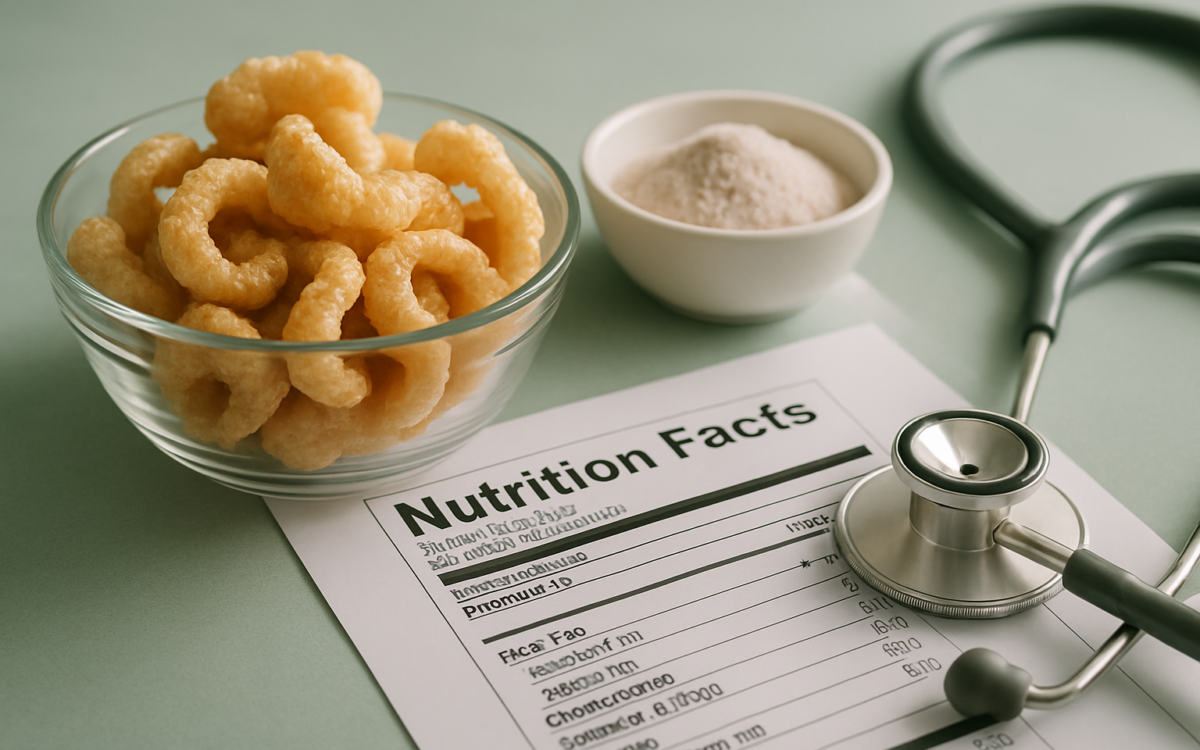
Pork rinds have been a popular snack for many years, often enjoyed for their crunchy texture and savory flavor. Known for being high in protein and low in carbs, they are sometimes viewed as a good alternative to traditional chips or crisps. However, as with any snack, it’s important to understand the nutritional facts and how they can fit into a balanced diet. This article will dive into the nutrition facts of pork rinds, explore their health benefits, and discuss potential drawbacks.
Pork Rinds: What Are They?
Pork rinds are made from the skin of pigs and are typically fried or baked until they become crispy. This popular snack is often found in Southern cuisine but has gained popularity across various dietary lifestyles, especially among those following low-carb or ketogenic diets. Pork rinds are not only a tasty treat but also have an interesting nutritional profile worth exploring.
Pork Rinds Nutrition Facts
Understanding the nutrition facts of pork rinds can help you make informed decisions when choosing snacks. Here’s a breakdown of the typical nutritional content found in a serving of pork rinds, which is typically 1 ounce (about 28 grams):
- Calories: Approximately 150 to 200 calories
- Protein: 7 to 9 grams
- Fat: 8 to 12 grams (varies based on preparation)
- Carbohydrates: 0 grams
- Sodium: 300 to 600 milligrams (can vary widely)
- Fiber: 0 grams
The absence of carbohydrates makes pork rinds a popular choice for those following low-carb diets. However, it’s essential to note that the sodium content can be high, which can be a concern for individuals monitoring their salt intake.
Health Benefits of Pork Rinds
Despite their reputation as an unhealthy snack, pork rinds have several potential health benefits:
High in Protein
Pork rinds are a good source of protein, which is crucial for repairing tissues, building muscles, and supporting overall body functions. For those on a low-carb diet, they can be a convenient way to increase protein intake without the added carbohydrates.
Low in Carbohydrates
For individuals following ketogenic or low-carb diets, pork rinds can serve as a crunchy substitute for higher-carb snacks. Their low carbohydrate content allows people to enjoy a crispy snack while staying within their dietary guidelines.
Source of Collagen
Pork rinds are derived from pig skin, which contains collagen. Consuming collagen can support skin health and may contribute to joint health, although research on benefits specifically from pork rinds is still limited. Some studies suggest that collagen may help with skin elasticity and hydration (NIH).
Potential Drawbacks of Pork Rinds
While pork rinds do have their benefits, there are also a few potential drawbacks to consider:
High Sodium Content
Many commercially prepared pork rinds are high in sodium, which can contribute to high blood pressure and other cardiovascular issues. It’s essential to read the label and choose brands that offer lower sodium options if needed.
High in Saturated Fat
Pork rinds can also be high in saturated fats, which, when consumed in excess, may raise cholesterol levels. While fats are an essential part of a balanced diet, prioritizing unsaturated fats from sources like olive oil, avocados, and nuts can be beneficial for heart health.
Potential Additives
Some commercially produced pork rinds may contain additives, artificial flavors, or preservatives. It’s crucial to read ingredient labels to ensure you’re choosing a product that aligns with your dietary preferences.
How to Incorporate Pork Rinds into Your Diet
If you decide to include pork rinds in your diet, consider the following tips for a balanced approach:
- Use as a Crunchy Topping: Crush pork rinds and use them as a topping for salads or soups to add texture.
- Low-Carb Dishes: Incorporate pork rinds into recipes that need a crunchy element, such as casseroles or as a coating for meats.
- Mind Your Portion Size: Enjoy pork rinds in moderation as part of a varied diet to avoid excessive sodium and fat intake.
When to See a Doctor
If you have concerns about your diet, sodium intake, or any health conditions related to high cholesterol or blood pressure, it’s best to consult with a healthcare professional. Open discussions about your dietary habits can help tailor the best eating plan for your individual needs.
Conclusion
Pork rinds can be an enjoyable and unique snack option, especially for those seeking low-carb alternatives. Understanding their nutritional profile allows you to make informed decisions about including them in your diet. Remember to enjoy them in moderation and to stay mindful of factors like sodium content and overall dietary balance. Next time you reach for a snack, keep pork rinds in mind, and savor them as an occasional treat that fits within your nutritional goals.
