
Shoulder pain can be a frustrating experience, affecting daily activities and quality of life. When other diagnostic methods don’t provide clear answers, a magnetic resonance imaging (MRI) scan of the shoulder can offer valuable insights. This article explores what an MRI can reveal about shoulder problems, its benefits, and how it works.
What is a Shoulder MRI?
A shoulder MRI is a non-invasive imaging test that uses powerful magnets and radio waves to create detailed images of the structures within the shoulder joint. Unlike X-rays, which primarily show bones, MRIs provide a clear view of soft tissues, including ligaments, tendons, muscles, and cartilage.
Why is an MRI Recommended?
Doctors typically recommend a shoulder MRI when a patient experiences persistent pain, weakness, or limited mobility that does not improve with conservative treatments, such as rest, ice, or physical therapy. Here are some common reasons for a shoulder MRI:
- Rotator Cuff Injuries: The rotator cuff is a group of muscles and tendons that stabilize the shoulder. An MRI can help determine if there is a tear or inflammation in these tissues.
- Labrum Tears: The shoulder labrum is a ring of cartilage that surrounds the socket of the shoulder joint. Tears in this area can cause pain and instability.
- Bursitis: Inflammation of the bursa (a fluid-filled sac that reduces friction in the shoulder) can be visualized through an MRI.
- Arthritis: The extent of joint degeneration due to osteoarthritis or rheumatoid arthritis can be assessed using MRI.
How Does a Shoulder MRI Work?
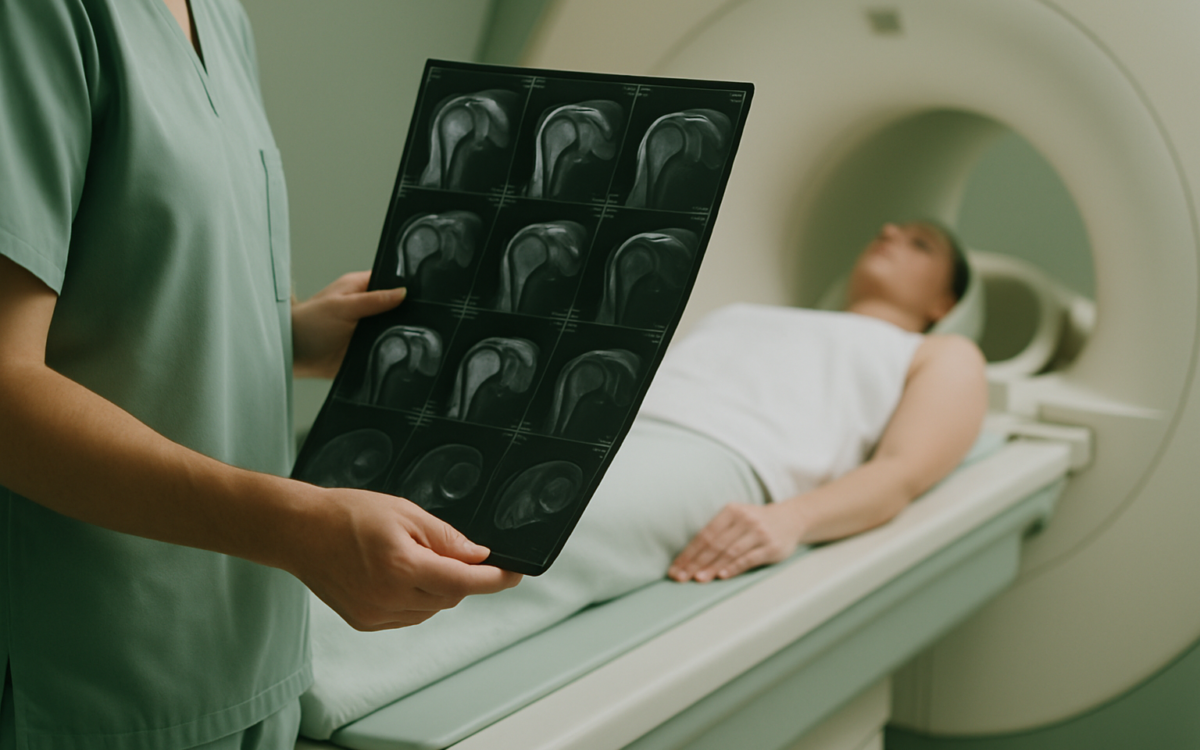
The process of getting a shoulder MRI is straightforward. The patient lies down on a table that slides into a large, tube-shaped machine. During the scan, which may last 30 to 60 minutes, it’s crucial to remain still to obtain clear images. The MRI machine makes loud tapping or thumping noises, which is completely normal.
Throughout the procedure, a radiologic technologist will monitor the patient from an adjacent room. If necessary, a contrast agent may be injected into the shoulder joint to enhance the imaging results. This can help highlight specific areas of concern.
Benefits of Shoulder MRI
Shoulder MRIs offer numerous advantages:
- Non-invasive: No surgery or radiation is involved, making it a safe option for most patients.
- Detailed Imaging: Offers high-resolution images that can help diagnose complex conditions.
- Guides Treatment: The information gained from an MRI can assist healthcare providers in designing an effective treatment plan, whether it’s conservative management, physical therapy, or surgical intervention.
Limitations and Risks
While shoulder MRIs are generally safe, some limitations exist:
- Cost: MRI scans can be expensive, and insurance coverage may vary.
- Not Always Definitive: An MRI may not capture every issue; sometimes, other imaging studies like X-rays or CT scans are needed for a comprehensive evaluation.
- Claustrophobia: Some patients find it uncomfortable to be in the enclosed space of the MRI machine.
What to Expect After the MRI
After completing the MRI, the images are sent to a radiologist who will interpret the results. This can take anywhere from a few hours to a couple of days. Once the analysis is done, your healthcare provider will discuss the findings with you. Based on the results, they will create a tailored treatment plan, which may involve further tests, medication, physical therapy, or possibly surgery.
When to See a Doctor
If you’re experiencing persistent shoulder pain, weakness, or mobility issues that interfere with your daily activities, it’s essential to consult a healthcare provider. They will assess your condition and determine whether an MRI or other diagnostic tests are necessary.
In Conclusion
Shoulder MRIs are valuable tools in diagnosing a variety of conditions affecting the shoulder. Understanding this imaging process can empower you to make informed decisions about your health. If you have ongoing shoulder concerns, don’t hesitate to reach out to your doctor for an assessment. For more information on MRI technology and other health topics, you can explore resources like the NIH or the Mayo Clinic.
