
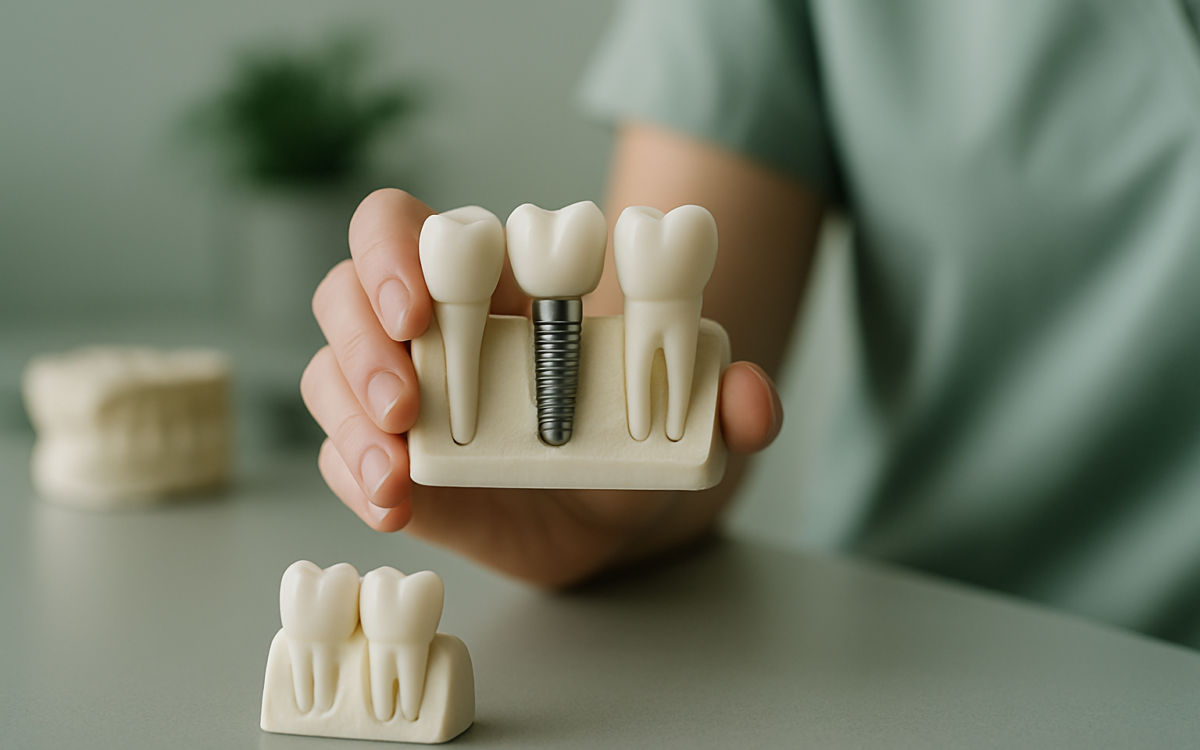
Dental implants are becoming increasingly popular as a solution for missing teeth. They offer a long-lasting, natural-looking alternative to dentures or bridgework. If you’re considering dental implants, understanding the different types can help you make an informed decision.
1. Endosteal Implants
Endosteal implants are the most commonly used type of dental implant. They are placed directly into the jawbone, serving as a sturdy foundation for artificial teeth. Typically made of titanium, these implants resemble small screws and act as anchors that hold replacement teeth in place.
Procedure Overview
The procedure for endosteal implants involves several steps:
- Initial consultation and imaging to assess bone health.
- Placement of the implant into the jawbone.
- Healing time, allowing the implant to fuse with the bone (osseointegration).
- Placement of an abutment, which connects the implant to the crown.
- Finally, the replacement tooth (crown) is attached.
This type of implant is suitable for most patients, provided they have sufficient bone density to support the implant.
2. Subperiosteal Implants
Subperiosteal implants are another type of dental implant, but differ in their placement. Instead of being set into the jawbone, these implants are placed under the gum but above the jawbone. They are designed for patients who have minimal bone height and cannot undergo bone augmentation procedures.
Characteristics
Subperiosteal implants are custom-made for each patient. A metal framework is fabricated to fit the contours of the jaw and is positioned underneath the gums. Once the gums heal, posts are attached to the framework to hold the artificial teeth. This type of implant is less common but still an option for certain candidates.
3. Zygomatic Implants
Zygomatic implants are the least common type, primarily used in patients with severe bone loss in the upper jaw. These implants anchor into the zygomatic bone (cheekbone) instead of the jawbone, providing a more stable solution without needing extensive bone grafting.
Advantages of Zygomatic Implants
Some advantages of zygomatic implants include:
- They require less recovery time than traditional implants.
- There is often no need for sinus lifting or bone grafting procedures.
- They provide immediate support for dentures or crowns.
However, these implants require a highly skilled oral surgeon due to their complex placement. Patients considering zygomatic implants should consult with a professional who has extensive experience in this area.
Choosing the Right Type of Implant
When deciding on the best type of dental implant for your needs, your dentist will evaluate several factors, including:
- Your oral health and hygiene.
- The quality and quantity of your jawbone.
- Your personal preferences and budget.
Each type of dental implant has its unique benefits and might suit different situations. Discussing your options with your dentist can help clarify which type might work best for you.
When to See a Doctor
If you have missing teeth or are considering dental implants, it’s important to see a dental professional. They can assess your oral health, discuss your options, and help you navigate the best treatment plan. Additionally, if you experience pain, swelling, or issues with existing implants, it’s crucial to consult your dentist as soon as possible.
Conclusion
Dental implants can significantly enhance your quality of life by restoring your smile and improving your ability to eat and speak. Understanding the three main types of implants—endosteal, subperiosteal, and zygomatic—can guide you in choosing the best option for your oral health. Always consult a qualified dentist to discuss your specific needs and determine the most appropriate treatment.
