
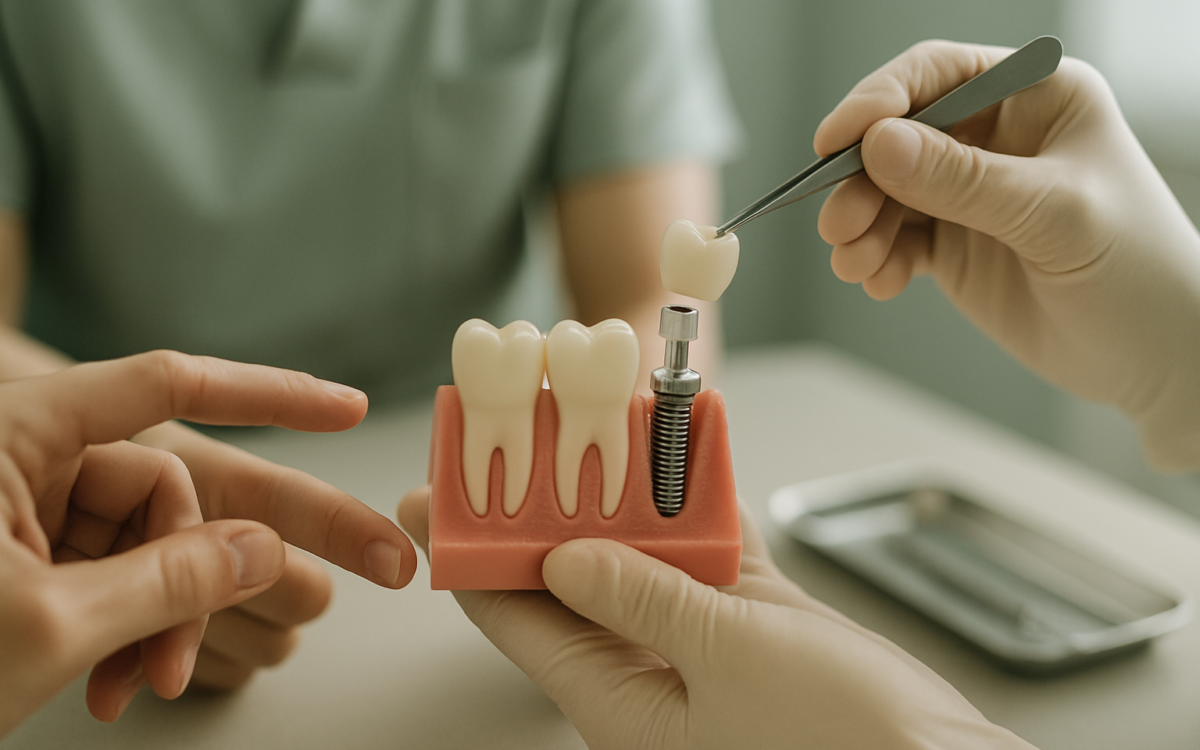
Getting a dental implant can feel daunting, but understanding the tooth implantation process can ease your worries. Dental implants are a popular solution for those missing teeth, offering a durable and natural-looking alternative. Here’s a complete guide to help you navigate through the stages of this dental procedure.
What Are Dental Implants?
Dental implants are artificial tooth roots made from titanium, designed to provide stable support for replacement teeth. They are gradually integrated into the jawbone through a process called osseointegration. When a tooth is lost due to injury or decay, an implant can serve as a foundation for crowns, bridges, or dentures.
Preparing for Tooth Implantation
The journey to getting a dental implant begins with a consultation. During this initial visit, your dentist will evaluate your oral health by examining your gums, teeth, and the structure of your jawbone.
Your dentist may take X-rays or 3D scans to assess the best placement for the implant. This evaluation helps determine if you are a good candidate for dental implants. Factors like gum disease, bone loss, or certain health conditions can affect your suitability for the procedure.
In some cases, additional treatments may be necessary before proceeding with the implants. For instance, bone grafting may be recommended if there is insufficient bone density to support the implant.
The Implantation Procedure
The actual tooth implantation process usually occurs in several stages:
- Anesthesia: Before starting, your dentist will administer local anesthesia to numb the area around your implant site. Sedation options might also be offered for those who experience anxiety.
- Implant placement: The dentist will create a small incision in your gum to expose the bone. They will then drill a hole into the bone to insert the titanium implant. After the implant is placed, the gum is stitched back together.
- Osseointegration: Over the next few months, the bone will grow around the implant, securely anchoring it into place. This healing period, known as osseointegration, is crucial for the long-term success of your implant.
- Abutment placement: Once osseointegration is complete, another minor surgery is performed to attach an abutment — a small connector that holds the crown. This procedure may require additional healing time.
- Crown placement: Finally, your dentist will take impressions of your mouth to create a custom crown that matches your natural teeth. Once the crown is ready, it is attached to the abutment, completing the process.
Recovery and Aftercare
After your implant placement, proper care is key to a smooth recovery. Here are some tips to aid your healing:
- Follow your dentist’s aftercare instructions carefully.
- Manage any discomfort with recommended pain relief options.
- Eat soft foods and avoid sticky or hard items as you heal.
- Maintain your oral hygiene by gently brushing and flossing; be careful around the implant site.
- Schedule follow-up appointments to monitor the healing process.
Most patients can return to their daily activities within a few days, but complete healing may take several months. It’s important to stay patient during this time.
Considerations for International Patients
If you are considering dental implants overseas, it’s essential to research clinics that specialize in this procedure. Many countries offer high-quality dental care at a fraction of the cost found in the U.S. For those interested in exploring treatment options abroad, it may be beneficial to reach out to international patient services for guidance on choosing reputable facilities and understanding the local standards.
Potential Risks and Complications
Though dental implants are generally safe, like any surgical procedure, risks do exist. Potential complications include:
- Infection at the implant site
- Damage to surrounding teeth or blood vessels
- Nerve damage, which can lead to pain or numbness
- Sinus problems if implants are placed in the upper jaw
Your dentist will discuss these risks in detail during your consultation, helping to set realistic expectations.
When to See a Doctor
If you experience significant pain, swelling, or unusual changes in your oral health during recovery, consult your dentist. These could be signs of infection or complications that require immediate attention.
Final Thoughts
The tooth implantation process can transform your smile and restore your confidence. Understanding the steps involved can empower you as you embark on this journey. Remember, thorough research, careful planning, and open communication with your dentist can lead to a successful procedure and a beautiful new smile.
