
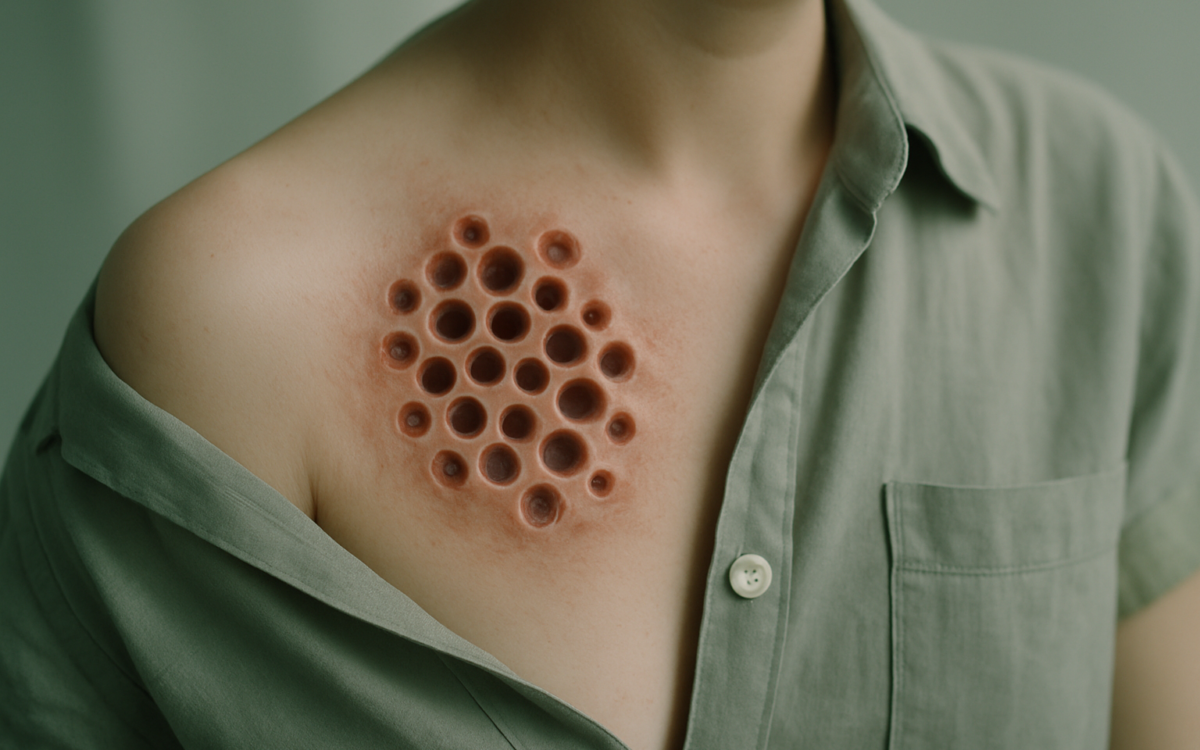
Have you ever looked at a picture of a honeycomb or a sponge and felt an overwhelming sense of unease? If so, you might be experiencing trypophobia, a term that combines the Greek words ‘trypa,’ meaning hole, and ‘phobos,’ meaning fear. Though it’s not recognized as a formal mental health disorder, this aversion to clustered holes or patterns can provoke real discomfort in many individuals.
What is Trypophobia?
Trypophobia is characterized by an intense feeling of unease or disgust when someone sees images or objects with clusters of holes or bumps. Common triggers include images of certain plants and animals, such as lotus seed pods or certain types of animals with holey skin. While the emotional response varies from person to person, many report feeling anxious, nauseous, or even experiencing chills or skin irritation at the sight of these patterns.
Why Does Trypophobia Exist?
There are several theories about why trypophobia exists, and while research is still ongoing, some experts believe it may be related to evolutionary instincts. For instance, our ancestors may have developed an aversion to certain natural patterns that could signify danger, such as the skin of a decaying animal or a nest of poisonous insects. This instinct might have helped humans avoid poisonous or infectious threats in the wild.
Another possibility is that the sight of clustered holes triggers the brain’s fear response due to its association with disease or decay. The National Institutes of Health notes that aversions of this kind could also arise from learned behavior, where negative experiences shape our responses to similar stimuli.
Common Triggers of Trypophobia
While triggers can vary widely among individuals, some common ones include:
- Nature: Honeycombs, lotus seed pods, and certain fruits like strawberries.
- Animals: Skin textures resembling holes, such as those of certain frogs or toads.
- Everyday Objects: Sponges, bubble wrap, or even patterns on certain types of clothing.
Understanding personal triggers can be the first step toward addressing feelings of unease or discomfort.
Symptoms of Trypophobia
Individuals experiencing trypophobia may report a range of symptoms, including:
- Emotional reactions like fear, disgust, or anxiety.
- Physical symptoms such as sweating, increased heartbeat, or nausea.
- Cognitive reactions like obsessive thoughts about the triggering image.
It’s crucial to recognize that these reactions can be profound for some people, impacting their daily life and overall well-being. Awareness of these symptoms is essential, as it helps individuals understand their experiences.
How to Cope with Trypophobia
While coping strategies vary by individual, here are some general approaches that can be beneficial:
1. Gradual Exposure
For some, gradually exposing oneself to images that trigger trypophobia can help reduce sensitivity over time. Start with less triggering images and gradually work up to more challenging ones as your comfort increases.
2. Mindfulness Techniques
Practicing mindfulness through deep breathing or meditation can help ground you when feeling anxious. Techniques like progressive muscle relaxation may also be helpful in reducing physical symptoms associated with anxiety.
3. Professional Help
For those who find their fear significantly impacts their daily life, talking to a mental health professional may provide additional coping mechanisms. Cognitive-behavioral therapy (CBT) is one effective approach for addressing various phobias and anxiety disorders.
Community and Support Resources
Finding community or support groups can also be beneficial for individuals who feel isolated due to their experiences. Sharing stories and coping strategies with others can be a valuable source of comfort.
When to See a Doctor
If you find that your fear of clusters of holes is interfering with your daily life, causing significant distress, or leading to avoidance behaviors, it may be time to consult a healthcare provider. They can offer guidance on coping strategies and, if necessary, therapy options tailored to your needs.
Conclusion
Trypophobia is an intriguing phenomenon that affects many people, evoking feelings of discomfort from mundane images. Understanding your triggers, recognizing symptoms, and exploring coping strategies can significantly improve your experience. While trypophobia may seem peculiar, it is not uncommon, and you’re certainly not alone in facing it. For more insights and research, resources such as the Centers for Disease Control and Prevention and the Mayo Clinic can provide further information on mental health and anxiety-related fears.
