
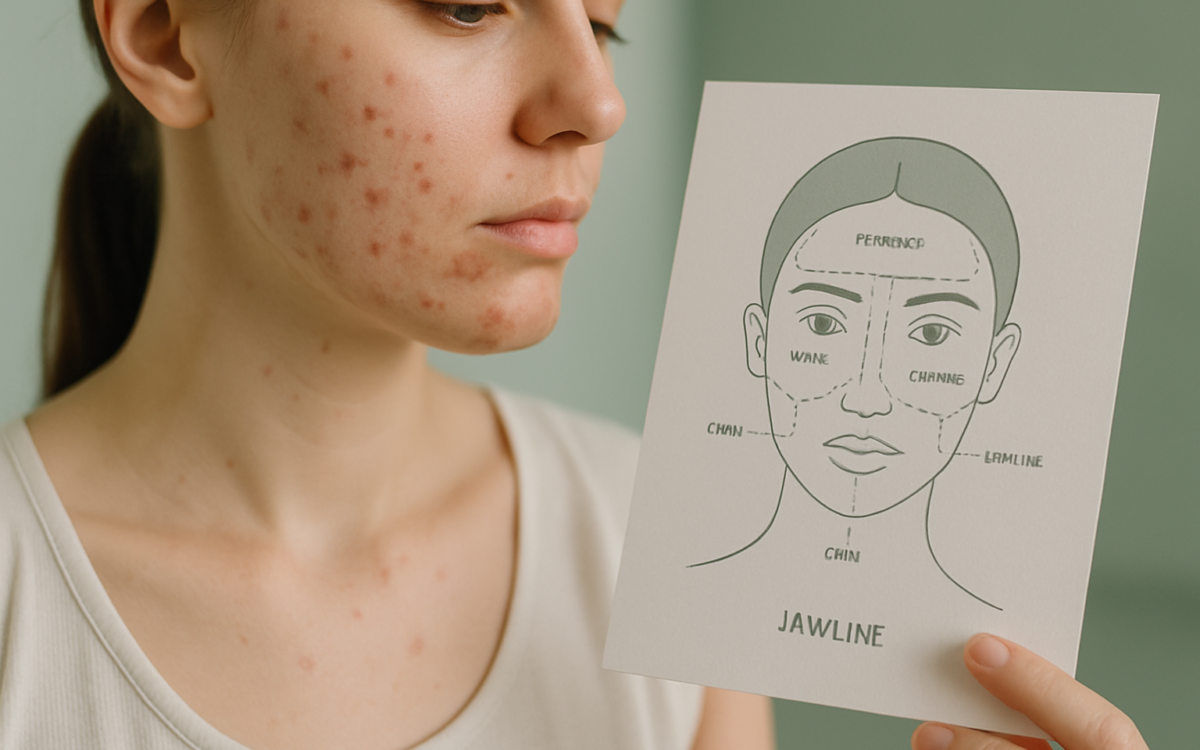
For anyone experiencing acne, the struggle can feel all-consuming. But did you know that the location of your breakouts might provide clues about their underlying causes? This concept is called the acne face map. Understanding this mapping technique can help you identify potential triggers and make better-informed skincare choices.
What Is the Acne Face Map?
The acne face map is a visual guide that connects the different regions of your face to specific internal health issues or environmental factors. Each area of the face corresponds to potential causes of acne, suggesting that breakouts might not be purely a result of external factors like skincare products. Instead, they could also indicate imbalances in the body.
Deciphering the Map: Areas of the Face
Here’s a closer look at what each region of the face may signify:
Forehead
The forehead is often linked to digestion. Breakouts here can indicate issues such as poor diet, overeating, or inadequate hydration. If you notice frequent acne in this area, consider taking a closer look at your eating habits.
Between the Eyebrows
According to face mapping, acne between the eyebrows might relate to the liver’s health, possibly suggesting you consume excessive alcohol or greasy foods. If you’re dealing with breakouts here, it might be worth considering a detox or lifestyle changes.
Nose
The nose is considered a central point regarding heart and circulation issues. Breakouts on or around the nose can be linked to stress, anxiety, or high blood pressure. If this is an area where you regularly experience acne, evaluating your stress levels could prove beneficial.
Cheeks
Acne on the cheeks is often considered a reflection of environmental factors such as pollution or bacteria. It can also indicate respiratory issues. If you’re in a high-pollution area, regular cleansing and gentle exfoliation can help minimize breakouts.
Chin and Jawline
Breakouts in this area tend to be associated with hormonal fluctuations, which is common during menstruation or stress. Maintaining a consistent skincare routine and discussing possible hormonal imbalances with a healthcare provider could prove crucial.
Causes Beyond Mapping
While face mapping can be a useful tool, it’s essential to recognize that many factors contribute to acne. Hormonal changes, genetics, diet, and stress play significant roles in skin health. Some other common causes include:
- Excess oil production
- Clogged pores
- Use of comedogenic products
- Infections from bacteria
Treatment Options for Acne
When it comes to treating acne, a personalized approach can be most effective. Over-the-counter products containing ingredients like salicylic acid or benzoyl peroxide may provide relief for mild cases. For more persistent issues, consultation with a dermatologist for prescription treatments may be necessary.
If you are considering travel for specialized acne treatment, options like treatment in Turkey are available that cater to diverse skincare needs, offering modern techniques and technologies.
Skincare Tips for Preventing Breakouts
Incorporating certain habits into your daily routine can help prevent acne before it starts. Here are a few tips to consider:
- Cleanse your face twice daily to remove dirt and oil.
- Use non-comedogenic skincare products.
- Stay hydrated by drinking plenty of water.
- Maintain a well-balanced diet rich in fruits, vegetables, and whole grains.
- Manage stress through mindfulness or relaxation techniques.
When to See a Doctor
If your acne continues to worsen or becomes painful despite your efforts, it might be time to consult a healthcare provider. A dermatologist can help identify underlying causes, suggest appropriate treatments, and provide advice tailored to your skin type.
Conclusion
The acne face map can serve as an interesting starting point in understanding your breakouts, but it’s crucial to remember that the skin is complex. While face mapping can offer insights, it should be used as a supplement to broader skincare and health practices. Always consider consulting a healthcare professional for personalized advice.
