
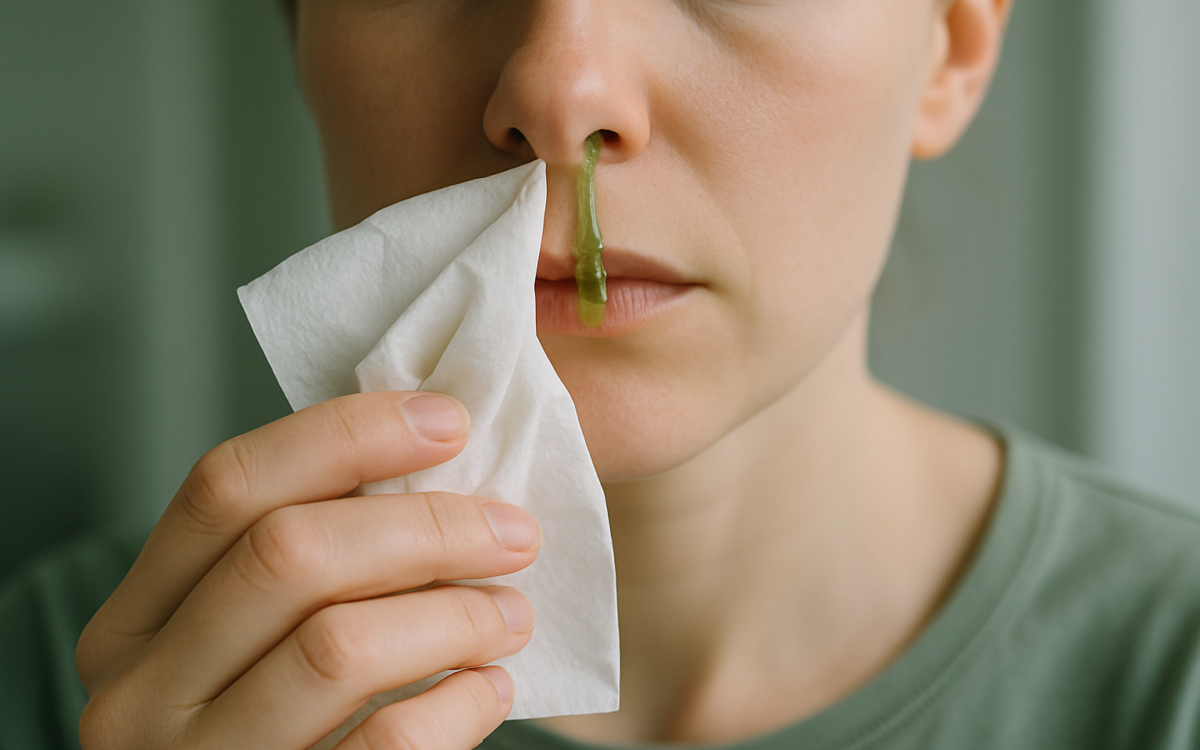
Nasal mucus can tell us a lot about our health, and many people find themselves alarmed when they notice that their snots have turned from clear to green. But what does this change in color mean? Is it a sign of something serious, or is it just a normal part of being sick? In this article, we’ll take a closer look at green snot, its causes, associated symptoms, and when it’s important to see a doctor.
What Is Nasal Mucus, and Why Does It Change Color?
Nasal mucus, commonly known as snot, is produced by the mucous membranes in our nose. Its main job is to help trap dust, allergens, and microorganisms, preventing them from entering our lungs. Mucus is usually clear when we’re healthy, but its color can change as a response to various factors.
When we’re not feeling well, the body’s immune response ramps up, which can alter the appearance of mucus. The color of mucus can shift for several reasons:
- Infection: Bacteria or viruses can cause changes in mucus color when the immune system responds to an invasion.
- Dehydration: Thick mucus may appear yellow or green if you’re not drinking enough fluids, as the mucus can become concentrated.
- Allergies: Allergens can lead to inflammation, resulting in changes in mucus consistency and color.
What Does Green Snot Indicate?
Seeing green snot often raises questions about what might be happening in your body. While many assume that green mucus means a serious infection, it isn’t always the case. Here’s a breakdown of what green snot can mean:
- Viral Infections: Initial stages of viral infections like the common cold often produce clear mucus. As the infection progresses, your mucus can turn green as your body gets rid of dead white blood cells and other debris.
- Bacterial Infections: If the green snot is accompanied by facial pain, swelling, or a fever lasting more than a week, it could indicate a bacterial sinus infection (sinusitis). Bacterial infections require different treatment compared to viral ones.
- Allergies and Irritants: Sometimes, exposure to allergens or pollutants can irritate the nasal passages, causing mucus to thicken and change color. This can occur without an infection.
Associated Symptoms of Green Snot
Green snot often doesn’t come alone. There are additional symptoms that commonly accompany this change in mucus color. These can include:
- Nasal Congestion: The buildup of mucus can lead to a feeling of stuffiness in the nose.
- Post-Nasal Drip: This occurs when mucus drips down the throat, leading to coughing or a sore throat.
- Facial Pain: Particularly around the cheeks or forehead, often related to sinus pressure.
- Fever: A mild to high fever may accompany bacterial infections, signifying the body is fighting off an illness.
Home Care Tips for Managing Green Snot
While green snot can be a sign of an infection, many cases will resolve on their own without medical treatment. Here are some tips for managing the symptoms while you recover:
- Stay Hydrated: Drinking plenty of fluids helps thin mucus, making it easier to expel.
- Use a Humidifier: Humid air can soothe irritated nasal passages and help reduce congestion.
- Nasal Irrigation: Rinsing the nasal passages with saline solution can clear out mucus and debris.
- Rest: Your body needs rest to recover from any infection, so make sure to get adequate sleep.
When Is It Time to See a Doctor?
While green snot is not usually a cause for alarm, there are certain situations where it’s time to consult a healthcare professional. Consider seeing a doctor if you experience:
- Symptoms that last more than 10 days.
- Severe facial pain or swelling.
- High fever (over 101°F or 38.3°C).
- Blood in the mucus.
- Shortness of breath or wheezing.
These signs could indicate a more concerning condition that may need medical intervention.
Conclusion
Green snot is a common occurrence and often not a reason to panic. Understanding its potential causes and associated symptoms can help you navigate your health with more ease. Remember to keep hydrated, rest, and pay attention to your body. If symptoms persist or worsen, don’t hesitate to reach out to a healthcare provider. For more detailed information on respiratory updates, resources like the CDC and Mayo Clinic provide valuable insights.
