
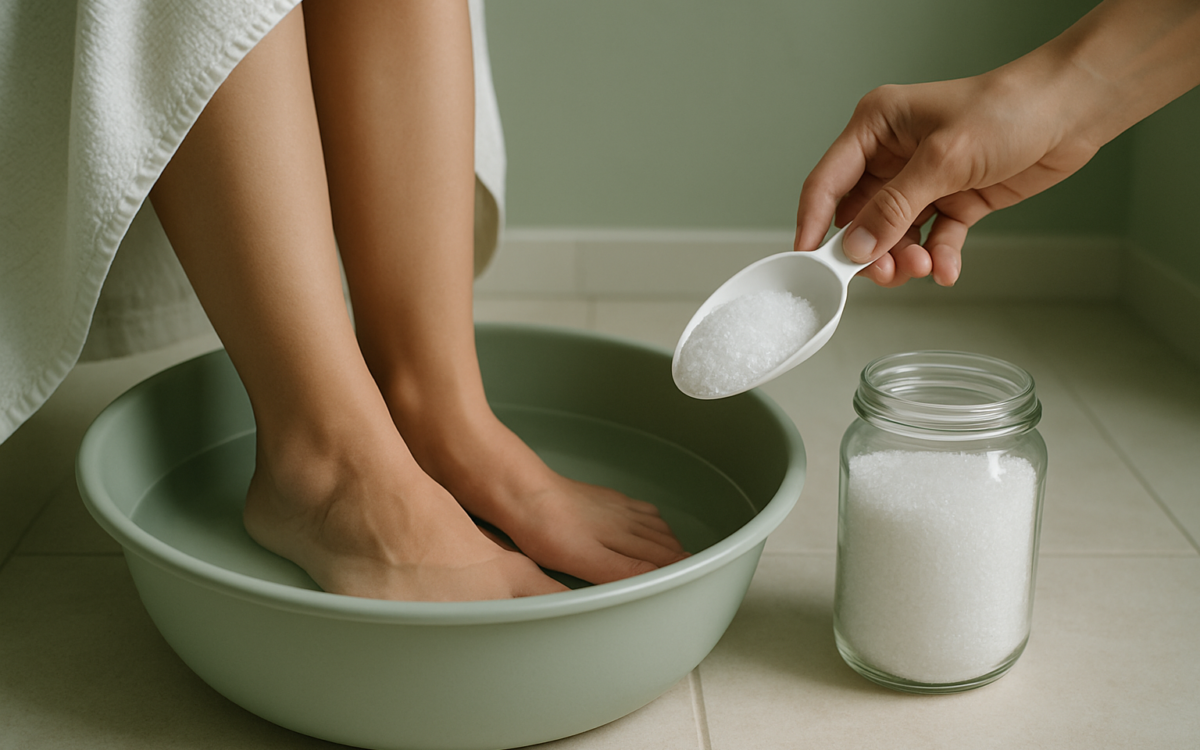
After a long day on your feet, there’s nothing quite like a warm foot bath to soothe tired muscles and melt away stress. Even better, when you add Epsom salt to your foot bath, you tap into the potential benefits of magnesium, known for its calming properties. Let’s explore how an Epsom salt foot bath can improve your well-being and foot health.
What is Epsom Salt?
Epsom salt is a naturally occurring mineral compound made up of magnesium, sulfur, and oxygen. People have used Epsom salt for centuries for its reported health benefits. Unlike traditional table salt, Epsom salt is known for its high magnesium content. Magnesium plays a crucial role in our bodies; it helps regulate muscle function, reduces inflammation, and promotes relaxation.
The Benefits of Epsom Salt Foot Baths
Utilizing Epsom salt in your foot baths offers two key benefits: relaxation and potential relief from various ailments.
1. Stress Relief and Relaxation
Stress can take a toll on both our minds and bodies. Taking time for yourself, even if just for a few minutes, can help you unwind. Soaking your feet in warm water mixed with Epsom salt may help alleviate stress and anxiety. The warmth of the water, combined with the soothing properties of magnesium, can create a calming experience.
2. Relieving Aching Feet
Many of us spend long hours on our feet, whether standing at work, walking, or exercising. This can lead to soreness and discomfort. An Epsom salt foot bath can help reduce muscle soreness and swelling. The magnesium may enhance muscle recovery, making it a popular choice among athletes. Studies suggest that magnesium can help with muscle tension and reduce pain; however, more research is needed to fully understand its effects (NIH).
3. Supporting Healthy Skin
Your feet often face harsh conditions: sweat, dirt, and friction from shoes. Epsom salt foot baths can help soften rough skin and exfoliate dead skin cells. The salt acts as a natural scrub when you rub your feet together, leaving them softer and smoother. If you’re prone to foot odor or athlete’s foot, adding Epsom salt may help alleviate these issues, thanks to its antifungal properties.
4. Easing Swelling and Inflammation
Swelling in your feet can be caused by various factors, including standing too long, pregnancy, or even certain medical conditions. The anti-inflammatory properties of magnesium found in Epsom salt can help reduce swelling and soothe inflamed tissues. Warm water itself promotes circulation, further aiding in swelling reduction.
How to Prepare an Epsom Salt Foot Bath
Creating an Epsom salt foot bath is simple and can easily be done at home.
- Gather your materials: You will need warm water, a foot basin or tub, and Epsom salt (typically 1-2 cups depending on the size of your basin).
- Fill the basin: Pour the warm water into the basin until it’s deep enough to cover your feet.
- Add Epsom salt: Stir in 1-2 cups of Epsom salt until it dissolves completely.
- Soak your feet: Immerse your feet in the Epsom salt solution for 15-30 minutes, allowing the minerals to absorb through your skin.
- Rinse and dry: After soaking, rinse your feet with clean water and pat them dry.
For added relaxation, consider lighting a few candles, playing soothing music, or enjoying a good book while you soak.
Additional Tips for Maximum Benefits
While Epsom salt foot baths can be highly beneficial, there are a few tips to enhance your experience:
- Frequency: Enjoy Epsom salt foot baths 2-3 times a week for the best results.
- Combine with essential oils: Adding a few drops of essential oils such as lavender or peppermint can enhance relaxation and provide aromatherapy benefits.
- Stay hydrated: Drinking water before and after your soak can help detoxify your body and replenish fluids lost during soaking.
Potential Risks and Considerations
While Epsom salt foot baths are generally safe for most people, there are a few precautions to keep in mind:
- If you have diabetes, circulation issues, or skin conditions, consult your healthcare provider before beginning a routine.
- People with open wounds or infections on their feet should avoid soaking, as it can exacerbate the issue.
- Excessive soaking can lead to dry skin, so be mindful of how long you soak.
When to See a Doctor
If you experience persistent foot pain, swelling, or other concerning symptoms that do not improve with home remedies, consider consulting a healthcare professional. Conditions like plantar fasciitis, arthritis, or severe fungal infections require medical attention to address the underlying issues. Always feel free to discuss any changes in your foot health with your doctor or podiatrist.
In conclusion, Epsom salt foot baths can be a delightful addition to your wellness routine. By soaking your feet in this soothing mixture, you can enjoy relaxation, relieve aches, and support your foot health. Take some time to care for your feet, and they will thank you for it!
