
When enjoying a sunny day outdoors, it’s easy to forget about the potential dangers of too much sun exposure. One painful consequence of sunburn is the formation of blisters on the skin. These blisters can be uncomfortable, but understanding their causes and how to care for them can help you recover more effectively.
What Are Sunburn Blisters?
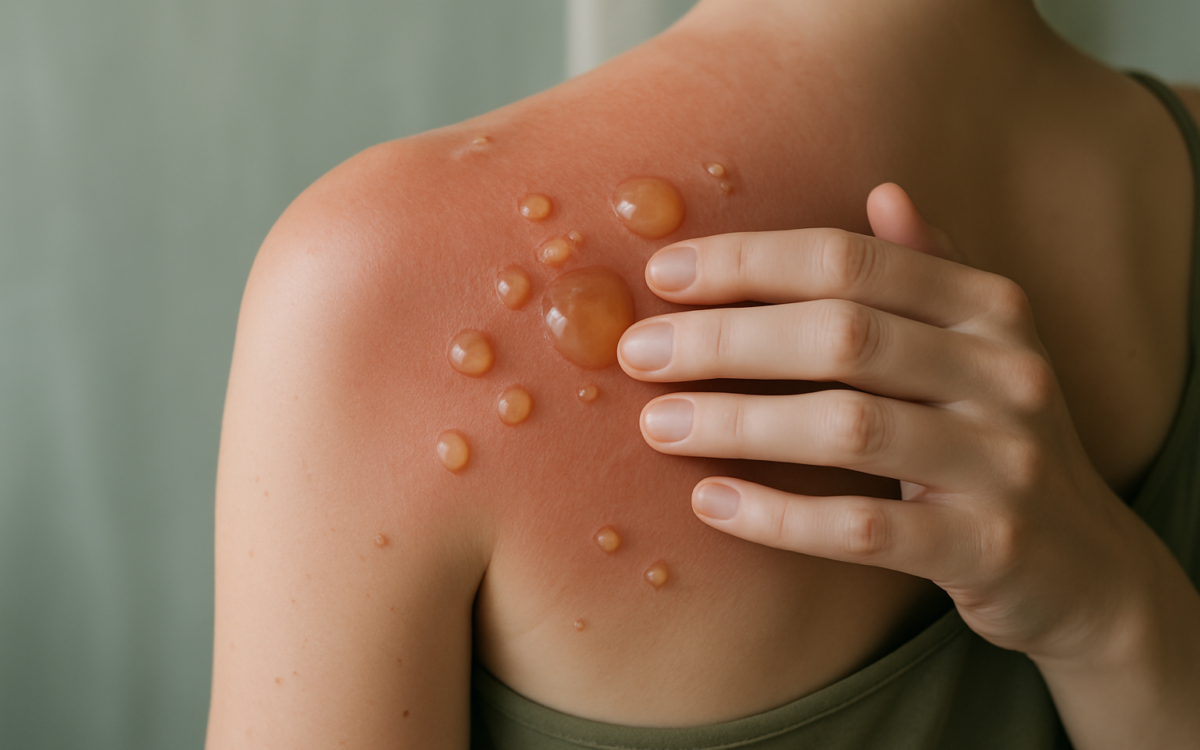
Sunburn blisters occur when the skin is damaged by ultraviolet (UV) rays from the sun. The body responds to this damage by generating blisters to protect the deeper layers of the skin from further injury. These blisters are filled with clear fluid and can appear on any part of the body that has been overexposed to the sun. The severity of sunburn and the likelihood of blistering depends on factors like skin type, the intensity of sun exposure, and the duration spent in the sun.
Symptoms of Sunburn Blisters
Identifying sunburn blisters is essential for proper care. Symptoms include:
- Red, inflamed skin
- Swelling in the affected area
- Fluid-filled blisters that may burst
- Pain or tenderness when touching the skin
- Fever or chills in more severe cases
How to Care for Sunburn Blisters
Taking care of sunburn blisters is vital for recovery. Here are some important steps to follow:
1. Avoid Popping the Blisters
It might be tempting to pop blisters, but doing so can lead to infection and delay healing. The blister acts as a protective barrier, so it’s best to leave it intact.
2. Cool the Affected Area
Applying a cool, damp cloth to the sunburned skin can provide relief from pain and reduce swelling. You can also take cool showers, but avoid using harsh soaps or scrubbing the affected areas.
3. Apply Moisturizer
Once the skin has cooled down, apply a fragrance-free moisturizer or aloe vera gel. These products can help soothe the skin and keep it hydrated. Avoid products containing alcohol, as they can further irritate the skin.
4. Stay Hydrated
Drinking plenty of fluids is crucial, particularly if you’re experiencing a severe sunburn. Staying hydrated helps support the healing process and can alleviate symptoms.
5. Protect the Skin
Keep the affected area protected from the sun during the healing process. Wear loose, cool clothing over the blisters, or use a broad-spectrum sunscreen with SPF 30 or higher in the future to prevent further sunburns.
Preventing Sunburn Blisters
Prevention is always better than treatment when it comes to sunburn and blisters. Here are some helpful tips to keep in mind:
- Use sunscreen generously: Apply a broad-spectrum sunscreen at least 30 minutes before going outdoors. Reapply every two hours, and more frequently if swimming or sweating.
- Avoid peak sun hours: Try to stay indoors or seek shade during the peak sun hours between 10 a.m. and 4 p.m.
- Wear protective clothing: Invest in UV-protective clothing, hats, and sunglasses to shield your skin from harmful rays.
- Seek safer alternatives: If you enjoy outdoor activities, consider using sun-safe technologies like shade sails or beach umbrellas.
When to See a Doctor
While many sunburn blisters can be treated at home, there are circumstances where medical attention is necessary. Contact a healthcare professional if you experience:
- A high fever of 101°F (38.3°C) or higher
- Blisters that cover a large area or are infected
- Severe pain that is not relieved by over-the-counter pain medications
- Signs of dehydration, such as dizziness, dark urine, or a rapid heartbeat
Conclusion
Sunburn blisters may be painful, but knowing how to care for them effectively can significantly aid in your recovery. Remember to prioritize sun safety to minimize the risk of sunburns in the future. By applying proper skincare techniques, staying hydrated, and proactively protecting your skin, you can enjoy the sun while keeping your skin healthy. For more information, consult reputable sources such as the Mayo Clinic or the World Health Organization for detailed sun safety guidelines.
